Dangote refinery’s upcoming record IPO prompts investors to reassess Nigeria’s risk profile


- Dangote refinery becomes world’s largest aviation fuel exporter amid Iran conflict-related supply disruptions
- Fuel subsidies removal and foreign exchange market reforms boost investor sentiment
- Political, regulatory and security risks remain key investment concerns
Dangote Group, the Nigerian industrial conglomerate, is pursuing an initial public offering (“IPO”) of its oil refinery business in the second half of 2026 which would be the largest IPO in Africa’s history. Amid growing investor interest in Nigeria, the proposed IPO comes as market participants are assessing how President Bola Tinubu’s reforms are reshaping the country’s investment landscape and risk profile.
In April 2026, the group’s founder, billionaire Aliko Dangote, announced his intention to list an undisclosed stake of Dangote Petroleum Refinery and Petrochemicals FZE on the Nigerian Exchange Group (“NGX”). In early August 2026, Reuters reported that the company had submitted its IPO application to Nigeria’s Securities and Exchange Commission and was expected to receive approval in the coming weeks.
While the primary listing is expected to be on the NGX, stock exchanges in other African countries including South Africa, Kenya, and Egypt have expressed interest in taking part in the deal which could reportedly raise up to USD 5bn.
Economic Impact on Nigeria and the Region
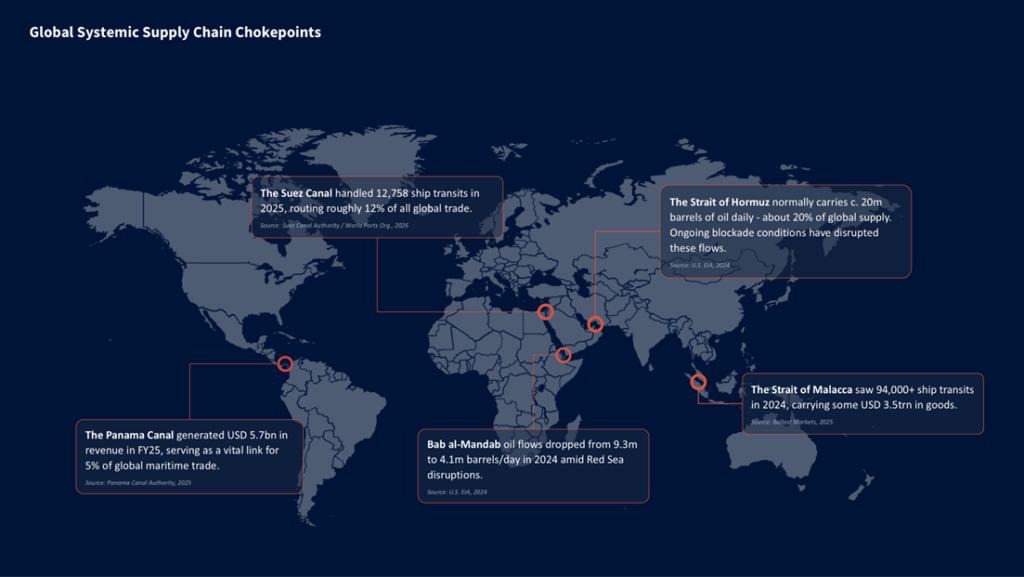
Based in the Lekki Free Zone near Lagos, the Dangote refinery reached a processing capacity of up to 650,000 barrels of crude oil per day in February 2026, just weeks before the outbreak of the Iran conflict. Amid disruptions to oil trade routes passing through the Strait of Hormuz and increased demand for alternative suppliers of refined petroleum products, the refinery has emerged as a major beneficiary of the ongoing conflict. In April 2026, it reportedly became the largest exporter of aviation fuel globally.
The proposed IPO has already attracted significant interest from both institutional and private investors across Africa, reflecting growing confidence in the refinery’s commercial prospects. In July 2026, the company raised USD 2.5bn through a private placement targeting institutional investors and high-net-worth individuals to strengthen its financing structure and support the refinery’s expansion ahead of its planned IPO.
Earlier, in June 2026, the Johannesburg-headquartered Standard Bank Group, Africa’s largest bank, announced its support for the planned listing and reaffirmed its commitment to back Dangote Group’s expansion across the continent. While visiting the refinery, Standard Bank Group’s CEO Sim Tshabalala noted that its impact on Nigeria’s economy was already being felt through stronger foreign exchange earnings and an improved balance of payments position.
Dangote Group currently operates in over 10 African countries outside of Nigeria, primarily through its cement, sugar, and fertilizer subsidiaries. In May 2026, it was reported that Dangote Group intended to use proceeds from the planned IPO to double the Lekki refinery’s capacity and build a new refinery on Kenya’s Lamu Island. In an interview that month with the Financial Times, Dangote said the group chose Kenya over neighbouring countries because the nearby deep-water port of Mombasa can accommodate larger crude vessels and refined product tankers, thereby reducing shipping costs and improving supply reliability.
The new Kenyan refinery on the East African coast would also facilitate imports of crude oil from international suppliers including the UAE. East Africa remains one of the African regions most dependent on imported refined petroleum products. According to a May 2026 article by Business Insider Africa, East and Central Africa combined have only one operational oil refinery, compared to Southern Africa (seven refineries), North Africa (21), and West Africa (14).
In Nigeria, the Dangote refinery in Lekki has the potential to strengthen the country’s position as a major regional supplier of refined petroleum products. Its long-term success will reinforce investors’ confidence in the broader economic trajectory of the most populous African country. But it will depend on factors extending beyond operational performance, including domestic crude availability, foreign exchange stability, and a predictable political and regulatory environment.
Nigeria’s Oil Industry Woes
Nigeria possesses vast crude oil reserves in the Niger Delta region and is one of Africa’s largest crude oil producers. Crude oil remains the country’s principal export commodity and a major source of foreign exchange earnings. Despite this resource wealth, however, Nigeria relies heavily on importing refined oil products due to long-standing operational and maintenance issues affecting its four state-owned refineries, operated by the Nigerian National Petroleum Company Limited (“NNPC”). None of these facilities is currently operational, with critics attributing their decline to decades of underinvestment, weak governance, and systemic corruption.
In April 2025, President Tinubu dissolved the NNPC’s board over governance concerns and replaced its former CEO with former Shell executive Bayo Ojulari. The following month, Nigeria’s Economic and Financial Crimes Commission launched an investigation into former senior NNPC executives, which remains ongoing, over the alleged misuse and misappropriation of nearly USD 3bn in funding which had been allocated for the rehabilitation of the state refineries.
In this context, the Nigerian government views the Dangote refinery as a strategic national asset in its efforts to address the country’s long-standing challenges in the downstream oil sector. Yet, much of Nigeria’s crude production remains committed under long-term export agreements with international oil companies and foreign buyers, meaning that domestic crude oil supply has so far been insufficient to fully utilise the refinery’s processing capacity.
Domestic crude production and supply have also been constrained by chronic instability in the Niger Delta. Despite its abundant natural resources, the Niger Delta remains one of Nigeria’s poorest regions and continues to face environmental degradation, under-investment, and deep socio-economic inequalities, factors that have contributed to oil theft and vandalism by local armed groups targeting critical energy infrastructure.
As a result, the Dangote refinery has increasingly sourced crude feedstock from international suppliers, including the United States, Brazil, and Angola, to maintain operations. While the government has attempted to address this issue by introducing domestic crude supply obligations under the Petroleum Industry Act 2021, Nigeria’s downstream petroleum sector remains exposed to elevated shipping costs, supply chain disruptions, and foreign exchange risks.
Tinubu’s reform agenda
International finance institutions have broadly welcomed several reforms introduced by President Bola Tinubu’s administration since he took office in May 2023.
Among the most significant was the removal of fuel subsidies in June 2023. Under the subsidy regime, introduced in the 1970s, the government fixed the price of imported fuel for Nigerian consumers below the international price, using government funds to pay for the difference. The policy had long been criticised by international lenders, including the World Bank and the International Monetary Fund (“IMF”), because of its fiscal burden, which was estimated at approximately USD 10bn in 2022. Decades of fiscal deficits had weakened the country’s long-term economic outlook, negatively affecting investor confidence. Previous Nigerian administrations, however, had reportedly been reluctant to remove the subsidies because of the measure’s political sensitivity. Announcing the decision, Tinubu described it as a necessary “sacrifice” and pledged that the resulting fiscal savings would be redirected towards public services.
Another major reform introduced by the Tinubu administration was the liberalisation of Nigeria’s foreign exchange regime in June 2023. Prior to the reform, Nigeria operated multiple official exchange rates for different categories of transactions, creating significant price distortions. Through the reform, the Central Bank of Nigeria consolidated these multiple exchange rate windows into a single market-driven exchange rate, allowing the naira to depreciate and trade more freely according to market demand and supply.
According to the IMF’s 2025 Article IV assessment of Nigeria’s economy, reforms introduced by the Tinubu government, including the removal of fuel subsidies and the liberalisation of the foreign exchange market, have strengthened investor confidence, contributing to the resumption of foreign portfolio inflows.
Official data indicates that Nigeria attracted approximately USD 23bn in capital importation during 2025, compared to USD 12bn in 2024 and USD 6.5bn in 2023. This trend was largely driven by foreign portfolio investment, particularly inflows into money-market instruments (approximately USD 13.8bn), government bonds (USD 4.9bn), and listed equities (USD 2.1bn). Foreign direct investment (FDI), however, remains comparatively modest at around USD 923m in 2025 (up from USD 675m in 2024 and USD 377m in 2023), suggesting that many investors continue to favour liquid financial assets and remain cautious about long-term commitments in the country.
Despite improving investor sentiment, several risks continue to shape Nigeria’s investment environment, including:
- Political uncertainty. Although President Tinubu’s reforms have been broadly welcomed by international finance institutions, Nigeria will soon enter an election cycle ahead of the 2027 general elections. In 2023, Tinubu won by a margin of approximately 1.8 million votes over his closest rival in what the international press described as a “tight race,” the outcome of which was disputed by opposition parties. Historically, election periods in Nigeria have been associated with heightened political uncertainty, policy delays, and increased fiscal spending, all of which may affect investor sentiment.
- Corruption and governance. Nigeria continues to rank poorly on international corruption indices. It ranked 142nd out of 182 countries in Transparency International’s Corruption Perception Index 2025, behind many other African countries including South Africa, Ghana, and Kenya. In its most recent assessment for 2025, the IMF noted that further reforms are needed to improve governance and enhance the business environment to support sustainable private investment and growth. Weak governance and corruption allegations involving public officials have continued to affect several government institutions and remain critical risks for investors, increasing legal, compliance, and reputational exposure.
- Security. Security challenges remain a material operational risk for investors. While Nigeria’s principal commercial hubs, including Lagos, Abuja, and Port Harcourt, continue to attract significant domestic and foreign investment, security conditions vary considerably across the country. Insurgency in the country’s northeast, banditry and kidnapping in the northwest, oil theft and pipeline vandalism in the Niger Delta, and sporadic intercommunal violence can disrupt supply chains, increase logistics and security costs, delay project implementation, and complicate site visits, making location-specific risk assessments an important part of the investment process. In recent years, some international oil companies operating in Nigeria, including Shell and TotalEnergies, have exited their onshore and shallow water operations to focus on deepwater assets, amid security challenges including oil theft and sabotage, as well as broader strategic and commercial considerations.
- Macroeconomic stability. Despite recent reforms, Nigeria’s macroeconomic environment continues to present challenges for investors. While inflation has moderated from earlier peaks, it remains elevated at approximately 15.9% in June 2026, increasing operating costs and reducing consumer purchasing power. To contain inflation, the Central Bank has maintained high interest rates, increasing financing costs for businesses. Meanwhile, the liberalisation of the foreign exchange regime has improved market liquidity and reduced distortions created by multiple exchange rates. However, the naira underwent a sharp depreciation in 2023 and 2024 following the reforms and has continued to experience periods of volatility. Although exchange rate conditions have become more stable since 2025, as signalled also by the IMF’s latest country assessment, businesses that rely on imported raw materials like the Dangote refinery remain exposed to exchange rate fluctuations. Together, these factors may affect project costs, profitability, and long-term investment planning.
- Legal, regulatory, and compliance risks. Investors should carefully assess legal and regulatory compliance obligations before entering the Nigerian market, particularly in heavily regulated sectors like oil and gas. Recent cases illustrate the potential for regulatory scrutiny and litigation to delay transactions or create significant financial exposure. ExxonMobil’s USD 1.28bn sale of its Nigerian onshore assets to the Nigerian oil company Seplat Energy, agreed in 2022, was delayed for over two years pending a regulatory approval process that considered issues including decommissioning liabilities, such as who would ultimately bear the costs of dismantling ageing oil infrastructure, as well as environmental remediation obligations. Other oil majors have faced protracted litigation. Most notably, Shell continues to defend claims brought by communities in the Niger Delta before English courts over pollution from oil spills in the region. Outside the energy sector, in July 2024, Nigeria’s Federal Competition and Consumer Protection Commission imposed a USD 220m penalty on Meta following an investigation into alleged breaches of Nigerian consumer protection, competition, and data protection rules. These cases highlight the importance of assessing a target or partner’s regulatory history, environmental obligations, outstanding litigation, and contingent liabilities.
- Third-party risks. Investors should conduct thorough due diligence on prospective business partners, suppliers, and acquisition targets. Opaque ownership structures, politically exposed persons (PEPs), undisclosed conflicts of interest, historical litigation, and adverse media can expose investors to legal, financial, and reputational risks, particularly when entering an unfamiliar market. In Nigeria, due diligence can also be complicated by limited digital availability of corporate and litigation records, which can require on-the-ground retrieval of physical records. Conducting source enquiries through local networks of contacts also remains crucial in gaining in-depth insights into third parties and revealing risks that can otherwise remain undetected.
As Nigeria’s investment landscape continues to evolve, investors will need to balance the country’s commercial potential against its political, regulatory, macroeconomic, and security risks. Comprehensive due diligence remains essential to assess counterparties, understand local risk exposure, and support informed investment decisions.
A service of 

Navigate complex markets and risk with confidence. Today
Global due diligence specialists helping you stay ahead of uncertainty.