China deepens engagement in Central Asia amid global competition for strategic resources and persistent political, regulatory and operational risks


- Middle Corridor expands amid northern and southern trade route disruptions
- Russia’s declining influence creates opportunities for broader range of foreign investors
- Region’s relatively attractive risk profile to drive investment in AI and fintech
Amid intensifying global competition for strategic resources, China has significantly deepened its economic engagement with Central Asia in recent years. At the crossroads of the broader Eurasian rebalancing, the region holds large reserves of precious metal and critical raw materials and is traversed by the Middle Corridor, the shortest overland route between Europe and Western China.
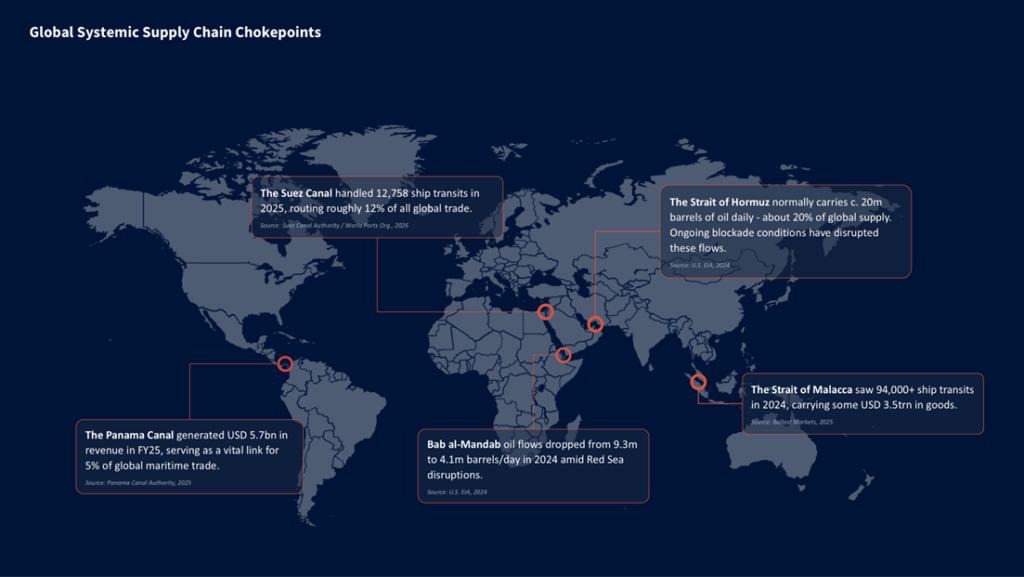
The war in Ukraine and acceleration of international sanctions against Russia since 2022, the attacks in the Red Sea since 2023, and the closure of the Strait of Hormuz earlier this year have disrupted both northern routes through Russia and southern routes through the Suez Canal and Iran. In this context, freight volumes along the Middle Corridor are projected by the World Bank to reach 11 million tonnes by 2030, up from 4.1 million tonnes in 2024.
According to China’s General Administration of Customs, trade between China and the five Central Asian republics of Kazakhstan, Kyrgyzstan, Tajikistan, Turkmenistan, and Uzbekistan has exceeded USD 100bn for the first time in 2025, reaching USD 106.3bn, a 12% increase from the previous year. The number of legal entities with Chinese participation in Kazakhstan increased from approximately 1,200 in 2019 to more than 4,100 by May 2025 and further to around 8,000 by January 2026, according to Kazakhstan’s Bureau of National Statistics. In Uzbekistan, as of early 2026, over 5,000 enterprises with Chinese capital were reportedly registered, more than for any other foreign investor in the country.

Source: Trans-Caspian International Transport Route (TITR)
To consolidate their dominant position, Chinese firms are expanding beyond trade and infrastructure into mining, manufacturing, and value-added processing projects, helping to secure China’s long-term resources-security objectives while increasing their integration into local economies. In June 2026, Kazakhstan, Hong Kong and China signed 42 commercial agreements and four intergovernmental memoranda to deepen cooperation across aviation, finance, technology, logistics, and sustainable development.
But as Chinese companies and investors align more closely with local development objectives via sustained financing and technology transfer, they also become more directly exposed to a risk environment that remains characterized by political power concentration, relative regulatory uncertainty, and opaque patronage networks.
China’s industrial push
The development of artificial intelligence, clean energy technologies, and advanced manufacturing has significantly increased demand for critical minerals such as lithium, rare earths, cobalt, and uranium.
Central Asia holds a notable share of global reserves in several essential minerals, including 38.6% of manganese ore, 30.1% of chromium, 20% of lead, 12.6% of zinc, 8.7% of titanium, 5.8% of aluminum, 5.3% each of copper and cobalt, and 5.2% of molybdenum, according to a Hague Research Institute’s report. Kazakhstan alone holds 14% of global uranium resources and is, according to the World Nuclear Association, responsible for 40% or the world’s total uranium production. Data compiled by The Oxus Society’s Central Asia Resource Tracker shows that China absorbs just under half of Central Asia’s critical mineral exports.
Historically, China’s engagement with the region focused on infrastructure and energy imports. Today, Chinese firms are increasingly investing directly into manufacturing, processing facilities, and resource extraction projects. This is driven in part by the complementary strengths of the two sides.
While Central Asia possesses abundant reserves of hydrocarbons and critical minerals, its industrial base often lacks the processing capabilities needed to convert raw materials into higher value-added products. As a result, Central Asian governments have increasingly turned to Chinese firms to expand domestic processing capacity and accelerate industrial and technological development. Several recent flagship projects illustrate this trend.
In 2025, China National Machinery Industry Corporation served as the lead contractor for the construction of a modern soda ash plant in Kazakhstan. The project utilized Chinese technology and equipment to process locally sourced limestone and salt, helping Kazakhstan reduce its dependence on imported soda ash and develop export capacity. The project also supported the growth of downstream industries, including glass and construction materials, via the development of an industrial cluster.
In 2024, Kazakhstan’s KAZ Minerals Smelting LLP reached an agreement with China Nonferrous Metal Industry’s Foreign Engineering and Construction Co., using copper concentrate sourced from Kazakhstan’s Bozshakol and Aktogay mines and Chinese engineering expertise, equipment and construction capabilities. The smelter is expected to enable Kazakhstan to produce higher-value products such as copper cathodes and refined precious metals, and create more than 1,000 jobs.
Global competition
Central Asia’s economic dependence on Russia has significantly diminished in recent years, often to the benefit of China. For most of the post-Soviet era, the region’s hydrocarbons continued to go through a network designed to serve the needs of the Soviet Union. Since Russia’s invasion of Ukraine in February 2022, sanctions, financing constraints, and Russia’s growing economic challenges have reduced Moscow’s ability to support overseas projects at the same scale as before, creating opportunities for other external actors to expand their presence in the region.
In March 2026, Kazakhstan turned to China-based Harbin Electric International to continue construction of the Ekibastuz GRES-2 power station, which was originally assigned to Russia, after Russian contractors were unable to proceed due to financing difficulties. Similarly, in 2025, financing difficulties led Kazakhstan to withdraw three power plant construction contracts from Russian state-owned utility Inter RAO. The projects in Kokshetau, Semey, and Oskemen were subsequently awarded to Chinese contractors.
In December 2024, Rosatom, a Russian state-owned nuclear energy corporation, transferred stakes in multiple Kazakh uranium assets to Chinese state-owned firms. As reported by Mining Technology, this was because Western sanctions on Russia complicated uranium sales to Western buyers. The transaction further increased China’s presence in one of the world’s most significant uranium-producing regions.
But beyond China, the Iran war has forced many countries to think harder about their resources and energy security strategies.
For instance, Japan, which relies on the Middle East for over 90% of its crude oil, has been seeking alternative sources from the US, Central Asia, South America and Canada. It is also proposing to strengthen the Middle Corridor through infrastructure, logistics and customs-support initiatives, with the intention to enhance supply-chain resilience and secure access to energy and critical mineral resources from Central Asia.
The EU and the US have also increased their focus on the region. As geopolitical tensions between China and the West deepen, the EU and the US see raw material diversification and supply chain resilience as a strategic sovereignty imperative, especially at a time when Beijing resorts to export control on critical raw materials (“CRMs”).
With Central Asia as its key upstream source, China remains the dominant processor of many critical minerals, accounting for approximately 74% of lithium refining, 76% of cobalt refining, 94% of graphite processing, and more than 80% of rare-earth refining worldwide, according to the Global Critical Minerals Outlook 2026 released by the International Energy Agency. It also accounts for approximately 60% of global magnet rare earth mining output, 91% of rare earth separation and refining capacity, and 94% of permanent magnet manufacturing.
China introduced two rounds of export controls on rare earth elements in April and October 2025, citing national security concerns. The second round of measures has since been suspended until November 2026. According to a statement by the European Parliament, the controls have adversely affected the EU, whose digital, green, and defense sectors depend heavily on a stable supply of rare earth materials. Similar concerns have been raised in the US. As reported by The New York Times, manufacturers in both the US and Europe have faced difficulties securing sufficient rare earth supplies from China. These materials are essential for a wide range of strategic industries, including electric vehicles, wind turbines, semiconductors, computer displays, and military equipment.
The EU signed strategic Memoranda of Understanding with Kazakhstan and Uzbekistan in 2022 and 2024, respectively, to secure stable supplies of CRMs. Introduced in 2021, the EU’s Global Gateway Strategy highlights Central Asia as a cornerstone of diversification away from China and Russia. As part of this effort, the EU also unveiled a EUR 12bn investment package for Central Asia in 2025, supporting projects in transport infrastructure, critical mineral value chains, digital transformation, and sustainable water-energy-climate cooperation. Similarly, in February 2024, the US launched the C5+1 Critical Minerals Dialogue with the five Central Asian states, aiming to deepen cooperation on geological exploration and the development of resilient critical mineral supply chains.
In this context, several key considerations for investors and corporations active in Central Asia remain.
Political power concentration. In Kazakhstan, the constitutional changes and replacement of key officials under President Kassym-Jomart Tokayev – enacted under the banner of increased checks and balances – have not served to loosen his grip on political power. According to the mission of the Organization for Security and Cooperation in Europe (OSCE) who observed the August 2026 parliamentary elections, genuine political and media pluralism remain limited in the country. The newly launched pro-presidential party, Adilet, won just over 71% of the vote and therefore dominates the new Kurultai. In July 2026, Kazakhstan’s Constitutional Court cleared Tokayev to seek another seven-year presidential term beginning in 2029, when his current presidential term ends. He has not yet confirmed whether he intends to run.
Similar centralizing trends are visible elsewhere in the region. Kyrgyzstan’s 2021 constitutional changes shifted the country back towards a presidential system and weakened parliament; the OSCE found that the associated presidential election was dominated by one candidate who benefited from substantially greater resources and the misuse of administrative advantages. Subsequent restrictions on foreign-funded civil-society organizations and critical media have further reduced independent scrutiny.
In Uzbekistan significant economic liberalization has gone hand-in-hand with continued political concentration. Its 2023 constitution extended the presidential term from five to seven years and reset the term count, enabling President Shavkat Mirziyoyev to stand for further terms. The OSCE concluded that both the constitutional referendum and subsequent presidential election lacked genuine political pluralism or meaningful alternative viewpoints.
For investors, the centralization of authority may facilitate rapid approvals but increases key-person, policy-reversal and politically influenced enforcement risks.
Corruption and patronage networks. Kazakhstan rose from 124th to 88th place in Transparency International’s Corruption Perceptions Index between 2018 and 2024 but then slid back into 96th place in 2025, with a score of 38 out of 100. Corruption continues to hinder efforts to optimize public spending, professionalize public administration, and boost efficiency, according to Transparency International. Informal patronage networks remain a feature of Kazakhstan’s political system. These networks are based loosely on political loyalty and family, regional, and ethnic ties and have been realigned since January 2022. The structure and dynamics of these networks remain largely obscured from public view.
Similar trends are observed elsewhere in Central Asia. Uzbekistan’s corruption perception rating has been deteriorating since 2023 after a decade on an upward trajectory. The country currently scores 31 out 100 and is ranked 124th out of 182 countries. Kyrgyzstan’s current score of 26 out of 100 and 142nd place is a small year-on-year improvement from 2024 but an overall deterioration since 2020 when it scored 31 out of 100.
Foreign investors should exercise particular caution in sectors such as energy, construction and infrastructure, where entrenched political and commercial interests can heighten exposure to opaque decision-making and regulatory intervention. Newer sectors such as technology, fintech and AI may be less exposed to these established networks, though broader governance risks remain.
Legal and regulatory environment instability. Though some protections have been enacted for foreign investors in many Central Asian countries, their implementation remains uneven. Investors continue to report inconsistent interpretation of legislation, high levels of bureaucracy and difficulty enforcing decisions, particularly when disputes engage strategic assets, state-owned enterprises or politically connected parties.
For example, in Kazakhstan, uneven and arbitrary enforcement, shifting rules, retroactive penalties, and state intervention remain common, particularly in major economic sectors. The Astana International Financial Centre (“AIFC”) courts are formally independent from Kazakhstan’s justice system and generally function as such. There has, however, been a recent example of Kazakh state intervention in a high-profile AIFC case. In May 2026, the independent AIFC Court ruled to recognize and enforce a USD 1.4 billion Swiss International Chamber of Commerce arbitral award in favor of Ukrainian state-owned Naftogaz against Russian state-owned Gazprom. Following the ruling, Kazakh Justice Minister Yerlan Sarsembayev publicly stated that the court’s decision would not be enforced in Kazakhstan, arguing that the AIFC Court lacked jurisdiction in the case. In August 2026, the AIFC Court of Appeal allowed Naftogaz to appeal the lower court ruling that blocked the enforcement. The case is ongoing.
Grassroots opposition. Despite regional players actively courting foreign investors and China being a key pole in its multi-vector foreign economic policy, local populations occasionally protest against perceived economic reliance on Beijing, with job security, environmental standards, human rights, and land ownership among their chief grievances.
Grassroots opposition is particularly relevant to mining and infrastructure projects where communities perceive that environmental costs, employment benefits and access to land or water are distributed unfairly. In Tajikistan, communities near mining projects operated by China’s Zijin Mining Group have reported severe air pollution, worsened water quality, and loss of grazing land for livestock. Complaints regarding working conditions, wage levels, and the perceived preference for Chinese employees over local workers have also emerged.
In Kyrgyzstan, according to a Research Center for Security and Geopolitical Studies’ report, public attitudes toward Chinese investors have been mixed. Residents near certain gold deposits have opposed Chinese involvement, resulting in incidents such as the burning down of a mining company’s office in the Toguz-Toruu district. Local investors have also expressed concerns that coal fields development projects in Tegene and Sulukta have been disproportionately awarded to Chinese companies.
Dumping and unfair competition concerns. The spillover of low-price competition is becoming a notable issue in several Central Asian markets. Some Chinese companies have been accused by local competitors of pursuing aggressive pricing strategies to capture market share rapidly.
In Uzbekistan, a Chinese-owned cement plant was fined UZS 4.9bn (USD 406,330) in 2024 for dumping and unfair competition after local producers alleged that it was selling products below cost.
In October 2025, PetroCouncil, an association of 150 Kazakh oil service providers, published an open letter urging the government to curb Chinese companies’ dumping behaviors, alleging that some of them offered services at prices 70% below market rates.
A service of 

Navigate complex markets and risk with confidence. Today
Global due diligence specialists helping you stay ahead of uncertainty.