What Arkenu’s rise and (apparent) fall reveals about Libya’s political economy


- Libya’s oil output approaches pre-2011 levels as sector reopens to investors
- Oil shipments linked to Arkenu continue despite government-ordered suspension
In February 2026, Libya concluded its first public oil and gas licensing round in 17 years, awarding five of 20 onshore and offshore blocks to international energy companies, including Eni, Chevron and Repsol.
The reopening of upstream opportunities is a strong indicator of the country’s improving investment accessibility, which is being supported by current geopolitical events.
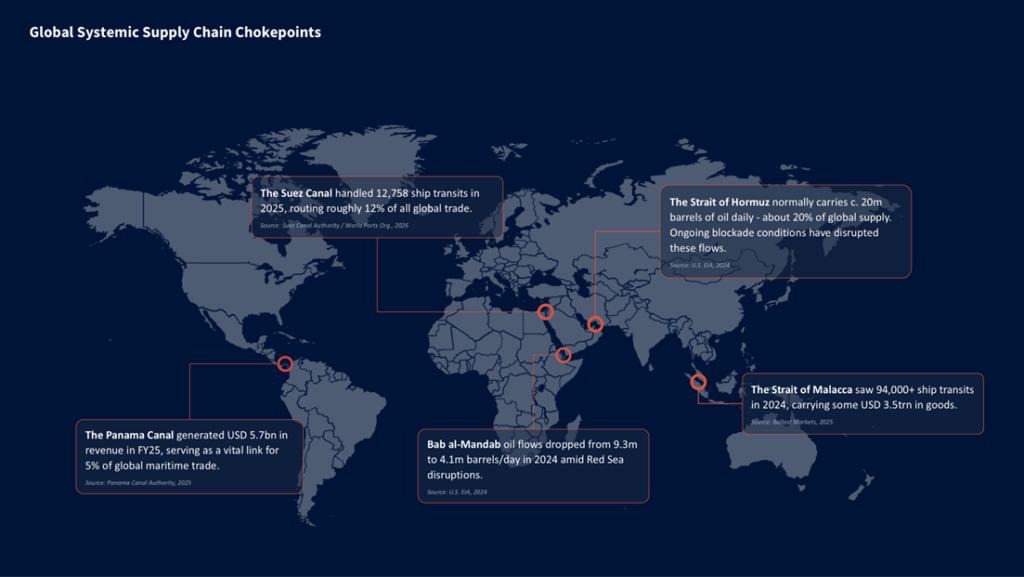
The war involving Iran and the disruption of transit through the Strait of Hormuz have tightened global supply, pushing oil prices higher and redirecting demand toward alternative producers. Libya, with its light, sweet crude and relatively short shipping routes to Europe, has become increasingly competitive as refiners seek alternatives to disrupted oil shipment from the Gulf region.
National production has risen to approximately 1.4 million barrels per day (bpd) in 2026, approaching pre-2011 levels of around 1.6 million bpd. This follows a prolonged period of disruption during which output collapsed to as low as 300,000 bpd between 2014 and 2020, before stabilizing above 1.2 million bpd following the 2020 ceasefire between Libya’s conflicting parties.
However, the increase in output does not reflect a resolution of Libya’s political divisions, but rather a fragile arrangement that allows production to continue despite the divisions.
Oil generates more than 90% of the country’s income, as per the Libyan central bank’s data, and how that income is distributed shapes power, security, political and economic access. Therefore, hydrocarbons operate less as a conventional commodity and more as the financial foundation of the economy, with risks in the oil sector extending across other sectors.
This dynamic is best understood through the rise of Arkenu Oil Company, Libya’s first private oil company.
Arkenu and the political economy of Libya
Established in Benghazi in early 2023, Arkenu’s swift ascent reveals how Libya’s political economy operates, and how rival centers of power use access to oil for political bargaining.
Within a year of its foundation, the company secured upstream access and commercial relationships, including a partnership with state-owned Arabian Gulf Oil Company (“AGOCO”) as well as commercial ties to international oil services firms and commodity traders that would ordinarily be out of reach for a newly formed private firm.
At the centre of Arkenu’s model is its 2023 agreement with AGOCO, a subsidiary of the National Oil Corporation (“NOC”) responsible for operating two of Libya’s biggest oilfields, Sarir and Mesla. Under this agreement, Arkenu was tasked to undertake production enhancing work at Sarir and Mesla.
However, as reported in the media, rather than receiving conventional cash payments, the company is compensated in crude oil. This payment-in-kind mechanism, effectively a proxy monetisation structure, allows Arkenu to convert state-owned hydrocarbons directly into revenue through international sales.
The scale of these flows is significant. The UN Panel of Experts on Libya reported in March 2026 that the company may have generated upwards of USD 3bn in export revenues between October 2024 and February 2026.
A product of political bargaining
Arkenu emerged from a broader process of political bargaining between Libya’s rival centres of power.
On one side stands Field Marshal Khalifa Haftar (“Haftar”) and his network, rooted in a coalition of former Gaddafi-era military figures, tribal alliances, and a family-based patronage system centred on his sons, particularly Saddam Haftar (“Saddam”), who has been identified by the UN Panel of Experts on Libya as exercising indirect control over Arkenu through proxies.
On the other side is Prime Minister Abdul Hamid Dbeibeh (“Dbeibeh”), a Misrata-based businessman who rose through state-linked construction and development firms under Gaddafi and now heads the internationally recognized Government of National Unity (“GNU”), which retains partial control over Libya’s formal financial architecture, including the Tripoli-based NOC and Central Bank.
These two camps are not simply political rivals but represent distinct and interdependent systems of power: Haftar controls territory and military force over oilfields, while Dbeibeh controls legal authority and financial flows.
This division created a structural deadlock at the heart of Libya’s oil economy. Haftar’s forces control most of the country’s oil infrastructure and fields in the east and south, giving them physical leverage over production. At the same time, oil cannot be legally exported without passing through the NOC, and revenues are formally deposited into the Central Bank in Tripoli, which falls under the influence of the GNU.
This asymmetry forced both sides into negotiation. Haftar could shut down oil production through blockades, as he repeatedly has in the past, while Tripoli could deny eastern actors access to state revenues. The result was an informal agreement: continued oil flows, to ensure state revenues for the GNU government, in exchange for some level of access to revenue and reconstruction funds for Haftar and his eastern-controlled authorities.
In this context, Arkenu functioned as an intermediary structure. It bridged state-controlled oil production with privately captured revenue streams, enabling multiple centres of power to extract value without resolving underlying questions of sovereignty or control over Libya’s oil sector. In doing so, it formalised practices that had previously operated through fragmented smuggling networks and informal arrangements.
Arkenu’s corporate records may on paper suggest affiliations with state entities, particularly AGOCO, implying legitimacy and lowering perceived counterparty risk. Yet in practice, such arrangements are nothing but a negotiated political settlement rather than clear ownership or authority.
Scrutiny and limited enforcement
Arkenu’s short-lived stability came under pressure in March-April 2026, following the publication of the above-mentioned UN Panel of Experts’ report on Libya.
The report alleged that Arkenu was involved in oil smuggling and corruption implicating senior figures across both rival administrations. These findings triggered public backlash and intensified political pressure to dismantle both the company and the arrangements underpinning it.
The report also highlighted a broader pattern: oil traders and shipping firms involved in Libyan crude exports had been circumventing enhanced due diligence through complex and opaque corporate structures.
This opacity allows politically connected networks to capture revenue at different stages through contracts, cargo allocations, and resale margins, effectively “sharing” the profits. At the same time, if questions arise, responsibility is deflected and accountability is diluted, as each party point the blame on each other or at another entity within this network.
In the Arkenu case, once public scrutiny intensified following the publication of the UN Panel of Experts’ report, PM Dbeibeh, despite having previously facilitated Arkenu’s agreement with the AGOCO, instructed the NOC to suspend Arkenu’s oil arrangements and blamed Arkenu’s affair on Haftar’s camp. Dbeibeh’s decree of 2 April 2026 mentioned the public outcry against Arkenu’s agreement as one of the main reasons for the suspension order, as reported.
Yet in Libya, orders and enforcement are not the same. Subsequent leaks and media reports suggested that, in late April 2026, oil exports linked to Arkenu continued despite the suspension order.
In practice, the NOC, as the only entity legally permitted to market and sell Libyan crude, continued to carry out exports, with leaked documents indicating a shipment was attributed to Arkenu after the suspension order, and subsequently transferred to a European commodity trading firm for onward sale and monetization for the benefit of Arkenu.
The fact that Arkenu continued to operate after suspension demonstrates how adaptable Libya’s power-sharing agreement is. In a system defined by overlapping mandates, divided sovereignty, and negotiated compliance, formal restrictions are applied inconsistently and often function as instruments of signalling to domestic audiences, rival factions, or international partners, rather than as definitive expressions of control, with workarounds emerging quickly when rules threaten entrenched interests.
Arkenu itself may not survive in its current form, particularly given the political scrutiny and formal attempts to suspend its contracts. However, the conditions that enabled its emergence remain in place. Unless the underlying imbalance, where one side controls oil production and the other controls revenue, and the political division are resolved, similar intermediary mechanisms are likely to reappear, whether under the same name or through new entities.
Conclusion
Libya’s energy sector cannot be understood through a conventional regulatory or commercial lens. Formal licensing and government alignment may suggest stability but in fact reveal little about where control sits. As Libya remains divided, control over its oil is split between armed actors aligned with Haftar, who hold the oilfields, and Dbeibeh’s administrative institutions that oversee exports and revenues.
As a result, the impact of political decisions depends on whether they are accepted and enforced by the political powers that control territory, infrastructure, and money. In practice, the system adapts: when one channel is blocked, another emerges.
In this context, the critical questions are not who owns a company on paper, but who protects it, under what conditions and who ultimately benefits, and for how long.
Elections in Libya initially scheduled for 2021 have been repeatedly delayed, as the main political actors have little incentive to risk losing power or access to resources. In the near term, Libya is settling into a fragmented but workable arrangement, where rival sides keep the system running and oil flowing through informal deals.
Arkenu’s rise as the only private oil company to break through Libya’s oil sector shows how access to hydrocarbons can be mediated through hybrid arrangements that blur the lines between state mandate and private business.
This dynamic extends well beyond the energy sector into construction, transport and logistics, banking, and trade finance, where politically exposed actors frequently operate through layered corporate structures, proxy ownership arrangements, and offshore vehicles.
As the Arkenu case demonstrates, the decisive risk is not legal or reputational, it is political, and often invisible until it is under public scrutiny.
A service of 

Navigate complex markets and risk with confidence. Today
Global due diligence specialists helping you stay ahead of uncertainty.