Debtwire LatAm showcases contributions, achievements and observations of outstanding leaders – Trailblazing Women


To mark International Women’s Day, the ION Analytics team, including reporters and analysts at Creditflux, Debtwire, Mergermarket, Dealreporter, Cybersecurity Law Report, Hedge Fund Law Report, Private Equity Law Report, and Anti-Corruption Report have interviewed outstanding women in their respective jurisdictions and fields.
It is our honor to highlight these women and their accomplishments and contributions to their industries and share some of their insights and perspectives. These lawyers, advisors, and consultants from around the world specialize in private equity, restructuring, mergers and acquisitions, hedge funds, anti-corruption, data privacy, and more. We hope these remarkable women inspire you as much as they do us.
In this article, Lucy Monteiro and Clara Agustoni profile notable women in the debt restructuring field in Latin America, including (i) Gabriela Avendaño Fernández, partner at Sainz Abogados (Mexico), (II) Analía Battaglia, partner at Bruchou & Funes de Rioja Abogados (Argentina), (iii) Monica Maria Costa Di Piero, Judge of the First Chamber of Private Law of the Rio de Janeiro Court of Appeals (Brazil), (iv) Tatiana Flores, partner at LDCM Advogados (Brazil).
Gabriela Avendaño Fernández
Partner, Sainz Abogados (Mexico)
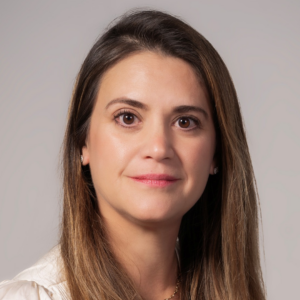
Gabriela Avendaño Fernández joined Sainz Abogados in 2009 and has been a partner since 2023.
She has more than 15 years of professional experience and her practice focuses on insolvency, restructuring and bankruptcy, as well as corporate reorganizations, sale and purchase of assets in complex or special situations and financing matters representing clients from diverse industries, domestic and foreign, creditors and debtors.
She has participated in numerous complex cross-border restructuring matters, including insolvency and restructuring proceedings under Chapter 11 and Chapter 15 of the US Bankruptcy Code with respect to Mexican debtors.
Avendaño Fernández has worked on high-profile cases such as Braskem Idesa, Operadora de Servicios Mega, Tangerine Pomelo Group and Oro Negro.
Do you believe that gender has played a role, either negatively or positively, in your career path and opportunities?
Yes, gender has shaped my career – not only through visible barriers, but in the subtle, everyday realities that define a woman’s professional journey.
Throughout my path, I became aware of the nuanced expectations women often navigate: how visible we need to be to be perceived as fully committed, how assertive we can be without being labeled differently, and how we balance ambition with other dimensions of our lives. These dynamics are rarely explicit, yet they influence how we are evaluated and how confidently we move forward.
Motherhood has been one of the most defining parts of my life. Raising three children while growing toward partnership required resilience, discipline, and constant prioritization. There were moments when I questioned whether I could sustain both at the level I demanded of myself. I have had to continuously recalibrate how I work, set priorities, and define success on my own terms.
What has evolved over time is not my ambition, but my understanding of it. I focus on depth over display, substance over visibility, and long-term value over short-term perception. I managed my time strategically, concentrated on outcomes that matter, and developed resilient, trust-driven teams capable of excelling under pressure. Those decisions were not about scaling back; they were about building a model that allowed me to excel sustainably and on my own terms.
I became partner 14 years into my career, and I was the first woman to do so in my firm. That achievement reflects perseverance, but it was never an individual effort.
My firm, my partners, associates, and the broader team evolved together. One of the most decisive factors in that journey was sponsorship – having senior leaders who genuinely advocate for you and mention your name in rooms you are not yet in makes an extraordinary difference. Women are still less likely to receive this type of advocacy, and without it, advancement becomes significantly harder.
It is also important to recognize that women navigate very different realities. Some have strong support networks; others carry significant caregiving responsibilities, whether alone or with a partner. Some benefit from institutional flexibility; others do not. These differences shape professional paths in ways that are often invisible from the outside.
Gender has shaped my experience – sometimes through real constraints that required additional resilience and patience. But it has also shaped my strength. It pushed me to define leadership in a way that is intentional, sustainable, and deeply aligned with who I am. Ultimately, that has been one of the greatest advantages of my career.
Is there a particular woman who has been an influence/inspiration to you in your career, and what have you learned from her?
I cannot point to a single woman as my defining inspiration. Instead, I have been shaped by several women at different stages of my life – and by the different leadership models they embodied.
Early in my career, I was fortunate to encounter extraordinary women who supported me and helped shape how I approach work and life. They were outstanding professionals who genuinely loved what they did, yet they were equally committed to other dimensions of their lives. Seeing that balance so early on was powerful. It showed me that the kind of leader I admired did not necessarily fit the traditional mold often associated with our sector.
At the same time, I also experienced leadership styles that did not resonate with me. In some environments, authority was confused with harshness, or strength with relentless competitiveness. I observed practices that felt unsustainable for the long term or disconnected from the kind of professional – and person – I aspired to become. Those contrasts were clarifying, teaching me what I did not want to replicate.
Over time, I realized that effectiveness does not require adopting rigid or overly aggressive behaviors. I did not need to be excessively competitive, authoritarian, or constantly severe to earn respect. I could lead as myself – ambitious and demanding, yet collaborative, fair, and human.
My leadership identity has been shaped primarily by the women I have had around me. Their example, combined with lessons learned from contrasting styles, helped me develop a leadership approach that feels authentic and sustainable. Today, we have the opportunity – and responsibility – to move beyond outdated leadership templates.
Rather than conforming to inherited models, we can embrace a style that aligns with our values, strengthens our teams, and enables meaningful, long-term impact.
What leadership qualities do you think female professionals bring to the restructuring profession that are sometimes overlooked?
Female professionals bring leadership qualities to restructuring that are often less visible, particularly in high-stakes, fast-evolving environments where companies in distress require immediate, strategic, and multidisciplinary responses.
Restructurings today are significantly more sophisticated and complex. They require the seamless integration of complex and interdependent dimensions, shaped by the industry, the stakeholders involved, and the nature of the distress itself. Success depends not only on technical expertise, but on the ability to design and execute a coherent strategy while coordinating multiple disciplines with precision.
In that context, leadership becomes less about isolated negotiation skills and more about orchestration. The ability to synthesize complex information, anticipate interdependencies, and align diverse stakeholders under intense time pressure is critical.
Deep listening, careful observation, analytical rigor, and structured coordination are not secondary traits – they are central to preserving value for stakeholders.
Increasingly, collaborative and emotionally intelligent leadership proves particularly effective in these environments. Conflict management, situational awareness, adaptability, and clear communication are not “soft” skills – they are strategic competencies. In distressed scenarios, where relationships often extend beyond a single transaction, these capabilities directly influence both efficiency and the durability of outcomes.
Even with the exceptional skills women bring to restructuring, senior leadership roles – particularly in high-profile negotiations – remain heavily male-dominated. This is not a question of talent or drive, but of systemic constraints that continue to slow women’s advancement. Women navigate these dynamics with deliberate strategy and resilience, transforming complexity into clarity and potential obstacles into opportunities for value creation.
As restructurings become more intricate and multidimensional, leadership should not be defined by who speaks the loudest in the room. It should be measured by who can integrate disciplines, align competing interests, maintain credibility across stakeholders, and deliver durable solutions under pressure. Many women develop these capabilities through a combination of rigorous professional experience and the complexity of responsibilities they navigate outside the office.
These are precisely the areas where female professionals consistently add extraordinary value – and where the profession as a whole benefits from strategic, inclusive, and sophisticated leadership.
Analía Battaglia
Partner, Bruchou & Funes de Rioja Abogados (Argentina)

Analía Battaglia joined Bruchou & Funes de Rioja Abogados in 1994, becoming the first female partner of the firm in 2005.
She has extensive expertise in corporate finance, lending, debt restructurings, acquisition financing, financing of infrastructure and energy projects – including transactions under the Argentine renewable energy programs – trade financings and project finance transactions, representing banks, multilateral entities, and multinational companies in the infrastructure, oil & gas, agribusiness and public utility sectors.
Battaglia led complex cross-border transactions, advising clients across industries including national and international clients, investment banks, and multilateral entities. Her expertise spans syndicated loans, project finance, debt restructuring, and renewable energy programs.
In 2025, she led the team at Bruchou that advised initial purchasers on the issuance of USD 600m, 6.375% notes due 2032 by Arcos Dorados. The issuance ran in parallel with a tender offer funded by the proceeds of this transaction.
Battaglia also led a team that advised the International Finance Corporation, IDB Invest, IDB and Rabobank, as lenders, in a USD 100m project finance granted to San Miguel Global, the largest citrus exporter in the Southern Hemisphere. In 2024, she advised on the refinancing of this deal, which involved the release of mortgages granted in the original transaction and the creation of new security interest.
Do you believe that gender has played a role, either negatively or positively, in your career path and opportunities?
Gender has undoubtedly played a meaningful role in my career path, bringing significant challenges. Historically, the banking and finance sector in Argentina has been largely male-dominated. While recent diversity initiatives have started to address longstanding gender bias, women have historically navigated structural barriers within the industry. A similar pattern has been reflected in the banking and finance practice groups of leading law firms, where female representation at senior levels remained the exception rather than the rule.
In the early stages of my career, I was often the only woman in the room, leading negotiations with male counterparts from the financial and legal sectors. Confidence in my abilities, combined with unwavering dedication and sustained hard work, ultimately led to my appointment as the firm’s first female partner in 2005, at a time when gender diversity was not yet a priority in Argentina.
A further challenge of particular significance came up in 2000, when I became the first attorney at the firm to reconcile the demands of motherhood with full professional engagement. Discipline, the support of my husband, the backing of partners who genuinely believed in a meritocratic system, and a clear vision of my professional goals were decisive in enabling me to become the firm’s first female partner after having children – and the only female partner in the Banking & Finance practice at the firm ever since. This experience prompted me to contribute to the development of the firm’s pioneering maternity policy, which introduced flexible working arrangements – including part-time and flexible full-time options – and ultimately became a benchmark within the Argentine legal market.
For genuine equality of opportunities for women, it is important that the law firm embrace a clear mandate of inclusion, one that actively addresses gender-based bias, provides technological tools to facilitate a sustainable balance between professional and family life, and proactively promotes women empowering them to pursue leadership positions.
Is there a particular woman who has been an influence/inspiration to you in your career and what have your learned from her?
When I began practicing in the 1990s, I was often the only woman at the table. It was highly uncommon to find women in leadership positions in banks or practicing within the banking and finance legal sector. As a result, I did not have female role models to look to for inspiration. I therefore relied on my intuition, disciplined work ethic, and confidence in my abilities to achieve my professional goals.
After becoming a partner, and as diversity initiatives began to address longstanding gender bias, I have been inspired by the many young lawyers committed to supporting other women’s professional growth and advancing gender parity. I firmly believe that fostering a sense of solidarity among women (often referred to as “sorority”) is essential. Encouraging female associates to take the next steps in their careers through mentorship, visible role modelling, and meaningful support in achieving their professional goals is critical for building a more inclusive banking and finance legal market.
While there is still a long way to go, meaningful progress has been made over the past decade in narrowing what is often described as the female “dream gap.”
What leadership qualities do you think female professionals bring to the restructuring profession that are sometimes overlooked?
Empathy is a fundamental quality of effective leadership, particularly in its capacity to embrace diverse viewpoints and engage constructively with individuals across professional and social contexts. In complex institutional environments such as law firms and financial institutions, the capacity to listen, negotiate, and build consensus is indispensable. Women develop these competencies by navigating multiple and overlapping responsibilities – professional, familial and social – which enhance their capacity to manage competing priorities and engage with a broad spectrum of counterparts. This experience frequently translates into strong consensus-building skills and highly adaptive leadership.
Discipline and attention to details are other leadership qualities that female lawyers bring to the profession. Despite meaningful progress in recent years, women often continue to face the implicit expectation of demonstrating a level of dedication and commitment to work equal to that of their male counterparts. In particular, for women lawyers who become mothers, the need to manage multiple responsibilities simultaneously fosters a strong capacity for multitasking, handling diverse matters at once while maintaining focus, precision, and unwavering commitment to their job.
Monica Maria Costa Di Piero
Judge (Brazil)

Monica Maria Costa Di Piero is Judge of the First Chamber of Private Law of the Rio de Janeiro Court of Appeals, with extensive experience in corporate restructuring and insolvency.
She is a member of National Forum on Corporate Restructuring and Bankruptcy (FONAREF), a professor at the School of the Magistracy of the State of Rio de Janeiro (EMERJ), and a published author on judicial reorganization and bankruptcy law.
She holds a Ph.D. from Universidade Federal Fluminense (UFF) and a law degree from the Federal University of Rio de Janeiro (UFRJ).
Costa Di Piero has been actively working on the Brazilian telecommunication company Oi’s bankruptcy protection proceedings since 2016.
Do you believe that gender has played a role, whether negative or positive, in your professional trajectory and in the opportunities you have had?
I am the first child, a daughter. My father, a Public Prosecutor, had a direct influence on my career choice because of the admiration I had for him.
My choice was the result of the love between a father and a daughter. Therefore, gender had a direct influence on my choice and, above all, on the dedication I have to what I do.
My professional path has been marked by great resilience and by the need to reaffirm my individual worth as a daughter and as a woman.
All opportunities were approached as challenges for personal and professional growth, which I balanced with my personal life as a mother and wife – something that, in my view, was a distinguishing factor.
Is there any woman who has been an influence or inspiration in your career, and what did you learn from her?
Not just one. I observe women in their daily lives. The simplest ones inspire me the most.
Simple women who are strong, who do not settle even within the most routine daily tasks, are always influential. They are the source of my inspiration because they show the need to overcome the everyday limits that life imposes on us.
Specifically, therefore, I do not have a particular name in my career. I greatly admire competent, up-to-date women and, above all, women with strong presence in the male-dominated environment in which I work – it is in them that I find inspiration.
What leadership qualities do you think professional women bring to the restructuring profession that are sometimes overlooked?
Intuition is the first. A quality that combines experience and knowledge – and it is very feminine.
On the other hand, a maternal nature brings women a heightened sensitivity to put herself in someone else’s place, an essential and distinguishing factor for good management.
Tatiana Flores
Partner, LDCM Advogados (Brazil)
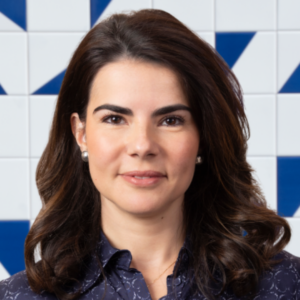
Tatiana Flores is a partner at LDCM Advogados, with more than 20 years of experience representing creditors, investors and financial institutions in complex restructuring, insolvency and distressed M&A matters across Latin America.
She specializes in cross-border workouts, capital markets disputes and bondholder negotiations, combining strong legal and financial analysis with a pragmatic, business-oriented approach.
Flores has led landmark transactions, including the Novo Mundo UPI acquisition, which set new standards for adhesion-based approvals in Brazilian judicial reorganizations, and strategic matters involving Renova Energia, VarigLog and Pilar Gold. She holds an LL.B. and a Master’s in Commercial Law from the University of São Paulo and is a former President of IWIRC Brazil.
Do you believe that gender has played a role, whether negative or positive, in your professional trajectory and in the opportunities you have had?
I would be naive to say gender has not played a role. Early in my career, I was often the only woman in the room, and usually the youngest as well. That meant my competence was sometimes tested more than my male peers’, and I had to work harder to establish credibility with certain stakeholders, particularly in high-pressure restructuring negotiations. Like many women, I have experienced microaggressions, interruptions and subtle attempts to make me question my own value. At different points, some male supervisors tried to undermine my confidence, even when my performance and results spoke for themselves.
At the same time, I have also worked with men who were open-minded, supportive and genuinely committed to meritocracy. Those relationships were important, but my real turning point came when I joined IWIRC (the International Women’s Insolvency & Restructuring Confederation). For the first time, I felt I had a clear place in this community and a powerful support network of women. Those women are far wiser and experienced than I am – they never hesitated to share knowledge, open doors and help me navigate challenges. The very fact that there is a global organization devoted exclusively to women in restructuring, and that IWIRC has been active for more than three decades, is itself evidence that there is still a structural gap to address. The organization works every day to narrow that gap, but it has not disappeared.
Today, I see my gender as one dimension of a broader professional identity: I am a restructuring lawyer who happens to be a woman. That combination, together with the perspective I gained through IWIRC and other networks, has allowed me to bring a distinct lens to complex situations, particularly in capital-markets-driven restructurings and bondholder negotiations, where navigating power dynamics and giving voice to underrepresented stakeholders can make a tangible difference in outcomes. And I know that I am good at it.
Is there any woman who has been an influence or inspiration in your career, and what did you learn from her?
Rather than a famous name, the woman who most influenced me is someone I worked with closely early in my career. She was the general counsel of the client I was working for. Her name is Renata Quartin Barbosa. Interestingly, she did not work in restructuring, but she was decisive at a moment of deep uncertainty and pain in my professional life, when I had just received one of the biggest “no’s” of my career. I will never forget how she “occupied the room:” calm under pressure, technically impeccable, and absolutely uncompromising on ethics.
From her, I learned three things that continue to guide me.
First, “good enough” is never neutral, and in restructuring it is usually costly. A small flaw in the analysis or structure can ripple into years of disputes, value erosion and uncertainty for boards, investors and creditors.
Second, you can be firm and authoritative without losing your humanity. I watched her lead tense negotiations where she was both extremely tough on substance and deeply respectful of the people on the other side of the table.
Third, visibility matters. She insisted that I have a voice in meetings, not just a seat. That taught me to do the same for younger professionals today – especially women – so that the next generation does not have to fight for basic visibility in the way ours did.
Renata gave me a book on leadership, with a powerful and beautiful dedication. I still open that book in moments of inflection and transition, and it continues to remind me of the standard I want to hold myself to as a professional and as a leader. I would not be where I am today without her.
I also cannot answer this question without mentioning the women of IWIRC, and my mentor, Monica Blaker, the most formidable Texan I have ever met. She encouraged me to think bigger about my career, pushed me to trust my own judgment, and backed me as I took the risk of building my own firm. The generosity, strategic insight, and practical support I received from her and from the broader IWIRC network have been fundamental in giving me the confidence to lead, to innovate and to design a career on my own terms.
What leadership qualities do you think professional women bring to the restructuring profession that are sometimes overlooked?
Restructuring is about three things: conflict, uncertainty, and time pressure. In that environment, some qualities that many female professionals bring – and that are still undervalued – become decisive.
First, a different approach to risk and decision-making. Studies on gender-diverse leadership and boards consistently show a more rigorous challenge of assumptions, greater focus on downside protection and a lower tolerance for “wishful thinking” in forecasts and strategy. That is exactly what you need when capital structures are stressed, stakeholders are misaligned and there is very little room for error.
Second, disciplined empathy. Many women in our field are exceptionally good at reading the room – understanding the political, personal and institutional pressures on sponsors, bondholders, banks, employees and regulators – and using that insight to design deals people can actually live with. In large bond restructurings, this often makes the difference between a theoretical solution and one that is truly executable across jurisdictions and investor profiles.
Third, high-signal communication. I see many female leaders who excel at turning complexity into a small number of clear, actionable choices for boards and investment committees. That ability to synthesize – to say “here are the three real options and the trade-offs” – reduces friction, accelerates decisions and, very concretely, protects value.
Finally, team resilience. Distressed deals are long, technical and emotionally draining. Female leaders are often the ones who quietly maintain cohesion, share information, and keep standards high over months or years of work. Those so-called “soft” skills show up very clearly in outcomes: fewer surprises, fewer broken deals, and a much higher likelihood that everyone around the table is still willing to work together on the next transaction.
In other words, what is often seen as “style” is, in restructuring, a source of hard competitive advantage.
A service of 

Start your trial. Today
Explore unlimited content like this, available only in the platform.
Already a client? Sign in