Stone Point sharpens long-term approach, eyes services assets


- Firm employs long-term deal-sourcing methodology known as ‘elephant process’
- Tenth flagship fund closed on USD 11.5bn; expects to make 15-18 investments of between USD 100m-USD 1bn
- Insurance brokerages, fund administration services among recent targets
A methodical approach to deal sourcing is a hallmark of Stone Point Capital’s playbook, but its pursuit of Ultimus showed its ability to play the long game.
When the New York-based private equity firm agreed to invest in the fund administrator alongside GTCR in April, it marked the culmination of a decade-long exploration of the space. The deal speaks to Stone Point’s discipline in waiting for the right moment and its preference for investing in areas where its expertise runs deep.
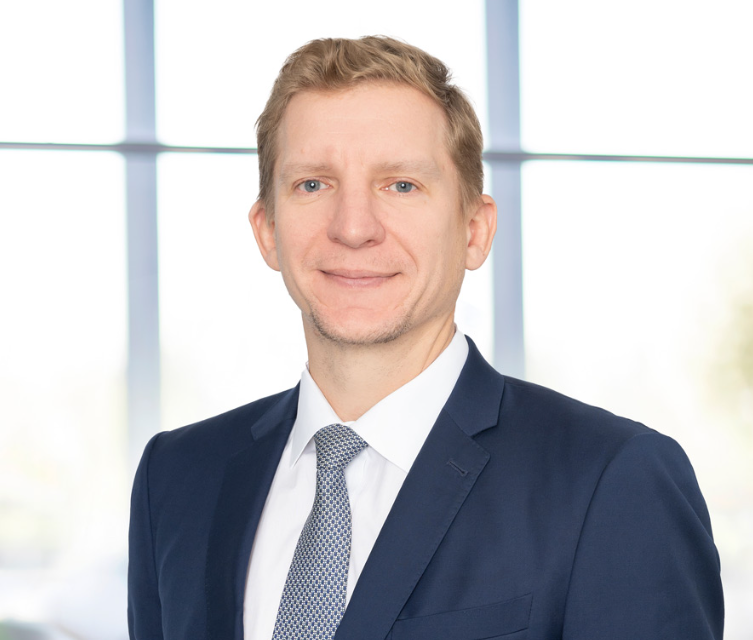
“The situation may not be actionable at the time, but the idea is to do our work well ahead of time, so that we are prepared to act when a situation is actionable,” Nick Zerbib, Stone Point’s co-president and CIO, told Mergermarket. “CEOs, founders, and managers like to talk to people who know their business well.”
The cornerstone of Stone Point’s investment philosophy is known as the “elephant process.” Pioneered by co-CEO Chuck Davis during his tenure at Goldman Sachs, the methodology involves a proactive scouring of opportunities across 10 financial services sub-sectors.
It is an approach that has seen Stone Point develop into one of the leading investors in financial services and related areas over the last four decades. Established as the private equity arm of Marsh McLennan in the 1980s, when it was known as MMC Capital, Stone Point spun out from the professional services giant in 2005 via a management buyout.
Since then, it has amassed over USD 65bn across private equity and private credit. Its PE strategy, known as Trident, has raised ten funds. The firm is currently deploying its tenth Trident fund, which closed in July on USD 11.5bn, exceeding its original target and hard cap of USD 9bn.
So far, Trident X has made two investments. The Ultimus deal was followed in September by an investment in Onex Partners-backed OneDigital alongside CPP Investments, valuing the provider of insurance brokerage, HR consulting and financial services at over USD 7bn. The deal has not yet closed.
The fund is expected to make investments of between USD 100m and USD 1bn across 15 to 18 deals. The sweet spot falls between USD 400m and USD 600m.
Financial services evolution
Both the Ultimus and OneDigital transactions underscore Stone Point’s predilection for services businesses.
Zerbib joined Stone Point in 1998 and has seen the firm through some of its most significant deals and its toughest challenges.
In that time, the financial services landscape has shifted. Zerbib notes that generating PE-like returns in capital-intensive sectors such as banking and insurance underwriting has become increasingly difficult. While Stone Point will still pursue capital-intensive opportunities selectively, its primary focus is on service-oriented investments that generate stronger free cash flow
Ultimus is a case in point. Stone Point plans to make use of its expansive network and experience in the asset management and wealth space to make “strategic introductions to help accelerate the company’s growth,” according to Zerbib.
The firm also sees a long growth runway for the fund administration space. “It requires more scale, it requires more expertise, and there is obviously very significant growth in the variety of private assets that require outsourced administration,” Zerbib added. Insurance brokerages are another key area of interest. In 2024 Stone Point invested in The Ardonagh Group, a United Kingdom-based insurance broker, alongside Madison Dearborn Partners and HPS Investment Partners, in a USD 14bn transaction. A year earlier, Stone Point was part of a consortium of private equity firms that acquired Truist’s insurance brokerage arm, Truist Insurance Holdings (TIH), since rebranded as CRC Group.
After acquiring CRC Group, Stone Point was left holding an insurance business servicing other brokers with a duo of insurance brokers of its own under the CRC umbrella. To mitigate any potential conflicts of interest and focus on the core business of working with other insurance brokers, Stone Point sold CRC’s two brokerage assets, McGriff and Crump, to Marsh McLennan and AmeriLife, respectively. The terms of the Crump deal were not disclosed, but the McGriff sale was valued at USD 7.75bn.
“We were trying to essentially unleash more growth in the wholesale business by exiting the retail insurance brokerage business,” Zerbib said of the process. “So, from a value creation perspective, it worked out quite well.”
Co-invest flexibility
For larger deals, Stone Point typically offers its limited partners (LPs) co-investment opportunities. For instance, in the TIH deal, Stone Point offered co-investment when acquiring an initial 20% stake in 2023 and later when it sought a control position. In total, the sponsor offered USD 4.4bn in co-investment to LPs in 2024.
“I think it gives us the ability to punch above our weight,” explained Zerbib. “It gives us flexibility without raising an outsized fund, and it lets us continue to swing on deals that we like and keep our momentum.”
Meanwhile, in some instances, Stone Point will opt for minority positions, including in parts of the financial services sector where a labyrinth of regulations can complicate PE investment. The 2023 acquisition of Everbank from the Teachers Insurance and Annuity Association of America (TIAA) offers a recent example. The deal, completed alongside Warburg Pincus and Reverence Capital Partners, involved a division of the bank’s assets and operations, with TIAA maintaining control of its trust business.
Still, Stone Point will typically seek control positions and then build on the asset. M&A is a central part of its growth strategy. In 2024, Stone Point completed 100 add-ons for its portfolio companies.
Unlike some peers, Stone Point does not have an internal value creation team. Instead, it taps industry connections made during its elephant process. This allows it to often enter transactions with a list of potential tuck-in targets lined up.
“Our job is to say we will be your outsourced business development team,” said Zerbib. “We are investing in durable businesses and sectors where typically there is an opportunity to consolidate a space where scale is important.”
Exit opportunities
Meanwhile, Stone Point has also kept a steady realization pace. In total, it made three full exits and nine partial exits in 2024, generating USD 8.5bn in distributions to its LPs. Recent majority stake sales include the sale of SunFire to KKR in April 2024, and again in July 2024 by selling a chunk of its position in Safe-Guard Products to Hellman & Friedman.
Stone Point has a mix of options in mind when underwriting its deals, ensuring it understands what types of exit opportunities might exist five years out for a specific business. “Unfortunately, you do not have a perfect crystal ball,” said Zerbib.
The focus is typically on full or partial exits, but more recently Stone Point has been testing the waters in GP-led secondaries. The sponsor is currently pursuing a USD 3bn multi-asset continuation vehicle (CV) for positions it holds in eight assets across several of its funds, as reported. Ardian and Carlyle’s AlpInvest have agreed to anchor the deal, with Evercore advising. The ongoing CV has a mix of majority and minority positions, according to a regulatory filing.
Zerbib declined to comment on the potential CV. However, he said that in circumstances where Stone Point sells a majority position to another sponsor, a CV could allow it to capture any compounding growth from that asset under its new owner without overextending the holding period of the original fund. In other cases, a CV would let Stone Point hold onto its best performers for longer.
A service of 

Your M&A Future. Today
Explore unlimited content like this, available only in the platform.
Already a client? Sign in