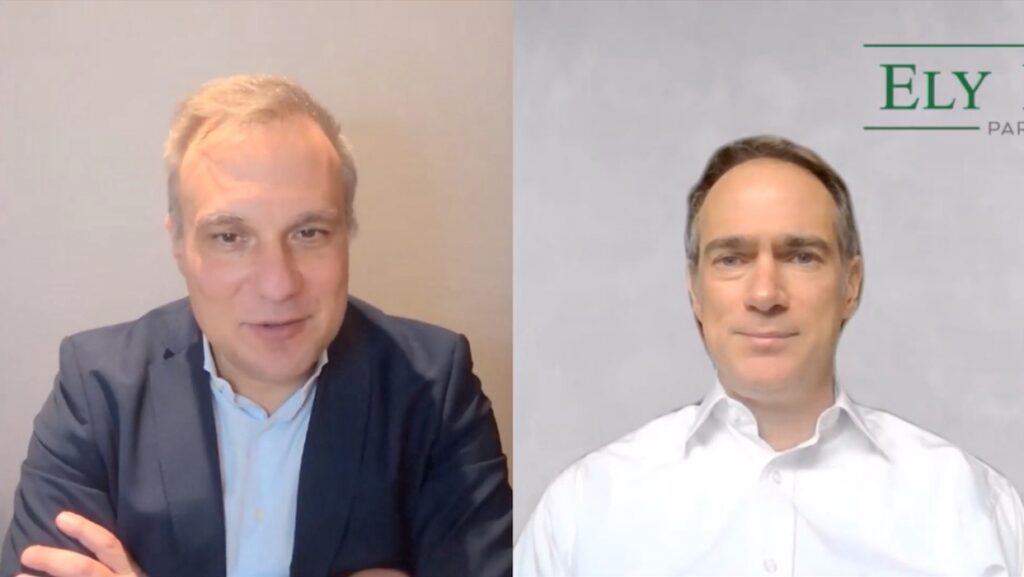
Steve Brotman, Founder and Managing Partner at Alpha Partners, on trends in the tech space


In a recent ION Influencers fireside chat, Steve Brotman, Managing Partner and Founder of Alpha Partners, unpacked how to identify trends in the tech space and navigate the evolving venture capital landscape. Brotman, a “recovering entrepreneur” turned investor with over 25 years of experience, shared actionable insights for founders, investors, and finance professionals. Here are the key topics discussed.
1. The Evolution of Alpha Partners: A Unique VC Model
Brotman started Alpha Partners to solve a critical problem: early-stage VCs often couldn’t reinvest in their own winners as companies scaled. Alpha’s innovative model partners with over 1,000 VC firms, sharing profits and granting access to breakout companies at the growth stage. This “VC’s VC” approach allows Brotman to cherry-pick top-performing deals while rewarding early-stage investors for their risk.
2. Why Growth-Stage Investing Is the “Sweet Spot”
-
Reduced Risk & Duration: Unlike early-stage investing (which can take 10–20 years to mature) or late-stage betting (which depends on IPO cycles), growth-stage investing offers shorter timelines and more predictable outcomes.
-
Data-Driven Decisions: At this stage, companies show tangible metrics—like revenue scaling from $10M to $100M—making it easier to evaluate performance versus early-stage “art critic” speculation.
-
Market Trends: As technology grows from 14% to an estimated 28–50% of global GDP, Brotman argues that exposure to tech is non-negotiable for investors. With fewer public companies, private markets—especially growth-stage—are where outsized returns are increasingly found.
3. How to Spot Winning Tech Trends
Brotman emphasized that successful trend identification hinges on:
-
Category Leadership: The #1 player in a category often generates 10x the returns of #2.
-
Top-Tier Backing: Companies supported by top-quartile VCs have higher persistence of success.
-
Rational Valuations: Paying excessive multiples (e.g., 100x revenue) repeatedly is a recipe for losses—even in high-growth sectors.
He also highlighted the importance of “non-consensus” bets: “The way a GP makes money is to be right when the market thinks you’re wrong.”
4. The Future of Venture Capital: Consolidation vs. Opportunity
While mega-funds like Andreessen Horowitz (with $15B raises) dominate headlines, Brotman doesn’t foresee an Armageddon for smaller VCs. Instead, he believes niche strategies and unique worldviews will continue to thrive. New waves—like AI and crypto—create openings for emerging managers who spot trends incumbents miss. However, trust, track record, and skin in the game remain critical. As Brotman noted, “If you lose LP money, you should get hurt pretty bad.”
5. Advice for Aspiring VCs and Investors
-
Start Early: Begin by investing your own capital or collaborating as a “fundless sponsor” on deal-by-deal bases.
-
Build Trust: To raise a fund, you must convince LPs to lock up capital for a decade—often without a specific portfolio upfront.
-
Find Your Edge: Whether it’s a geographic niche (as Brotman did with NYC’s rise) or a sector specialization, differentiation is key.
-
Show Commitment: Most successful GPs invest the bulk of their net worth in their own funds.
Key timestamps:
00:07 Introduction to ION Influencers
01:52 Understanding Partnerships in Venture Capital
04:52 Current Trends in LP Preferences
06:06 The Growing Importance of Technology in GDP
08:41 The Shift Towards Private Markets
10:35 Growth Stage Investing: A Balanced Approach
12:40 The Competitive Landscape of Growth Investing
18:13 Emergence of Multistage Venture Funds
22:23 Identifying Unique Investment Edges
25:17 Niche Opportunities in AI Investing
29:00 Talent Acquisition in Venture Capital
35:02 The Commitment of a Successful Investor
36:48 Conclusion and Final Thoughts
A service of 

Your M&A Future. Today
Explore unlimited content like this, available only in the platform.
Already a client? Sign in