SQ Capital leverages buyout, AI expertise to compile ‘greatest hits’ of mid-market secondaries


- Firm launched in January 2025, has invested in five deals so far
- Mid-market focus underpinned by less than 15% of GPs utilizing secondaries
- AI supports human judgement of GP-led, LP-led investment opportunities
Global private markets secondaries volume has grown more than sixfold over the past 10 years, reaching a record USD 226bn in 2025, according to Evercore. GP-led transactions account for roughly half the total, but SQ Capital believes certain segments of the market remain underpenetrated.
Despite representing the largest cohort of private equity practitioners on both sides of the Atlantic, fewer than 15% of middle market managers have launched a continuation vehicle (CV) to date, according to Mustafa Siddiqui, founder and CEO of the secondaries investor.
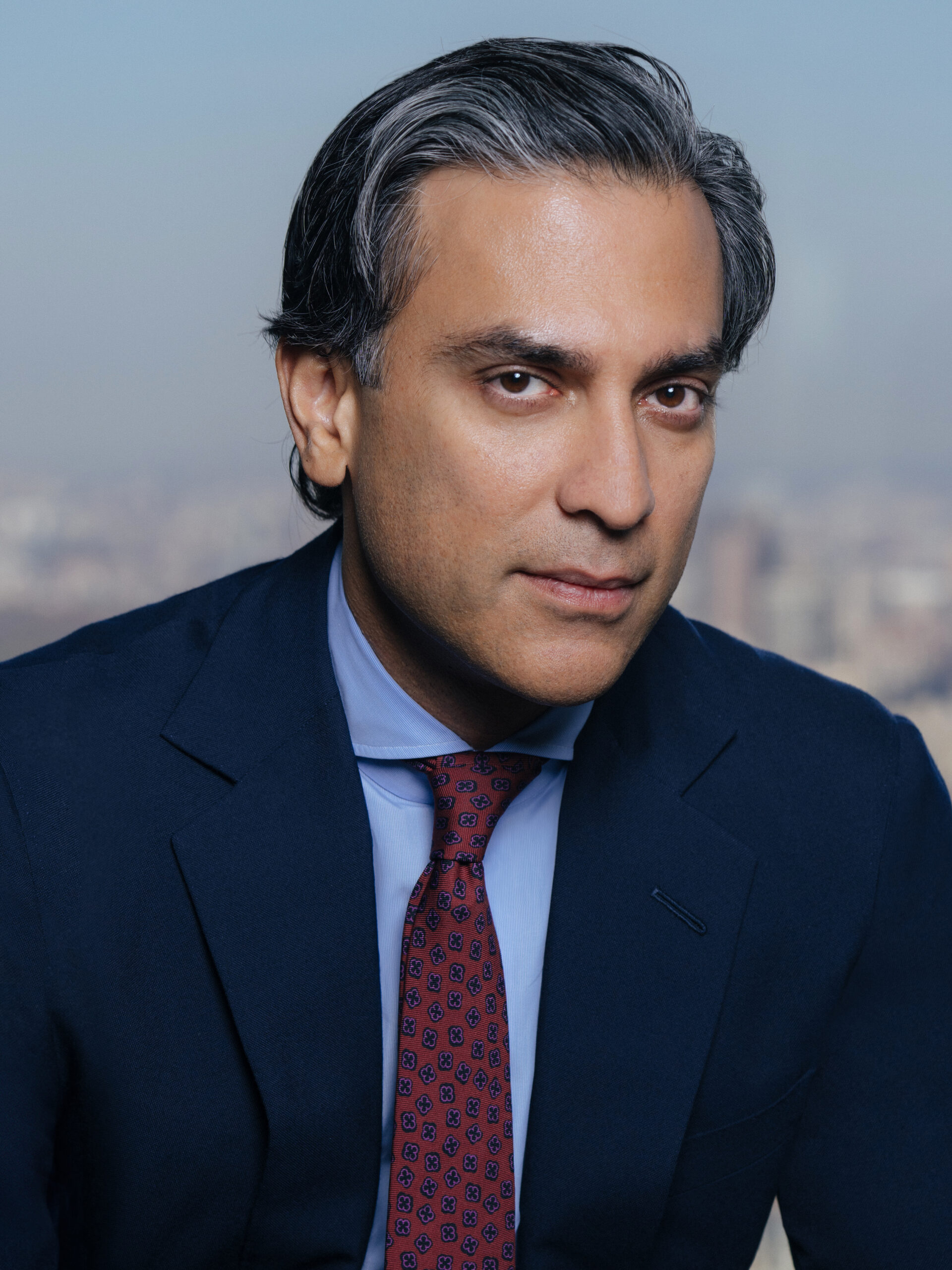
“Eventually, I think every GP will do one or two per fund – if I’m even half right, the implied growth is multiples of today’s market,” he told Mergermarket.
Siddiqui, formerly global head of GP stakes at Blackstone, established SQ early last year to prosecute this mid-market thesis. Early results are promising. The firm reviewed over USD 100bn of deal flow last year, and it put approximately USD 200m to work in 4Q25 across a mix of CVs and LP-led transactions. This implies a roughly 0.2% selectivity rate – in line with Siddiqui’s thinking.
“We’re building what we think of as a ‘greatest hits’ portfolio of high‑quality middle‑market secondaries,” he said.
Built from scratch
SQ was conceived to bring a bottom-up, fundamentals-based playbook to the middle market, combining direct buyout underwriting with a data-driven approach that incorporates a proprietary artificial intelligence (AI) toolkit. To do this, it assembled a team largely recruited from blue-chip PE shops.
Siddiqui, who spent over 15 years at Blackstone after starting his career at General Atlantic, was joined by CFO and CCO Mike Petryczenko, whose resume includes stints as CFO of both Blackstone Strategic Partners and fintech platform NewVest.
Last April, Henry Minello and Andrew Curry, formerly of Permira and Carlyle, respectively, came on board as managing directors. As previously reported, Minello plays a lead role in sourcing, evaluation and execution of LP-led and GP-led investments, while Curry heads up investor relations and capital formation.
Jonathan Hamilton – another Blackstone alumnus — recently joined as a managing director with a brief to work on deal evaluation and execution.
Now numbering 18, SQ’s team is largely complete, though the firm remains alert to opportunistic hires. Other members contribute expertise in secondaries as well as data science and AI. The latter function is overseen by Naiel Iqbal, formerly head of data and research at Tiger Global Management, while Eric Wayman joined last year from Lightspeed Venture Partners in a central role.
A key differentiator is that the platform has been designed from scratch, rather than adapted from an existing strategy. Data science and AI are woven into its DNA, supporting a focus on the underlying companies within secondary transactions.
Human judgement
SQ is also raising its debut fund, according to a regulatory filing. Mergermarket reported last April that the vehicle was expected to raise around USD 1bn. According to media reports, a first close was held last November with commitments of around USD 400m. Siddiqui declined to comment on fundraising plans.
The capital deployed to date has gone into two CVs and three LP-led secondary deals. None have been announced, though it was reported last year that SQ is the lead investor in a CV of approximately USD 160m for K1 Investment Management-backed TeamDynamix.
Overall, the firm claims a strong flow of CV opportunities in business services, healthcare, industrials, financials, and parts of technology. Meanwhile, on the LP-led side, it sees more small to mid-size investors bringing portfolios to market that are weighted toward mid-cap funds.
SQ aims to serve as the lead investor in GP-led transactions of USD 150m to USD 1bn in size. LP-led deals tend to range from a couple of million dollars up to USD 150m–USD 200m portfolios. The firm aims for a roughly even split between GP-led and LP-led, though Siddiqui said this is not hard-coded.
In a market where the supply of potential deals outstrips investor demand, there is never a shortage of opportunities. At any given time, the firm is reviewing 20–25 live transactions, alongside a wider “shadow pipeline” of expected deals.
“The real challenge is sifting through massive deal flow and focusing your time on the most attractive opportunities – where the underlying companies are strong and pricing is attractive relative to intrinsic value,” Siddiqui added.
SQ assesses inbound deal flow while engaging in proactive proprietary sourcing. Having already analyzed many funds and companies, it maintains “house views” on certain sectors and managers, which guide those outbound origination efforts.
The investment team applies its sector knowledge, pattern recognition and direct investment underwriting experience to the pipeline. “We designed our process so human judgment remains central,” Siddiqui said. “We’ve then layered in data science and AI to allow that judgment to be applied quickly, systematically, and consistently. It’s a bottom‑up process that helps us identify the opportunities most worthy of deep diligence and then analyze them in a consistent, rigorous way — without losing time.”
The firm is similarly systematic in its approach to conducting diligence, utilizing a proprietary rating framework across all deal types, from single-asset CVs to LP portfolios. Factors such as business quality, macro exposure, value creation potential, and valuations come under consideration.
On the latter, SQ is less concerned about how an asset is priced relative to net asset value (NAV). “The question of discount to NAV is a bit of a red herring,” Siddiqui explained. “The focus should be on intrinsic value.”
Early innings
Despite the surge in secondaries volumes, the market remains at a relatively early stage of development: best practices around asset selection, pricing and process management are a work in progress, while LPs are building their own resources to respond to opportunities.
Amid the fervor, Siddiqui is keen to deconstruct the perception that all assets are of the highest quality. “The reality is not every company that comes to the CV market is a trophy asset,” he said. “The majority aren’t. The whole game is identifying the ones that are.”
More broadly, however, the defining challenge is the persistent imbalance between supply and demand. According to Evercore, secondaries dry powder amounted to USD 215bn at the end of 2025, but just over half of that was controlled by approximately 10 buyers, each with USD 5bn-plus at their disposal.
There has been an influx of new entrants – including large buyout shops establishing GP-led strategies – but Siddiqui contends this barely moves the needle in terms of addressing the capital shortfall. For every deal that transacts, he reckons two to three come to market but fail to cross the finish line.
“We’re so far from being in danger of being even adequately capitalized, let alone over-capitalized in secondaries,” he said. “Especially in the middle market for secondaries, it remains very much a buyer’s market.”
This perspective lends credence to SQ’s thesis that middle market secondaries represent a historic opportunity. Siddiqui noted that, in the early stages, identifying the eventual scale of a given investment can be challenging. Google is an easily cited example, where initial growth appeared strong, but few could have envisaged the USD 4tn behemoth that ultimately emerged.
Siddiqui views secondaries through a similar lens. “This is the early phase of a decade-plus secular trend that’s still gathering steam.”
A service of 

Your M&A Future. Today
Explore unlimited content like this, available only in the platform.
Already a client? Sign in