Orangewood Partners targets franchisees in fragmented markets ripe for scale


- Focuses on franchisees with strong cash flow ready for institutional capital
- Targets resilient services businesses with USD 10m – USD 20m EBITDA
- Uses thematic, research-heavy approach to identify key sectors, companies
Franchising is big business in the US.
The number of franchise establishments is expected to grow to around 845,000 nationwide this year, employing around 8.9m people, according to the International Franchise Association (IFA). The sector contributes over 3% of US gross domestic product (GDP).
Private equity firms have targeted franchising opportunities for years, with the number of buyouts and add-ons in the space reaching record levels last year, according to Mergermarket data. Much of that capital has flowed to franchisors at the top of the ecosystem, which license their brands and operating models to local business owners.
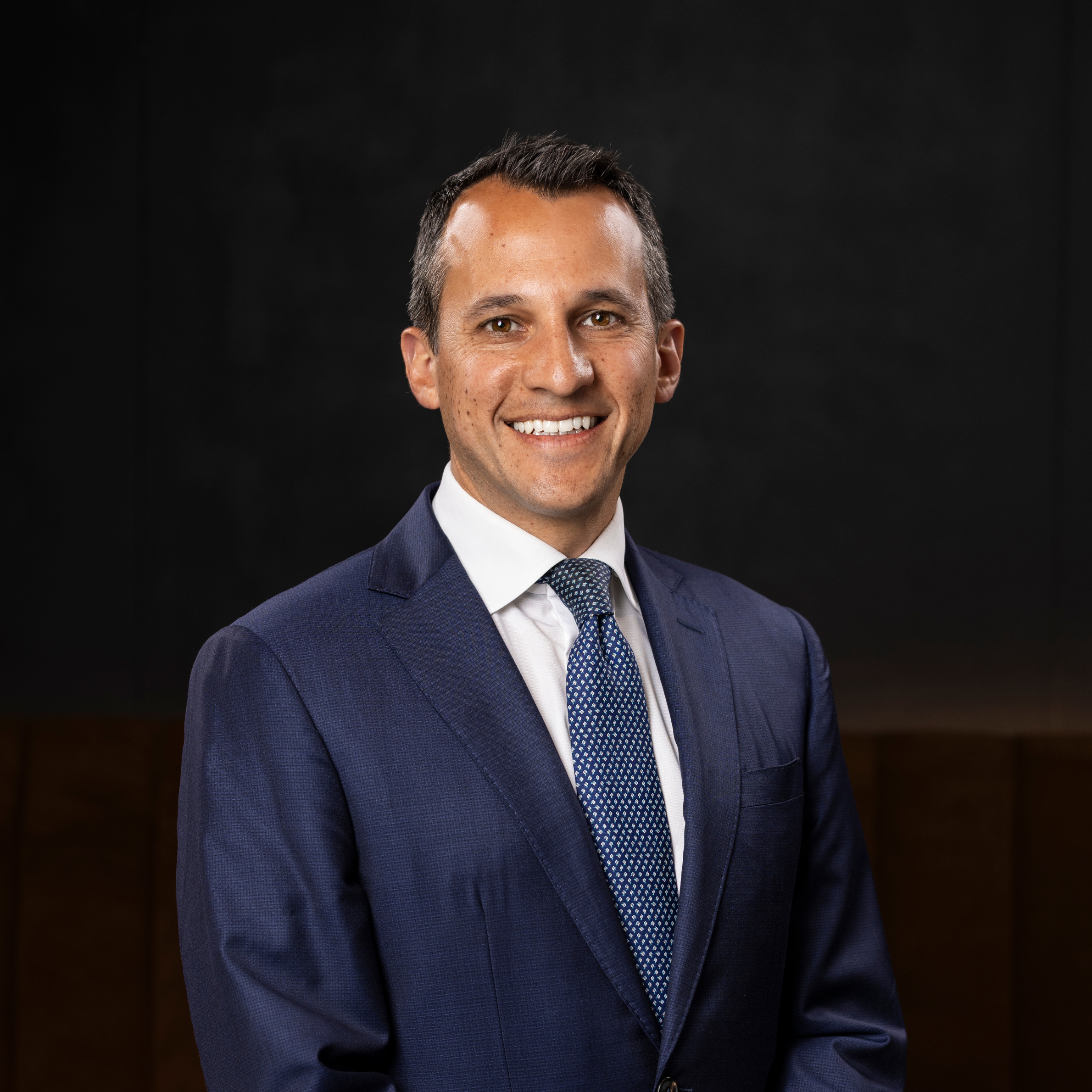
Alan Goldfarb, Orangewood Partners
Orangewood Partners takes a different approach, targeting the latter group. “There has not been a lot of institutional capital involved at the franchisee level, and we think that creates a really interesting opportunity,” Alan Goldfarb, founder and managing director at the New York-based sponsor, told Mergermarket.
Recent deals include an additional investment in Motley 7 Brew (M7B), a large franchisee of drive-through beverage chain 7 Brew Coffee. Orangewood co-founded M7B in 2022 alongside Anchor Point Management Group. The franchisee operates outlets in Georgia, Ohio and Texas, which all rank among the top 10 fastest growing states for franchising, according to the IFA.
A year earlier, it invested in SERVPRO West Coast DRT, a large franchisee of residential and commercial clean-up and repair franchise SERVPRO. Orangewood’s strategy focuses on identifying targets that already generate strong cash flow, with the potential to scale with fresh capital.
“There are some franchise systems that can generate a ton of cash and have real opportunity for institutionalization,” Goldfarb added.
Mission critical
Founded in 2015, Orangewood has over USD 1.3bn in assets under management (AUM). The firm is currently raising its Fund III, according to regulatory filings. Orangewood closed Fund II in March 2021 on over USD 200m, raising an additional around USD 100m across other vehicles.
While franchising is a firm specialty, it is not the sole focus for Orangewood. The sponsor’s investment strategy centers on thematically identifying durable businesses ahead of significant institutional capital formation, partnering with operators, and building platforms alongside founders and management teams.
“We spend a lot of time doing white paper research on different industries,” Goldfarb explained. “We try to find attractive sectors first, and if there happen to be franchise businesses in those areas, that’s where we can combine our experience.”
Orangewood seeks to minimize macro risk by targeting non-discretionary, service-oriented businesses with stable, recurring cash flows.
Core areas of interest include commercial services, home services, and consumer services, with a typical entry point of USD 10m-USD 20m of EBITDA.
“No matter what’s going on in the world or the economy, we’re really trying to find great businesses that are relatively insulated from macro environments and inflationary pressures,” Goldfarb said. “We’re focusing on businesses that aren’t going to get whipsawed by the next headline.”
Early bird
Orangewood’s research-heavy approach to sourcing deals maps out key industry players, laying the groundwork for relationship-building with companies well in advance of any sale process.
Most of its deals do not come through formal processes. “We don’t believe in just swooping in at auction and hoping we can figure it out after the fact,” Goldfarb said.
Orangewood also aims to identify segments where it can get something of a first mover advantage, before other sponsors have arrived en masse. The lower middle market cell tower sector – which Orangewood invested in over a decade ago – is a relatively early example of this approach. While the sector has since attracted significant institutional interest, at that time large infrastructure funds were not yet active on a significant scale.
In 2015 and 2017, Orangewood made successive investments in cell tower ownership and operations in partnership with cell tower specialist Peppertree Capital Management. The first investment, K2 Towers, grew from approximately 79 owned towers to 290 towers during Orangewood’s hold period. A second partnership with Peppertree — K2 Towers II— grew from inception to 372 towers. Both investments saw exits to strategic acquirors.
FIIT for purpose
The firm’s value creation playbook focuses on working with management teams to enhance operations, implement technology, and institutionalize processes, often through a framework it calls “FIIT”
“It’s not about cutting costs,” Goldfarb said. “It’s about how we exponentially increase the business in an efficient way using technology and operational improvements.”
Jake Brewer, a managing director of operations, who joined the firm in 2023, has led the charge on the FIIT initiative. Brewer has 15 years of prior operations, strategy and technology experience, with stints at the likes of Yum! Brands and Kroger.
Orangewood targets businesses where it can drive both organic growth and strategic M&A, while prioritizing EBITDA and cash flow expansion.
One example is ABTB (Aunt Betsy’s Taco Bells), a Taco Bell franchise platform based in and around Louisville, Kentucky. Orangewood teamed up with QSR operator Southpaw Restaurant Group to build the platform in January 2018, launching it via the acquisition of 24 locations. During Orangewood’s hold period, it added eight locations through a follow-on acquisition in April 2019 and developed seven additional locations from the ground up. By the time Orangewood exited in 2023, the platform’s unit count had grown 63% from the time of its initial acquisition.
Add-ons feature regularly in the value creation playbook. For example, Pacific Bells – a large Taco Bell franchisee backed by Orangewood since 2021 – has been acquiring additional Taco Bell franchise units in the southeastern US to scale its platform, according to a Moody’s report last October.
When it comes to exits, Orangewood aims to cast a wide net to facilitate a range of potential outcomes.
“When we think about deals, one of the important things is having multiple shots on goal,” Goldfarb said.
In practice, this means “institutionalizing” businesses to a scale that makes them attractive to a broader buyer universe, including larger sponsors, private equity-backed platforms seeking add-ons, and “pure-play” strategics.
“If we do our job right, our goal is to be able to make it easy for all three of those groups to be interested,” Goldfarb added.
A service of 

Your M&A Future. Today
Explore unlimited content like this, available only in the platform.
Already a client? Sign in