Mergermarket North America showcases contributions, achievements and observations of outstanding leaders – Trailblazing Women


To mark International Women’s Day, ION Analytics, including reporters and analysts at Debtwire, Mergermarket, Dealreporter, Cybersecurity Law Report, Hedge Fund Law Report, and Anti-Corruption Report have interviewed outstanding women in their respective jurisdictions and fields.
It is our honor to highlight these women and their accomplishments and contributions to their industries and share some of their insights and perspectives. These lawyers, advisors, investors, and consultants from around the world specialize in private equity, restructuring, mergers and acquisitions, hedge funds, anti-corruption, data privacy, and more. We hope these remarkable women inspire you as much as they do us.
In this article, Laura Larghi, Marlene Givant Star, Calvin Trice, and Hana Askren profile a selection of notable women across the M&A dealmaking cycle in North America, including (i) Andrea Basham, partner, Freshfields (ii), Eva Davis, managing partner-external affairs, Winston & Strawn (iii) Lorenna Buck, managing director, Ariel Alternatives, (iv) Michelle Thompson, CEO, Cherry Bekaert, and (v) Kristine Coogan, partner, KPMG.
Andrea Basham
Partner, Freshfields
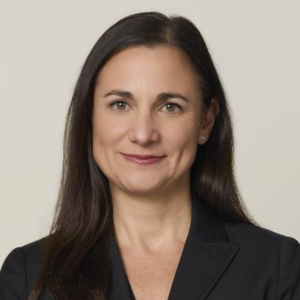
Basham is a Partner in Freshfields’ Corporate and M&A practice and is the recruiting chairperson for the firm’s US offices. Basham advises domestic and international corporations, private equity funds, sovereign wealth funds and other market participants on M&A, joint ventures, debt and equity investments and co-investments.
Looking back at your career in M&A, what was a defining moment that shaped your leadership style?
Many years ago I was fortunate enough to lead a transaction for Honeywell where both my deal team and the client team were made up entirely of women. The all-female composition of the broader team wasn’t intentional — it just happened that way. But the dynamic was noticeably different from the majority of the deals I had worked on.
The tone was highly collaborative. Team members listened carefully to each other. There was space for pause and reflection rather than a rush to fill silence. I found myself leaning into a style that felt very natural to me — patient, measured, respectful – and focused on building alignment rather than asserting authority.
The approach to success on that transaction didn’t work “because” it was an all-female team. It just worked, full stop. The deal moved efficiently, issues were surfaced early, and the trust level — both internally and with the client — was exceptionally strong.
While the experience didn’t transform my leadership style, it boosted my confidence in it – in that I didn’t need to adopt a louder or more forceful persona to be effective, particularly on complex deals and in high-pressure situations. Thoughtfulness can be strategic. Listening can be powerful. Reading of the room can define a result. Creating space for others to speak often leads to better outcomes.
Can you pinpoint a turning point when you felt you truly found your voice or confidence as a dealmaker?
For me, the turning point wasn’t early in my career — it came after I returned to BigLaw after having stepped away for several years to focus on raising my children.
When I returned to practice, I was deeply committed but also navigating a quiet nagging sense of imposter syndrome. The market had evolved, the pace felt faster, and I was working directly for the head of the practice at my old firm — someone whose technical expertise was unparalleled, who was incredibly exacting, and whom the leadership of the firm and the market widely respected. He was almost always right. I was afraid to be wrong.
On a transaction for Stanley Black & Decker in 2012, we were working with a broader team and he gave me real space – to negotiate directly with opposing counsel, to make judgment calls in real time, to shine in front of other internal and external leaders on the deal team, and to own the outcome.
At that time and on that transaction, I realized that the judgment I had developed before stepping away — combined with the perspective I gained during those years outside the firm — was not diminished. It had grown. Stepping away and returning had given me perspective and allowed me to continue to build my confidence deliberately and ultimately has strengthened my voice as a dealmaker.
What are the most exciting opportunities in the M&A/PE environment in 2026?
My practice in 2026 has hit the ground running on the heels of an uptick in activity in 2025 and sponsors and corporates anticipating increased activity this year even in the midst of macro and regulatory uncertainty.
I could try to formulate a unique answer that didn’t include AI and data centers, but that would clearly ignore the data infrastructure boom and the continued potential for AI capabilities to reshape strategic priorities.
But AI isn’t just driving the dealmaking that makes our profession exciting right now; it’s also changing the way we do deals. I think 2026 is going to be a pivotal year in defining which advisors are truly able to understand how AI is reshaping our profession and reshape their approach, offering, staffing, pricing and speed at which they operate. As law firm partners, we also need to be thinking hard about how we recruit, train and develop young lawyers in what will undoubtedly be a faster-moving environment. AI presents a real opportunity for firms to be strategic and present unique offerings.
How can organizations do better to support and retain female talent in M&A and PE?
When this question comes up, the conversation often gravitates to HR policies — billable hour targets, return-to-work programs, formal flexibility frameworks, or mandates around time in the office. Those tools have a role to play. But I don’t think they should drive the answer.
The harder and more important conversation sits with leadership.
I think history has finally proven that there is no one-size-fits-all model for building a career in M&A or private equity. As partners and senior leaders, we have to get out of our own way and let go of the idea that the path we took is the only legitimate one. And we have to acknowledge that even among highly driven professionals, workstyles differ and we all have lives and obligations outside of the office.
That does not mean abandoning the office or lowering standards. Time together is tremendously important.
But flexibility within that framework — measured by outcomes rather than optics — is what allows talented professionals to stay and thrive over the long term. Ultimately, supporting and retaining female talent (and all talent) in M&A and PE isn’t about creating a separate track. It’s about widening the definition of what a successful one looks like.
Eva Davis
Managing Partner, Winston & Strawn
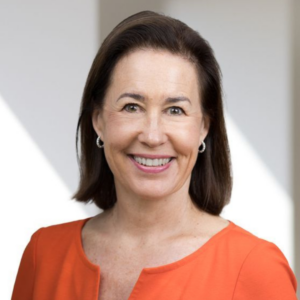
Eva Davis is managing partner- external affairs and a member of the executive committee of Winston & Strawn. She has advised public and private companies through transformative business transactions, ranging in deal value from tens of millions of dollars to over USD 5bn. Her primary focus is private equity. Eva was recently recognized as one of the 50 Women to Watch for Boards. She is based in Winston & Strawn’s Los Angeles office.
Looking back at your career in M&A, what was a defining moment that shaped your leadership style?
Early in my career as a partner, I represented the same company through its full life cycle – from a carveout of a large strategic in the form of an LBO, to an IPO, to a public-company merger and ultimately a multibillion-dollar hostile takeover of a dual-listed company with operations spanning the US, Asia and Europe. That experience fundamentally shaped how I led as I managed a large cross-border team over several deals and several years. It taught me that great outcomes are rarely about a single transaction or a single person — they’re about providing strong judgment, developing trust, showing up consistently over time and motivating a team to do the same. As a leader, that translates into being extremely prepared, commercially minded, and focused on long-term value creation, not just winning the moment. Leadership in M&A is being deeply embedded in a client’s world, taking ownership of outcomes even when they don’t go your way, and showing up when the stakes are highest. That mindset has guided how I lead teams and serve clients ever since.
Can you pinpoint a turning point when you felt you truly found your voice or confidence as a dealmaker?
The turning point came when I stopped trying to “fit” a traditional mold of how a dealmaker was supposed to look, act, and talk – which often meant lots of bravado. Instead, I finally leaned fully into being myself. I realized clients didn’t need theater — they wanted authenticity, industry fluency, clear judgment and a willingness to work shoulder-to-shoulder with them on their most challenging deals. Once I embraced that, my confidence grew. I began building relationships in ways that felt natural to me, grounding every discussion in a deep understanding of my clients’ businesses and anticipating where the market was heading. That’s when my practice and my voice really took off.
What are the most exciting opportunities in the M&A /private equity environment in 2026?
What excites me most is the convergence of creativity and discipline in dealmaking. With deal values at an all-time high, there is little room for error, especially when you are a buyer. As a result, we are seeing sponsors and strategic buyers become more thoughtful and nuanced – using minority investments, structured equity, carve-outs, earnouts and bespoke partnerships to get deals done. And, of course, using buyer stock as the primary consideration in many deals. At the same time, founders and boards are more sophisticated than ever. The opportunity lies in helping clients navigate complexity — regulatory, geopolitical, and operational — while still moving decisively. Personally, I am seeing the most M&A activity in branded consumer products (food, beverage, personal care, wellness and pet), industrials (highly engineered manufacturing especially in the US) and certain aspects of software – those using AI not just as a feature, but as a fundamental driver of scale, efficiency and defensibility. And, with the declining US dollar, we are expecting more US inbound M&A in 2026.
How can organizations do better to support and retain female talent in M&A and private equity?
It starts with sponsorship, not just mentorship. Some of the most important conversations about you are in rooms you are not in, and women need advocates who make sure they are. At Winston, our Executive Committee’s sponsorship program for senior associate women is designed to do exactly that — actively sharing opportunities, elevating talent with firm leadership and clients, and pulling women into the most meaningful conversations and deals. Flexibility and transparency also matter, particularly around career paths and leadership roles, but so does recognizing that there isn’t one model or timeline for success. I’ve seen firsthand that when women are supported this way, the entire organization is stronger.
Lorenna Buck
Managing Director, Ariel Alternatives

Lorenna Buck, managing director of Ariel Alternatives, serves on the firm’s investment committee and is responsible for deal sourcing and execution, due diligence, portfolio management and value creation opportunities. She currently serves as board director for two platform companies—Sorenson, the leading US communications provider for the Deaf and Hard-of-Hearing—and Groome Industrial Service Group, a specialty maintenance solutions provider serving power generation and industrial end markets. Formerly, Buck was a managing director and partner at Boston Consulting Group leading the sustainable investing agenda for the private equity practice.
Looking back at your career in M&A, what was a defining moment that shaped your leadership style?
When I returned to work after I had my first child. It was 10 years ago. I remember it was hard figuring out how to kind of reconcile professional life with family – new family priorities, if you will. There’s a little bit of insecurity, right? Coming back as a new mom and trying to make sure that you’re showing you’re just as serious about your job. But having those family priorities actually caused me to end up being a better leader, because it meant that I had to force more discipline in how I manage my teams, and I also had to give them more latitude in places, and be very intentional about how I plan to utilize my time. A very specific example of that would be I made it a priority to go home and have dinner with my family as much as possible. And that meant that all my teams knew there were two hours every evening that Lorenna was not going to end up being available, and everybody knew I was available after that. But it ended up being very freeing to my team, because they were like: “Oh, this is time that I know I’m not going to get an email from her if I want to go the gym, if I want to eat dinner, if I want to do work, I can do whatever those things are that I want to do in that time.” They had more predictability in their schedules too, and could figure out how to be the most productive for themselves. It was a win-win for me and for them, and that was one of the biggest kind of shifts in my leadership style.
When was a turning point when you felt you truly found your voice or confidence as a deal maker?
This is an area that I personally feel like I continue to build and evolve my confidence in. We all need to have humility as deal professionals, be diligent in our process, and, most importantly, be brave when we have concerns, even when they’re not shared by others. Those are probably some of the moments that I just remember the most. Earlier in my career, times when, when I knew that I was maybe the outlier, not feeling as brave to raise my concerns and recognizing that, you know, kind of after the fact, that those concerns were actually very important to be shared. I think this is something we’ve really prioritized at Ariel. Making sure that we’re forcing discipline in considering and discussing any and all risks. That allows us to make better investment decisions.
What are the most exciting opportunities in the M&A/PE environment in 2026?
AI continues to be that buzzword, but I am personally really excited about continuing to challenge our team to leverage AI tools so that our time is better spent really developing our investment theses. I’ve been really focused with our team on being more nuanced and contrarian, especially in the current environment, versus just following all the sheep.
I see AI as being really good at the first order set of insights, the stuff that everybody can find. It does it faster and gives you the time to go deeper on where you think that there are gaps that maybe are not as easily solved by AI today. We were literally just talking with one of our CFOs yesterday about this. He was mentioning that they were using some AI tools for building out Excel analysis, right? And getting to make dashboards and things like that. It’s not that it’s perfect, but I like the fact that it gets you that first version that allows you to start asking the most important questions.
And opportunities around M&A specifically?
We just finished doing two deals in the utility services sector. The challenge is a lot of folks are getting excited about that sector because they’re seeing all of the power usage because of AI and what that requires in terms of investment in our power ecosystem. But that’s been a theme that we’ve focused on for more than four years, before it became popular.
Now that it’s become more popular, we’re trying to make sure that we can find themes within that, that we think are really exciting, but a little outside of where most folks are focused.
How can organizations do better to support and retain female talent in the financial industry?
My perspective on this is that role models matter, and I do think we’re in an advantaged place at Ariel, because we do have women leaders at Ariel, with myself and Yue Bonnet, head of investments, on the alternatives side. So having women leaders is important, but more important is having leaders who are investing in their rising female talent and helping to elevate them.
I remember the first time that I presented to a public company board, it was relatively early in my career, and well before I thought that I was ready. But I was working with a partner who believed that I was ready because I had done all the work, and he thought that I was the best person to do it. Being given that challenge early in my career was hugely confidence building. And I think that all of us as leaders need to be the ones creating these step up opportunities for our rising talent, whether male or female. In the financial industry, there are more men than women, so you know you need for it to happen from everybody.
Michelle Thompson
CEO, Cherry Bekaert Advisory
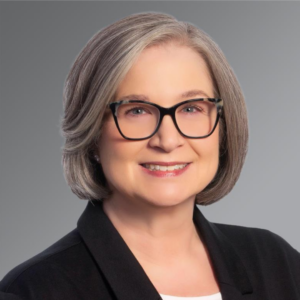
Michelle Loyd Thompson is chief executive officer of Cherry Bekaert Advisory, where she leads firm strategy, growth, and financial management. Thompson helps Cherry Bekaert design the firm’s M&A strategy and evaluates acquisitions. She was appointed CEO of the advisory unit when Parthenon Capital invested in the firm in June 2022. She had previously served as CEO of Cherry Bekaert LLP since 2018. After joining the firm in 1998, Thompson founded and scaled its Risk & Accounting Advisory Services practice and was managing partner of Assurance Services.
Looking back at your career, what was a defining moment that shaped your leadership style, particularly as it relates to M&A?
The most defining realization for me was understanding the importance of authenticity. There were times when I tried to fit a mold that others thought I should fit, and it never felt natural. Over the years, I learned to be true to who I am and allow that to guide how I lead. That carries directly into how I approach M&A. I don’t walk into a deal believing I have to know everything. Instead, I focus on asking thoughtful questions, connecting with people, and making sure others feel heard. That’s where I learn the most, and it’s how I’ve grown more comfortable navigating the complexities of acquisitions.
Can you pinpoint a turning point when you felt you truly found your voice or confidence in dealmaking?
I’ve been involved in M&A for about 10 years, but the turning point for me came in the last four—when we became a private‑equity‑backed firm. That changed everything. The stakes became higher, the pace faster, and the dynamics more complex. Operating as a PE‑backed buyer is an entirely different world compared to our earlier acquisitions. Working alongside private equity professionals—people who live and breathe deals—accelerated my growth tremendously. That period forced me to step more boldly into my role, and that’s when I truly found my voice and confidence as a dealmaker.
What are the most exciting opportunities in the M&A/PE environment in 2026?
What excites me most right now is the sheer increase in activity we’ve seen recently. We’re four years into our PE sponsor relationship, and we’ve already completed several acquisitions that align with who we want to be as a firm. But in the past three or four months, the uptick in opportunities has been significant. With so much movement in the market, the real opportunity lies in being selective – choosing the right fit rather than just any deal. For us, it’s about finding pieces that integrate well, strengthen our capabilities, and build on what we’ve already created. Integration and intentionality are just as important as the acquisition itself.
How can organizations do better to support and retain female talent in the dealmaking or PE environment?
I don’t see many women on the other side of the screen in PE or dealmaking conversations, and I think one of the most impactful changes organizations can make is shifting from mentorship to sponsorship. Mentorship is valuable, but sponsorship creates actual opportunities—bringing women into the room, letting them sit in on deals to observe the dynamics, and learn through experience. That kind of exposure builds confidence and reduces the uncertainty that often keeps talented women from raising their hands for high‑stakes work. Learning by osmosis is incredibly powerful, and giving women access to those environments is what will help them advance and stay in the industry.
Kristine Coogan
Partner, KPMG

Kristine Coogan is partner and US Industrial Manufacturing Strategy leader at KPMG in Chicago, working with clients to identify and address human capital considerations during diligence. She has more than 20 years of experience and works with clients throughout the deal lifecycle, specializing in HR due diligence. Coogan helps clients across industrial manufacturing sectors, with a focus on automotive, aerospace and defense, and diversified industrials.
Looking back at your career in M&A, what was a defining moment that shaped your leadership style?
Early in my career, I assumed leadership meant being the expert in the room on every aspect of the deal. I worked with partners who seemed to navigate all the complex, technical discussions – seemingly without much effort. I assumed that confidence came from always knowing the right answer.
When I stepped into account and deal lead roles myself, I felt pressure to show up the same way. But over time, experience changed my perspective. In complex transactions, no one has perfect information and certainty is nonexistent. What matters most is helping clients navigate that uncertainty – asking the right questions that will help them create enough clarity to move forward. I’ve come to see my role less as the person with all the answers and more as a guide, helping teams do their best work in an environment where ambiguity is the norm.
Can you pinpoint a turning point when you felt you truly found your voice or confidence as a dealmaker?
Confidence came from experience, especially from working through complex situations with clients and seeing those decisions lead to better outcomes. Each deal added a little more clarity to my voice. Deals are full of noise – details, urgency, strong opinions, big personalities and competing priorities, and it’s easy to lose perspective. Bringing the conversation back to a simple question: how does this deal create value – became a steady anchor for me and helped me find my voice using that reference point.
What are the most exciting opportunities in the M&A/PE environment in 2026?
I’m especially energized by the continued pace of carve-out activity in industrial manufacturing. We’re seeing organizations take a thoughtful approach to their portfolios, making clear, intentional decisions about where they can create the most value and where separation actually unlocks opportunity. Carve-outs are powerful because they create value on both sides. For sellers, they can offer them a chance to refocus on the core and reinvest their energy and capital. For buyers, they give them a platform to scale, expand capabilities, and build something that’s fit for purpose – rather than something they inherited by default. While carve-outs are complex, that complexity in working through the transition and operating models, and setting up the business for Day 1, is challenging and deeply rewarding.
How can organizations do better to support and retain female talent in M&A and PE?
Over my career, I’ve watched incredibly talented people – women and men – struggle not because they couldn’t do the work, but because the traditional work model in M&A itself wasn’t sustainable. Deal work is very intense and cyclical, and it can quickly become a grind that pushes people out as soon as they need flexibility.
From my own experience, flexibility and longer term sustainability matter far more than rigid career models. There are periods where the work demands a lot, and other moments where the ability to step back and focus elsewhere makes all the difference. The organizations that retain talent are the ones that recognize those cycles, pay attention to burnout signals early, normalize downtime between deals or phases, and create flexibility when it matters. When firms are able to design adaptable career paths – across different phases of life – they create rewarding environments where men and women can stay, grow, and build long-term careers in M&A.
A service of 

Your M&A Future. Today
Explore unlimited content like this, available only in the platform.
Already a client? Sign in