Mergermarket EMEA showcases contributions, achievements and observations of outstanding leaders – Trailblazing Women


To mark International Women’s Day, the ION Analytics team, including reporters and analysts at Creditflux, Debtwire, Mergermarket, Dealreporter, Cybersecurity Law Report, Hedge Fund Law Report, Private Equity Law Report, and Anti-Corruption Report, have interviewed outstanding women in their respective jurisdictions and fields.
It is our honour to highlight these women and their accomplishments and contributions to their industries and share some of their insights and perspectives. These lawyers, advisors, and consultants from around the world specialize in private equity, restructuring, mergers and acquisitions, hedge funds, anti-corruption, data privacy, and more. We hope these remarkable women inspire you as much as they do us.
In this article, Elisha Juttla, Lucinda Guthrie, Joanna Socha, Rachel Lewis and Myriam Mariotte, profile a selection of notable women across the M&A dealmaking cycle in EMEA including (i) Sunaina Sinha Haldea, global head of private capital advisory, Raymond James (ii) Julie Gautier, partner, PAI Partners (iii) Małgorzata Jędrzejczyk, vice president, Enterprise Investors (iv) Jenine Hulsmann, head of the European antitrust practice, Weil Gotshal & Manges (v) Catalina Stoica, partner, Park Square and (vi) Aditi Venkatram, managing director, Equity Capital Markets, Jefferies.
Sunaina Sinha Haldea
Global head of private capital advisory, Raymond James

Sunaina Sinha Haldea founded Cebile Capital and scaled it into a top-tier global private equity advisory firm before its acquisition by Raymond James, a Fortune 500, NYSE-listed firm, in 2021. Under her leadership, the platform has become a go-to advisor for leading private funds and institutional investors worldwide, executing hundreds of capital formation and secondary liquidity transactions.
Looking back at your career in PE, what was a defining moment that shaped your leadership style?
One defining moment was founding Cebile Capital in 2011—long before it became part of Raymond James. I was stepping into rooms where I was often the only woman, sometimes the only person of colour, and, usually, the youngest voice at the table. I realized quickly that I could not out-shout the room, I had to out-center it. Building a firm from scratch taught me that culture is not a by-product; it is a choice. I decided early on that we would be both high-performing and humane, commercially sharp yet deeply empathetic. That tension between excellence and empathy became the spine of my leadership style, and it remains so today as I lead a global advisory business.
Can you pinpoint a turning point when you felt you truly found your voice or confidence as an advisor?
The turning point came not in a boardroom, but in stillness. About a dozen years ago, I committed to a daily Vipassana meditation practice. Until then, my confidence was performance-based, deal-driven, outcome-dependent. Meditation shifted that axis inward. I began to understand that true authority comes from clarity, not volume. In all private equity work, steadiness is power. When markets are volatile and capital is scarce, clients don’t need noise—they need conviction anchored in composure. That signal is what they care about most.
What are the most exciting opportunities in the PE environment in 2026?
This is shaping up to be a year of intelligent reinvention. We are seeing private wealth step meaningfully into alternatives, secondaries becoming mainstream rather than niche, and capital formation strategies becoming more creative and bespoke. I find the evolution of GP-led solutions and continuation vehicles particularly exciting—they reflect a maturing asset class willing to rethink old constraints. At the same time, private equity is being forced back to fundamentals: operational value creation, disciplined underwriting, and genuine partnership with management teams. For those who can combine financial sophistication with operational depth, this is an extraordinary moment to build enduring franchises.
How can organizations do better to support and retain female talent in PE?
First, we must move beyond rhetoric. Representation improves when leaders treat diversity as a performance imperative, not a PR exercise. When I built my team, which is now the Private Capital Advisory business within Raymond James, I asked myself a simple question: if I, as a woman of colour, cannot build a diverse team, how can I ask my clients to do so? Today, our leadership is female and our broader team has a majority of women and minorities. That did not happen by accident. It required intentional hiring, flexible career design, visible sponsorship and, critically, a culture that values kindness alongside assertiveness. If organizations want to retain female talent, they must create environments where ambition and wellbeing are not in conflict. High performance and humanity are not opposites; they are, in fact, mutually reinforcing.
Julie Gautier
Partner, PAI Partners

Julie joined PAI Partners in 2021 as a member of the Food & Consumer Team. She has been involved in the Innovad and NovaTaste investments and became a partner at the firm at the end of last year. She joined PAI after 12 years of experience in M&A. She was previously an M&A director at Casino Group. Prior to Casino, she worked at the boutique investment bank Messier Maris & Associés. Julie holds a Master’s Degree in Finance from Sciences Po Paris.
Looking back at your career in M&A, what was a defining moment that shaped your leadership style?
As a leader, I’m intentional about where my direct involvement will have the greatest impact and my approach is to be hands-on when it matters most. A few defining moments have shaped this approach. In my time at Casino Group, I was deeply involved in negotiations with minority shareholders, including franchisee families as well as the Vietnamese State, navigating complex stakeholder dynamics while maintaining alignment and trust.
More recently at PAI, during the carve-out of NovaTaste, a global leader in taste innovation that provides a range of savoury solutions, we reached closing without a full management team in place. From day one, this meant being actively engaged in stabilising the business by establishing clear governance and decision‑making processes, staying close to operational priorities, maintaining dialogue with key stakeholders and ensuring continuity.
Experiences like these have shaped my belief that effective leadership is about taking ownership at critical moments: knowing when to step in to create stability, clarity, and momentum—and when to empower others once that foundation is set.
Can you pinpoint a turning point when you felt you truly found your voice or confidence as a dealmaker?
Over the course of my career, I have worked on a number of successful acquisitions, but I would highlight our recent acquisition of Innovad, a global specialty animal feed additives player, as a defining moment.
Innovad is a high-quality asset, with strong growth and differentiated positioning. The process was competitive, involving diligence across multiple jurisdictions, as well as engagement with a management team with real ambition for the next phase of growth. What made this transaction pivotal for me was the combination of conviction and responsibility required. We were underwriting a business that had already achieved significant expansion and we needed to articulate clearly why PAI was the right partner to help accelerate the next stage of its development.
Our dialogue with the CEO required confidence, clarity of thought and alignment around long-term value creation. Ultimately, the acquisition reinforced an important lesson: our job is not to operate businesses, but to identify and back the right management teams, align on clear value-creation plans and build partnerships grounded in trust. The confidence I gained stemmed from developing a well‑formed perspective on the asset, the strategy, and the people—and being prepared to stand behind that judgment.
What are the most exciting opportunities in the M&A/PE environment in 2026?
In 2026, some of the most compelling opportunities lie firmly within the Real Economy, particularly in Food & Consumer, which is one of PAI’s four sectors.
We are seeing increasing investor scrutiny across sectors perceived to be more exposed to AI-driven disruption, including certain areas of software. By contrast, food remains rooted in physical production and essential consumption. That structural resilience, combined with pricing power in the right categories, positions the sector as an attractive area for long-term value creation.
We are also closely monitoring the impact of GLP-1 treatments on consumer behaviour. These therapies are already reshaping demand patterns—influencing portion sizes, product mix and health-led purchasing decisions. For investors with deep sector expertise, this shift is creating targeted opportunities across categories aligned with evolving consumer preferences.
How can organisations do better to support and retain female talent in M&A and PE?
Organisations need to take deliberate, sustained action to advance women and ensure they have meaningful access to progression. Greater balance requires focus, accountability and practical measures. This means adopting a thoughtful, long-term approach to how talent is developed, supported and promoted. When representation is not consistently nurtured throughout the career lifecycle, achieving meaningful diversity at senior levels becomes significantly more difficult. Building a strong, well-supported pipeline is therefore essential to delivering lasting change.
Private equity is a demanding industry that often requires significant commitment, making visible female leadership especially important. Seeing women in senior roles signals that advancement is attainable and that different leadership styles are recognised and valued. Mentorship and strong allies across an organisation are also critical in helping women navigate what can be a competitive and high-pressure environment.
Małgorzata Jędrzejczyk
Vice president, Enterprise Investors

Małgorzata Jędrzejczyk has been with Enterprise Investors since 2019. She focuses on investments in business services, e-commerce, and FMCG sectors. Her key projects include Bisar, Focus Garden, JNT, Sescom, and Snap Outdoor/ 8a. Since joining Enterprise Investors, the most established private equity firm in Central and Eastern Europe, she has been investing in high-potential companies, providing capital, strategic expertise, and building strong partnerships with management teams. She concentrates on developing regional leaders in business services as well as consumer products and services. Prior to Enterprise Investors, Małgorzata worked at PwC and EY.
Looking back at your career in M&A, what was a defining moment that shaped your leadership style?
Very early on my father taught me: whatever role you’re in, stay yourself. That independence of thinking became my anchor, especially in an industry that can be very templated. Over time I learned that authenticity isn’t a “soft” trait in M&A— it’s a deal tool. Models matter, diligence matters, but people still choose to transact with people. Trust is built on consistency and intellectual honesty. At Enterprise Investors, reputation is real currency. My leadership style is simple: be calm in volatility, rigorous in judgment, and predictable in values. Reputations compound just like returns.
Can you pinpoint a turning point when you truly found your voice as a dealmaker?
Early in your career you prove yourself by executing flawlessly— models, diligence, materials. But at some point you realize execution is table stakes. The real shift is when you move from analysis to judgment: recognising which risks are structural, which are cyclical, when to push, and when discipline means walking away.
The question becomes less “Can we do this deal?” and more “Should we — and can we create value over three to seven years?” That’s when you stop trying to be the smartest analyst in the room and start thinking like a long-term investor.
What are the most exciting opportunities in the M&A/PE environment in 2026?
If the last few years taught us anything, it’s that volatility is the baseline, not the exception. In 2026, the opportunity is in resilience: essential, cash-generative businesses with real pricing power — healthcare, specialized B2B services, selected infrastructure-linked plays. In CEE, there’s also a strong transformation angle: founder-led companies professionalizing, consolidating, and scaling regionally. This market rewards operational value creation and smart structuring, not financial optimism. Volatility is uncomfortable but it rewards experience.
How can organizations do better to support and retain female talent in M&A and PE?
It’s not complicated: equal access to real deal exposure, clear standards, and sponsorship that isn’t selective. Capability isn’t the issue, opportunity often is. Private equity is a performance business. If we target meritocracy, we should measure outcomes consistently and remove the hidden filters. And diversity isn’t a PR project, it’s risk management. Homogeneous thinking is expensive, especially when capital is scarce and mistakes last for years.
Jenine Hulsmann
Head of the European antitrust practice, Weil, Gotshal & Manges

Jenine Hulsmann specialises in competition law and merger control with a focus on the TMT, pharmaceutical, energy, and infrastructure sectors. She has advised on some of the most high-profile and complex M&A transactions of the past decade, including Microsoft’s USD 68.7bn acquisition of Activision Blizzard in 2023. She has also secured multiple Phase 2 clearances from both the European Commission and the UK Competition and Markets Authority (CMA).
Looking back at your career in M&A, what was a defining moment that shaped your leadership style?
Leading the European antitrust work on Microsoft/Activision was a career highlight. The case played out over 20 months, with many twists and turns, but at each stage we had a clear game plan. As a leader, my role was to provide the team with a clear vision of our case and a strategic playbook that allowed us to navigate each regulatory hurdle we faced. It took a huge amount of resilience and creativity, but also the willingness to immerse myself in the world of gaming. I will forever be grateful to the people at Xbox and Activision who spent so much time explaining their industry to me, and to my team for all their hard work and dedication.
Can you pinpoint a turning point when you felt you truly found your voice or confidence as a dealmaker?
As an antitrust lawyer my job is to bring the regulator into my client’s world and to help them understand why a deal will benefit consumers. When the CMA decided to investigate Microsoft’s investment in OpenAI following the high-profile firing and rehiring of Sam Altman, I had to find a way of putting Microsoft’s multi-billion-dollar investment into perspective. The advances we are seeing in AI involve scientific and engineering efforts more ambitious than a moon shot. But speaking to those at the frontier of AI research, I realised that these developments are more akin to an entire space program —multiple parallel, distinct yet interrelated moonshots involving partners with different skills. By immersing myself in this new world, I found my voice as an advocate for my clients. It still took over a year to convince the CMA, but ultimately, they saw the light and cleared the deal.
What are the most exciting opportunities in the antitrust and M&A environment in 2026?
In the past year we’ve seen a range of truly innovative deal structures, from acqui-hires and new public benefit corporations in the AI space, to complex breakup transactions, such as Boeing/Spirit Aerosystems; and innovative remedies, such as Vodafone/Three and SLB/ChampionX. This year has brought new partnerships between private equity and strategic purchasers, such as InPost/FedEx/Advent. As deal volumes continue to recover, I expect buyers to continue to explore the full range of options available to them to manage regulatory risk and address competition concerns.
How can organisations do better to support and retain female talent in M&A?
Antitrust is blessed with many female leaders—in private practice, in-house, and within regulatory agencies—as well as an abundance of female talent coming through. With all that diversity, young lawyers have opportunities to experience different leadership styles and find something that works for them. Authenticity is so important and providing a work environment where people can be themselves, while bringing their passion for the field to bear, is the ultimate goal.
Catalina Stoica
Partner, Park Square
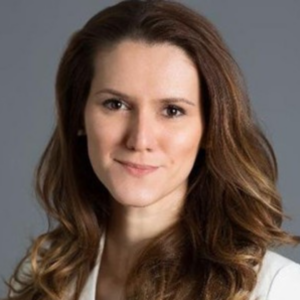
Catalina joined Park Square’s investment team in 2021. This year she was promoted as the firm’s first female partner. Prior to joining Park Square in 2021, Catalina was an Executive Director at JP Morgan covering acquisition and leveraged finance. Catalina holds a Bachelor’s degree in Mathematics and Economics from Williams College. Park Square was founded in 2004 and provides senior debt, mid-market direct loans, subordinated debt and structured equity to private equity-backed companies in Europe and the US.
Looking back at your career, what was a defining moment that shaped your leadership style?
I began my career on a trading floor in New York, an environment that was both demanding and formative.
What left the strongest impression on me was the combination of high standards and genuine empathy. The head of my team expected excellence and accountability, and difficult decisions were taken decisively. At the same time, he never lost sight of the people behind the work. On particularly busy days, when junior team members had no time to step away from their desks, he would arrange lunch for the entire team. It was a small gesture, but it conveyed something powerful: that performance and respect for individuals are not mutually exclusive.
Those early experiences shaped my belief that the most effective leaders are both exacting and supportive. Feedback, whether positive or critical, is a gift when delivered constructively. Standards should be high, but people should feel seen as individuals, not just as contributors to output. I strive to lead with that same balance: clarity in expectations, decisiveness in judgment, and an unwavering respect for the human dimension of our work.
Can you pinpoint a turning point when you felt you truly found your voice or confidence as a dealmaker?
A pivotal moment that stands out to me was when I recommended declining a transaction that the team had spent weeks developing. As credit investors, our responsibility is not only to deploy capital, but to protect it. Maturing as a dealmaker requires the judgment and conviction to walk away when the risk-reward profile is not sufficiently compelling.
Equally significant was the first time a client entrusted me to finance a confidential public-to-private transaction. While competitive processes drive much of our market, the most meaningful opportunities are often sourced off-market, enabled by long-standing relationships with sponsors and management teams alike. Being entrusted in that context was a validation not only of technical capability, but of judgment and relationship-building, both of which are essential in private credit.
What are the most exciting opportunities in the private credit environment in 2026?
I believe Europe will remain an attractive investment landscape in 2026 for several reasons. European businesses have, in many cases, been significantly less impacted by global tariff-related uncertainty than some of their global counterparts. Additionally, the US market has a higher concentration of sectors such as software, where questions around the impact of emerging AI technologies have introduced greater volatility. In contrast, risk in Europe often appears more attractively priced, particularly given that capital inflows into private credit vehicles, such as Business Development Companies (BDCs), have been more pronounced in the US.
Europe’s private credit market is set for a year of robust activity. Many private equity sponsors deployed significant capital around 2021, and we are now approaching the end of typical five-year holding periods. While traditional exits will support activity in select sectors, I expect an increasing need for creative and flexible capital solutions to facilitate capital recycling.
As technological disruption, particularly AI, reshapes competitive landscapes, I also anticipate greater performance divergence between asset gatherers and asset pickers. Managers with patient capital and disciplined underwriting are likely to be best positioned to navigate that environment, which is why at Park Square we take a highly selective approach to asset selection.
How can organizations do better to support and retain female talent in private credit?
First and foremost, cognitive diversity is not a social objective; it is sound corporate strategy. Investment decision-making benefits materially from diversity of thought, experience, and cultural and demographic background. Gender diversity is an important part of that broader mix. Making progress requires intentionality at the recruitment stage: organisations are only as diverse as the talent pipelines they build. Broadening and diversifying those pipelines is essential.
Beyond recruitment, sponsorship is critical. Across the industry, there remains a notable gap in sponsorship for women. Many highly capable women deliver exceptional work, but without active sponsorship, that contribution may not translate into sufficient opportunity or visibility.
Finally, flexibility matters. High-performing women are often deeply self-motivated and outcome-oriented, and they perform best in cultures that reward impact rather than presenteeism. One of the aspects that attracted me to Park Square was precisely that focus on outcomes and alignment, rather than rigid structures. That approach not only supports women; it strengthens the organisation as a whole.
Aditi Venkatram
Managing director, Equity Capital Markets, Jefferies

Aditi has over 15 years of experience working on IPOs and equity raises in Europe. Prior to joining Jefferies in 2018, Aditi worked in Equity Capital Markets at Lazard and HSBC and is also a qualified Chartered Accountant from Deloitte UK. Aditi has priced more than 100 ECM deals in Europe, including the USD 4.5bn IPO of CSG and the GBP 228m IPO of Raspberry Pi.
Looking back at your career in ECM, what was a defining moment that shaped your leadership style?
A key learning for me early on in my career, was to ensure that when I ‘made it’ that no one who worked in my team in the future ever felt unsupported for being their authentic selves. My style is to appreciate people for who they are and what they bring to the table. Leadership is about compounding excellence—our own and that of those around us. We can learn something from everyone and encourage each other to be 1% better every day while also having fun and making great strides
Can you pinpoint a turning point when you felt you truly found your voice or confidence as a dealmaker?
I spent many years early in my career focused on ‘fitting in’ or ‘being liked’ and it wasn’t productive as I didn’t really have the psychological safety to speak up or be myself. I have felt extremely supported at Jefferies and made MD after joining as an associate, within six years. Being able to claim the space and authority to make decisions, challenge views, and bring a unique perspective to the table is respected at my firm—and it turns out this also results in fantastic outcomes for our clients! Diversity of thought is a superpower that our clients increasingly seek and it starts with phenomenal leadership
What are the most exciting opportunities in the PE/ECM environment in 2026?
This year is looking like it will be the most active year for European ECM since the 2021 peak. IPO markets are in a very disciplined, rebuilding phase. The key winners that will emerge in the IPO market of 2026 will fall into two buckets: companies that offer defensive growth and those that are acquisitive and can compound growth in a resilient way. That is the alpha everyone is seeking right now and what most IPO hopefuls are positioning themselves as.
The recent IPO of CSG — which we served as global coordinator on — is a great example of this, and it was the largest European IPO since 2022.
How can organizations do better to support and retain female talent in ECM?
‘Support’ is the key phrase here. Every woman is on her own journey, we must not generalise or assume. We’re still in the generation where women need sponsors, this is crucial in my view for success. Sponsorship, ongoing encouragement and support for women to feel enabled to and motivated to deliver their very best is the goal we strive for at Jefferies.
A service of 

Your M&A Future. Today
Explore unlimited content like this, available only in the platform.
Already a client? Sign in