Law Report Group showcases contributions, achievements and observations of outstanding leaders – Trailblazing Women


To mark International Women’s Day, the ION Analytics team, including reporters and analysts at Creditflux, Debtwire, Mergermarket, Dealreporter, Cybersecurity Law Report, Hedge Fund Law Report, Private Equity Law Report, and Anti-Corruption Report have interviewed outstanding women in their respective jurisdictions and fields.
It is our honor to highlight these women and their accomplishments and contributions to their industries and share some of their insights and perspectives. These lawyers, advisors, and consultants from around the world specialize in private equity, restructuring, mergers and acquisitions, hedge funds, anti-corruption, data privacy, and more. We hope these remarkable women inspire you as much as they do us.
In this article, Jill Abitbol, Robin Barton, Rorie Norton and Megan Zwiebel profile notable women in the data privacy, cybersecurity, AI, private funds and anti-corruption law fields, including (i) Paula Howell Anderson, (ii) Gwendolyn Lee Hassan, (iii) Audrey Koh, (iv) Stacy Feuer, (v) Heather Egan, (vi) Jeewon Serrato, (vii) Stephanie Breslow, (viii) Anne Choe, (ix) Heather Wyckoff, (x) Angie Batterson, (xi) Jacqueline Eaves, and (xii) C. Dabney O’Riordan.
Anti-Corruption Report
Paula Howell Anderson
Partner and co-head of commercial litigation, A&O Shearman
Paula Anderson is U.S. co-head of commercial litigation at A&O Shearman. Her practice has an international focus and encompasses internal and government investigations, FCPA risk assessments, compliance reviews and monitorships, sanctions compliance, third-party and transactional due diligence, cross-border disputes, and mergers and acquisitions-related litigation. Her clients include global leaders in the finance, IT, automotive, telecommunications, energy, mining, construction, media and entertainment, consumer goods, healthcare and manufacturing industries.
How has your day-to-day work been impacted by the changes in enforcement priorities over the past year related to bribery and corruption, and how have you navigated that shift?
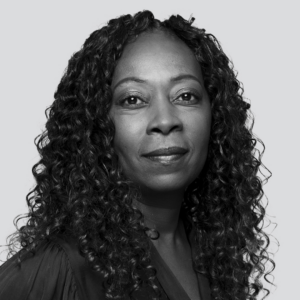
Since the announcement of the new FCPA enforcement priorities [in a memorandum from Deputy AG Todd Blanche in June 2025 (Blanche Memo)], much of my day-to-day work in this area has shifted to assisting clients with updating and reformulating their compliance risk assessments to better align with the new priorities. This has included closely examining the company’s operations in the newly designated high-risk jurisdictions and high-risk sectors, identifying potential risk areas, mapping those risks to the existing compliance infrastructure, and conducting a gap analysis to determine what gaps need to be filled. I have also been spending more time advising my non-U.S. clients on what this all means for them, given the focus on protecting U.S. economic interests abroad and the language in the [Blanche Memo] alluding to a potential disproportionate enforcement impact on non-U.S. companies competing against U.S. entities for lucrative foreign government contracts.
I have also been spending more time consulting with my A&O Shearman white collar colleagues across the globe, particularly in jurisdictions like the U.K. and EU, where the enforcement trend has been moving in the opposite direction and laws are being adopted to increase corporate liability for white collar crimes. We have been working collaboratively to advise our multinational clients on how to remain compliant in a diverse and evolving global enforcement environment.
Interestingly, I have seen an uptick in outreach from companies seeking my guidance on anti-corruption due diligence for large cross-border M&A transactions, amid a concern that the seemingly lax enforcement environment in the U.S. may have created a compliance vacuum increasing the risk associated with acquisition targets.
Overall, there still has been quite a bit of activity, albeit with a redirected focus. My clients understand that there are still many potential minefields out there when it comes to anti-corruption enforcement risk – my role is to help navigate them, whatever form they may take.
What pivotal moment, opportunity or turning point significantly influenced your career trajectory and what role did gender play in that experience, if any?
A pivotal inflection point for me in my career journey was when I worked on my first FCPA case. I was a mid-level associate and we had been selected for one of our first major FCPA monitorships. I was not initially assigned to the matter, but I observed a number of my colleagues flying all over the world, learning all about the company’s business, meeting with senior management, conducting employee interviews, analyzing business records, and conducting forensic testing. I became fascinated and wanted to get involved. In my mind, this presented the perfect opportunity to meld my two passions, namely, investigating corporate crime, leveraging all the skills I had acquired as a criminology major in college, and having an international practice.
Initially, I was hesitant about approaching the matter partner, as I had not worked on an FCPA case previously and questioned what additional value I could bring to what seemed like an already fully baked team. But I decided to go for it, remembering advice I heard from a speaker at a women’s conference about stepping outside of your comfort zone and not underestimating your worth, which sometimes as women we might have a tendency to do. So I marched into the partner’s office and asked to be added to the team. I will admit I was a little timid at first and feeling somewhat discouraged as he recounted all the reasons why he did not need another person on the team. But my perseverance paid off and he eventually relented, assigning me to work with the forensic accountants. While this was not the exact role I had in mind, I was determined to make the most of it, and I did. This ended up being the most critical part of the case for the government, allowing me to take on a prominent role and shine. It was truly a transformative experience, which I was able to leverage to take on a leading role on the next monitorship. Just a year later, I was leading teams on the ground in multiple countries all over the world – the Middle East, Africa, Southeast Asia, and Latin America – spearheading case strategy, and leading presentations to the DOJ and SEC. This became the launchpad for the successful global investigations and compliance practice I was able to build over the years.
How do you approach mentoring others, and what advice do you find yourself giving most often?
I am a firm believer that mentoring should happen organically. Every interaction should be seen as an opportunity to impart knowledge, wisdom, advice, and encouragement. I developed a practice over the years of incorporating what I call “mentoring moments” in my interactions with junior lawyers. These are opportunities to teach and provide feedback in real time, identifying both areas for growth, as well as providing positive reinforcement. I also find it effective to mentor by modeling behavior, to teach by example. That means being intentional about pulling younger lawyers into interactions with clients, taking the time to sit with them and explain why I made certain revisions to their work product, and getting them involved in all aspects of a matter, even if it means not billing the client for that time.
Regular check-ins are also important, as those human connections are so essential. Additionally, I try to make sure that I meet people where they are. I truly believe that no one is unteachable. I am guided by the principle that everyone has something to offer and can add value. That is probably the most common piece of advice I give to younger lawyers. Know your worth, find your unique superpower and use it to your advantage. I was given this advice as a young lawyer from a mentor a long time ago, who told me, quite astutely, that I would probably never be the loudest person in the room, as that is not in my nature, but I do know how to read the room, process information, exert quiet power, and be effective. Some of the most impressive female lawyers I have come across modeled similar behaviors and I have been inspired by them. I hope to impart the same wisdom to the next generation.
Gwendolyn Lee Hassan
Vice president and CCO at Unisys
Hassan serves as vice president and CCO for Unisys Corporation, a global technology solutions company. In addition to responsibility for the global ethics and compliance program, she also leads the organization’s trade compliance function globally. She previously served as global director of compliance for CNH Industrial, the world’s third largest capital goods maker, where she also led the corporate compliance and trade compliance programs globally. She is the founder and host of the “Hidden Traffic” podcast discussing developments in human trafficking and forced labor prevention and regulation.
How has your day-to-day work been impacted by the changes in enforcement priorities over the past year, and how have you navigated that shift?

The deprioritization of FCPA enforcement has created an interesting shift in terms of ethics and compliance programs. The lack of enforcement in that area has created the perception among many that “bribery is okay now” which it most certainly is not. It has been important to remind people that the cultural and behavioral expectations of our companies have not changed even if it appears enforcement priorities have.
It has also provided an opportunity to educate people about the fact that there is no statute of limitations for charges of conspiracy to violate the FCPA which creates the very real risk that companies may be held accountable at some future date when enforcement priorities have shifted again for actions they take today. This shift has also created an opening to talk about other laws that apply to global multinationals including the U.K.’s new cause of action for failure to prevent fraud [under s.199 of the U.K. Economic Crime and Corporate Transparency Act 2023 (ECCTA)]. Employees need to remember that changing enforcement priorities in one country are not tied to, and in fact are also counteracted by, the enforcement priorities of others.
What pivotal moment, opportunity or turning point significantly influenced your career trajectory and what role did gender play in that experience, if any?
When I was a newly minted law school graduate in my very first attorney position, I was also pregnant with my first child. The head of HR at the firm I was working for, who was also a woman, approached me and asked if the rumors were true. I asked what rumors she was referring to and she said, “The rumor that you’re knocked up.” I was stunned by this response, to say the least.
I responded, “My husband and I are expecting our first child in about 5 months if that is what you mean.” She responded by laughing derisively and “congratulating” me; her voice dripping with sarcasm as she said, “Well, you’ve doomed yourself to doing a half-ass job of everything from now on. You won’t be a very good attorney because you’ll always be distracted by your duties as a mother, and you’ll never be a very good mother because you’ll be away from your child and working all the time, so congratulations on that.” I went to the bathroom and cried.
I immediately knew this woman (who was childless herself) would never have said the same things to a man who was about to become a father. That could have derailed my career if I had let it. I chose, however, to prove her wrong instead.
Now, some 28 years later, I find myself thankful for her comments despite their bias and cruelty because they cemented in me a determination to be both an excellent mother and an excellent attorney. I am proud to report that I have excelled at both and, in fact, believe that each role made me better at the other. I am a better mother because I am also an attorney and am certainly a better attorney because I am also a mother.
How do you approach mentoring others, and what advice do you find yourself giving most often?
I truly enjoy mentoring others and feel something close to a karmic obligation to help others in their professional journeys, especially other women.
I don’t have a one-size fits all approach to mentoring as different people need and want different things out of their mentoring relationships. Some people want advice on how to manage up to their boss, while others want tips on how to manage difficult people on their team. Some people have asked for help learning how to network while others want to talk about how to set better work-life boundaries.
I approach mentoring as a privilege and an honor; the fact that someone sees my career and my style of working as something they can learn from is a huge compliment.
Throughout my own career I have had, and still have, people who serve as invaluable mentors for me. Being able to “pay forward” the kindness and advice I have received over the years is very fulfilling for me. I think of my mentors now as my own personal “board of directors” who I turn to for advice, feedback, honest critiques, and guidance. I recommend everyone create their own personal team of advisors – you’ll find them invaluable!
Audrey Koh
Partner and head of U.K. corporate investigation and white collar defense practice, Pillsbury

Audrey Koh is a partner of Pillsbury Winthrop Shaw Pittman and leads the firm’s U.K. corporate investigations and white-collar defense practice. She has a broad range of experience across energy and natural resources, financial services, and life sciences and pharmaceutical sectors, advising corporations, senior executives and high-net-worth individuals. Koh specializes in cross-border investigations focused on anti-bribery laws, sanctions, money laundering and financial fraud that involves multi-jurisdictional regulators and enforcement authorities and parallel civil fraud litigation and asset tracing, advising clients on anti-bribery, anti-corruption, anti-money laundering, anti-facilitation of tax evasion, fraud prevention, sanctions and ESG compliance, due diligence and related training. Koh has worked at leading law firms in London, Singapore, Hong Kong, Moscow, Paris and Geneva and was seconded to the SFO as an investigative lawyer in the bribery and corruption division.
How has your day-to-day work been impacted by the changes in enforcement priorities over the past year related to bribery and corruption, and how have you navigated that shift?
As with my colleagues and peers, I have witnessed a decline in bribery and corruption matters, particularly of a cross-border nature. However, money laundering cases have surged, especially in the U.K., Europe and Asia, in part due to recent legislative and enforcement developments across the EU and U.K. Given my ties to Asia and Mandarin language skills, I have maintained my practice representing Asian clients in U.K. and European financial crime, civil fraud and sanctions matters. Additionally, the new failure to prevent fraud offence [under the ECCTA] in the U.K. has generated much compliance advisory work for my global corporate clients, which has been an enriching experience, working closely with them to put in place controls and procedures in anticipation of this broad offence with extraterritorial effect.
What pivotal moment, opportunity or turning point significantly influenced your career trajectory and what role did gender play in that experience, if any?
Without a doubt, my secondment to the SFO whilst I was at Skadden was a turning point in my career. Having started out as an mergers and acquisitions lawyer who pivoted to investigations and white-collar crime following the 2008 financial crisis, my 1.5 years at the SFO turbocharged my professional experience and trajectory. The experience I gained working on cases, from organizing dawn raids to negotiating deferred prosecution agreements, was second to none, and doing this from a prosecutorial standpoint has been transformational to the development of my practice as a defense lawyer. Crucially, the relationships I built and maintained with former colleagues at the SFO have been invaluable and stood the test of time.
How do you approach mentoring others, and what advice do you find yourself giving most often?
While I was not fortunate enough to have a mentor during the formative years of my career, the advice I find myself frequently giving (and wish I had someone who told me!) is that it is never too early to build and forge relationships, not just with clients but with peers. I know it is challenging as a junior lawyer to find the time to do so when one is inundated with work, learning and development opportunities, but it is well worth the time and effort to start building one’s network from an early stage, as you never know where these connections will take you. Also, as a woman, we tend to seek out female mentors to bond over shared experiences – if you find one, great, however, keep an eye out for male allies, too, as they can also be powerful sources of guidance and support.
Cybersecurity Law Report
Heather Egan
Partner, Morgan Lewis
Heather Egan is a leading practitioner in cybersecurity, privacy, incident response and information management. For nearly 25 years, Egan has advised on privacy and cybersecurity laws worldwide, developing a broad understanding of how multinational businesses have adapted their practices to evolving laws. She provides strategic advice to clients, including some of the world’s most recognizable brands, seeking to leverage emerging technologies, including AI and advertising technology.
Which recent regulatory (or other significant) development in privacy, cybersecurity or AI has had the greatest influence on your day-to-day work, and how have you navigated that shift?
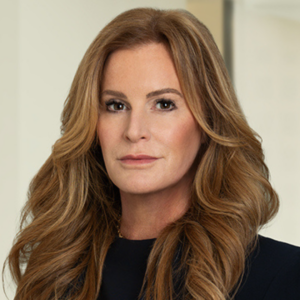
There’s no question – for me, the most significant recent development is AI itself. It has fundamentally reshaped my day-to-day work in several ways. First, I use AI tools regularly, both personally and professionally, across a broad range of support functions. They significantly reduce the time required for routine tasks and enhance efficiency.
Second, AI is transforming the business landscape and driving substantial demand for legal guidance. In the United States, a growing patchwork of state laws, reinforced by general consumer protection frameworks, has created a complex compliance environment. At the same time, organizations that implemented rigid compliance programs or intake processes are discovering that those structures struggle to keep pace with how AI is actually being deployed in practice, and how evolving use cases align with regulatory requirements.
In response, we have been helping clients design AI governance programs that are flexible, scalable and adaptable to a wide range of applications. Given the rapid evolution of the technology, a static or overly prescriptive approach simply is not sustainable.
What pivotal moment, opportunity or turning point significantly influenced your career trajectory and what role did gender play in that experience, if any?
I pursued doing things at work that interested me and was not afraid to say “yes” to whatever assignment came in the door. I started out as an employment lawyer, and in the early 2000’s we had employment matters that involved cyber or privacy. After I worked those cases, matters would come in the door and people would say “oh, Heather does that” and my practice grew from there. I joined our internal OSHA Catastrophe Response Group where we represented companies experiencing workplace accidents—refinery fires, plant explosions and more. I didn’t realize it then, but that was training ground for my cyber practice today. As workplaces became more digital, so did my practice and today, we triage a ransomware attack (which is the digital equivalent of an explosion) using similar workstreams to how we triaged those physical catastrophes way back when. As I became more senior, I was able to increasingly direct my practice toward the areas of law that interested me the most. I don’t think my gender influenced this experience, but I was lucky to work at a firm at the time that allowed me to go down to reduced time when my kids were little, and then come back up to full time when I was ready to manage that, and this did not affect my partnership trajectory, so I am deeply grateful to the mentors who supported me through that development.
How do you approach mentoring others, and what advice do you find yourself giving most often?
I always say: you have to do what you love. Find mentors and workplaces that prioritize your happiness and your personal and professional development. Life is short so don’t be afraid to take risks – it’s better to take a leap than stay stuck in a role that does not fulfill you. I hope this inspires some young people to go for it!
Stacy Feuer
Senior Vice President, Entertainment Software Rating Board

As senior vice president of the Entertainment Software Rating Board’s (ESRB) Privacy Certified program, Feuer ensures that member companies in the video game and toy industries adopt and maintain lawful, transparent and responsible privacy practices and policies for their websites, mobile apps and online services. She provides member companies with practical advice on resolving privacy challenges arising from the constantly changing, complex global data privacy landscape. Feuer also oversees compliance with ESRB’s privacy certifications, including its “Kids Certified” seal, which is an approved Safe Harbor program under the FTC’s Children’s Online Privacy Protection Act (COPPA) Rule. Before joining the ESRB, Feuer spent more than 21 years as an enforcer and regulator at the FTC, including as the FTC’s Assistant Director for International Consumer Protection, developing deep experience in cross-border privacy enforcement, international cooperation and policy development.
Which recent regulatory (or other significant) development in privacy, cybersecurity or AI has had the greatest influence on your day-to-day work, and how have you navigated that shift?
As the leader of an FTC-authorized COPPA Safe Harbor program for the video game industry, the growing focus on children’s and teens’ digital experiences and the corresponding expansion of privacy regulation beyond COPPA has had the biggest impact on my day-to-day work. COPPA, which was passed over a quarter century ago, currently only covers kids under the age of 13. It largely follows a traditional notice-and-consent privacy framework focused on parental control, though it does include important substantive protections for children’s personal information around data minimization, deletion, retention and data security, which the FTC emphasized in the 2025 amended COPPA Rule.
In recent years, starting with the Age-Appropriate Design Code issued by the U.K. Information Commissioner’s Office and spreading to California and many other U.S. states, children’s privacy legislation has expanded in many different directions – covering teens, requiring companies to assess privacy and safety risks from their products and services, and mandating that companies implement settings that offer the “highest available level” of privacy by default. Although many of these newer laws have been challenged on constitutional grounds in the U.S., there are more and more laws coming into force that have these provisions. Privacy enforcement actions by the FTC and state regulators have reinforced this broader focus.
As a result, while COPPA remains at the core of our Kids Privacy Seal program, in the past few years we’ve adapted and expanded our self-regulatory requirements to incorporate these evolving standards. We’ve added safeguards for teen privacy and embedded into our program requirements privacy-by-design-and-default practices, such as limiting public profiles and friend-finding features and restricting unmoderated, open text and voice chat. These changes are reshaping how we guide our member companies in meeting their legal obligations and in developing meaningful protections for their younger users. Navigating this shift is a constant ongoing exercise in translating still uncertain and evolving legal requirements into concrete, workable practices that video game and toy companies can implement while keeping their products fun and engaging.
What pivotal moment, opportunity or turning point significantly influenced your career trajectory and what role did gender play in that experience, if any?
The simple answer would be that no single moment defined my career because my legal jobs have built on each other. But if I had to identify a turning point, it was the day I first heard about the FTC from the legendary Jodie Bernstein, then head of the FTC’s Bureau of Consumer Protection. At the time, I was a partner at an international boutique firm coordinating litigation in 14 countries to recover funds for depositors and creditors in what was then the largest global banking scandal in history. It was fascinating, high-pressure and rewarding work. But when Jodie came to speak at a firm lunch and described the FTC’s work to protect consumers – which, at the time, included the FTC’s first internet privacy action (GeoCities), the rulemaking for the original COPPA Rule, and enforcement actions against online frauds and scams – something clicked. During law school, I was a summer law clerk for the ACLU’s nascent information technology and privacy project. Realizing that I could build on that experience while serving the public good at the FTC made it clear that it was time for a career move. The rest, as they say, was history.
When I arrived at the Commission in 2000, the agency was expanding its focus on the impact of technology on consumers, including privacy and data security. In fact, one of my early projects that year was organizing a workshop on The Mobile Wireless Web, Data Services and Beyond: Emerging Technologies and Consumer Issues. During my time at the FTC, I was fortunate to work on a wide range of investigations, enforcement actions, and policy matters spanning advertising, fraud, privacy and data security, international cooperation, and self-regulation. That work directly led to my role at the ESRB today.
As for the role of gender in that experience, it was more about lifestyle than opportunity. My law firm role demanded constant international travel, a pace I knew would be difficult to sustain while starting a family. Joining the FTC allowed me to do meaningful, challenging work while building a life that allowed me to balance family and career. Through my work in the agency’s Office of International Affairs, I found ways to use my cross-border litigation skills and reconnect with international work, but in a way that fit with my life.
How do you approach mentoring others, and what advice do you find yourself giving most often?
I’ve had the privilege of mentoring colleagues throughout my career, both through formal programs and in day-to-day interactions. My approach is to help people discover and build on their own strengths rather than trying to fit into a predefined path – something the law can sometimes push you toward. I encourage mentees to bring their authentic selves to work and to experiment with building a diverse set of skills they can draw on no matter what issues they’re working on at the moment. I also remind them that early career experiences, even the ones that might feel sideways or challenging, are opportunities to figure out what they enjoy and where they can have the most impact. And I always emphasize continuous learning. I just completed the IAPP’s AI training course and earned my AIGP (AI Governance Professional) certification, which is one example of modeling the advice I give.
Jeewon Kim Serrato
Co-founder and COO, Bear Financial; senior fellow and lecturer, UC Berkeley School of Law chief privacy officer executive education program

Jeewon Kim Serrato is an entrepreneur and senior fellow with the Berkeley Center for Law & Technology and a recognized authority in consumer protection, emerging technologies, and global data strategy. She brings more than two decades of experience at the intersection of business, law and policy — advising the U.S. government and Fortune-scale enterprises on mission-critical programs, privacy-by-design and the deployment of transformative technologies. As a former chief privacy executive for two global corporations — including a world-leading provider of information-based analytics and decision tools and a major financial institution — Serrato has led enterprise data strategy programs, managed over 600 security incidents, and guided brand and asset management for a publicly traded firm with $3.5 trillion in assets. Her work spans advising global technology platforms, driving value-enhancing digital initiatives through mobile, web, and AR/VR apps, and leveraging AI-powered solutions to unlock growth and innovation. Serrato also is the former global head of consumer protection, member of the global AI task force and partner in the San Francisco office at Pillsbury. Previously, she worked on Capitol Hill.
Which recent regulatory (or other significant) development in privacy, cybersecurity or AI has had the greatest influence on your day-to-day work, and how have you navigated that shift?
The most significant development shaping my day-to-day work has been the wave of U.S. state privacy laws that began with the California Consumer Privacy Act in 2020. For the first time, consumers were given clear rights over the data collected about them – what’s gathered, why it’s used, how it’s shared, and with whom. Any business, product, service or platform handling personal data had to rethink transparency, governance and accountability. That model has now been adopted in 19 other states, fundamentally reshaping how privacy, cybersecurity and AI are regulated in America.
This shift didn’t just change the regulatory landscape – it changed how I saw my own career. After two decades working inside these frameworks, I realized my regulatory experience had become a superpower in a world where trust and safety now fuel innovation. That insight is what pushed me to become a founder. I saw a market opportunity to build responsibly from day one, and I wanted to prove that compliance and creativity can coexist – and even accelerate each other.
Many early-stage founders worry that regulation will slow them down. I tell them the opposite: understanding these rules early gives you clarity, credibility, and a foundation for sustainable growth and the ability to scale. When you build with trust at the center, you’re not just meeting legal requirements – you’re earning the confidence of customers, investors and partners.
What pivotal moment, opportunity or turning point significantly influenced your career trajectory and what role did gender play in that experience, if any?
After 21 years advocating for the U.S. government and Fortune 500 companies, I reached a pivotal moment where I decided to take a leap of faith and build something of my own. Stepping into entrepreneurship wasn’t just a career shift – it was a deliberate choice to claim space in an arena where women are still underrepresented. Gender shaped my awareness of who gets to lead, who gets funded and whose ideas are amplified. That awareness pushed me to become a founder myself.
Over the years, I’ve watched how few women are positioned as builders, decisionmakers and owners. I wanted to change that narrative for myself and, hopefully, for others. I believe the future needs more women shaping industries, technologies and companies, and I’m committed to being part of that shift. I want to help build a world where women see entrepreneurship as a natural next step – not an exception.
How do you approach mentoring others, and what advice do you find yourself giving most often?
How I approach mentoring: I think of mentoring as a two-way street. I can share the lessons I’ve learned and the path I’ve walked, but I also learn from the people I mentor – their industries, geographies, lived experiences and the challenges unique to their stage of life or career. That exchange keeps me curious and reminds me that leadership isn’t about having all the answers; it’s about creating space for growth on both sides.
Advice I give most often: I find myself returning to a few themes:
- Own your story — No one else has your combination of experiences, instincts and perspective. That’s your advantage, not something to minimize.
- Take the leap before you feel “ready” — Most pivotal opportunities don’t arrive with perfect timing or certainty. Growth usually starts with discomfort.
- Build relationships, not transactions — The strongest careers are shaped by people who champion you, challenge you and open doors you didn’t know existed.
- Stay adaptable — Industries shift, technologies evolve and careers rarely follow a straight line. Flexibility is a superpower.
Hedge Fund Law Report
Stephanie Breslow
Partner, McDermott Will & Schulte
Stephanie Breslow is a partner at McDermott Will & Schulte and co-head of the credit funds practice. She maintains a diverse practice that includes hedge funds, hybrid funds, credit funds, activist funds and private equity funds, focusing on fund formation and providing regulatory advice to investment managers. She also represents fund sponsors and institutional investors in connection with seed-capital investments in fund managers and acquisitions of interests in investment management businesses. Stephanie is a current member of 100 Women in Finance and former member of the board of directors.
Which recent regulatory (or other significant) development in the private funds space had the greatest influence on your day‑to‑day work, and how have you navigated that shift?
The change in administration has resulted in new SEC priorities and a reduction of regulation by enforcement. This has been helpful in my practice, particularly in the crypto and blockchain area in which we are able to advise clients with greater certainty. One particular recent focus has been on tokenization of fund securities and underlying real assets.

What pivotal moment, opportunity or turning point significantly influenced your career trajectory and what role did gender play in that experience, if any?
I began my career as a transactional generalist. As I became more senior, I decided that I preferred to advise funds and their sponsors holistically on their businesses, rather than being the deal lawyer on specific projects. I moved firms and restructured my practice with a targeted focus on investment management. As to the role gender played, I think it was true back then and, to some extent, is still true now that it is easier for a woman to advance to partnership as a specialist with demonstrable expertise, rather than relying on the hope that male-dominated partnerships will see a woman in the early stages of her career as a younger version of themselves.
How do you approach mentoring others, and what advice do you find yourself giving most often?
I try to instill self-confidence in my mentees and to encourage them not to fear that they should already possess the full degree of judgment and knowledge that will develop over time. I tell them that the best way to determine the right career path for themselves is to find more senior colleagues who seem happy with their practices and figure out what the source is of that satisfaction and whether it resonates. And, although it is important not to ignore serious weaknesses, I encourage mentees to develop and focus on their strengths, while thinking about the type of practice that will make the best use of those strengths.
Anne Choe
Partner, Simpson Thacher

Anne Choe is a partner in Simpson Thacher’s registered funds and asset management regulatory and enforcement practices and represents investment managers, registered funds and private funds on a broad range of regulatory and transactional matters. She has deep experience representing investment advisers and funds in SEC examination and enforcement matters, as well as advising investment management firms on registration with the SEC as investment advisers and exemptions from registration for U.S. and non-U.S. firms. Anne was featured by Lawyers of Color in its inaugural “Wonderful Women” list in 2023.
Which recent regulatory (or other significant) development in the private funds space had the greatest influence on your day‑to‑day work, and how have you navigated that shift?
The biggest shift has been in the push for the democratization of private assets. This push has been driven both by fund innovation, as well as regulators open to more retail investor access to private markets, with the right processes and controls. We have been at the forefront of advising clients on the launch of these types of products. However, with fund innovation often comes regulatory opportunities and challenges. On the regulatory side, my day-to-day work has consisted of helping private fund managers adapt to the regulatory shift and requirements that come with the democratization of private assets – from navigating examinations to being trained on any new requirements.
What pivotal moment, opportunity or turning point significantly influenced your career trajectory and what role did gender play in that experience, if any?
The transition from associate to partner was a pivotal moment in my career. I had a really supportive mentor who was there for me during that time, giving me the opportunity to more directly interact with clients, hone analytical skills and network with contacts broadly. Although the legal field overall has generally been behind the curve on gender equality, my personal experience has been that clients turn to us because of our expertise and advocacy skills – and those have proven to be what is most important. This rings true both in my transition to partner, as well as the support I feel from female and male colleagues alike as I continue in my legal career today.
How do you approach mentoring others, and what advice do you find yourself giving most often?
I encourage and believe in taking an active approach to mentorship in which you are invested in your mentee’s individual goals. The most fruitful mentorships are often the ones where you are in the trenches and working together on a regular basis, getting to know your mentee in a personal and professional setting. When getting to know my mentees, I often find myself giving the advice that they should be open with others about goals and expectations. The best way to grow and take advantage of mentorships is through advocating for yourself, speaking up and communicating goals.
Heather Wyckoff
Partner, Alston & Bird
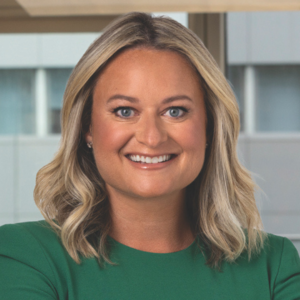
Heather Wyckoff is a partner in the investment funds practice at Alston & Bird in New York. She has guided investment managers through fundraises totaling more than $100 billion throughout the past 20 years. As the only attorney in the U.S. recognized by Chambers Global and Chambers USA across hedge funds, private equity funds and investor representation, Heather brings a rare 360-degree perspective to fund formation. She is particularly sought after for her innovation in evergreen and semi-liquid structures, helping clients navigate new or esoteric asset classes and creating bespoke funds designed for global scale. In addition, she is secretary of the global association board of 100 Women in Finance and chair of the governance committee.
Which recent regulatory (or other significant) development in the private funds space had the greatest influence on your day‑to‑day work, and how have you navigated that shift?
There have been key SEC regulatory developments that make it easier for managers of private funds to launch co-investing retail alternative funds. Pursuing their strategies in vehicles such as business development companies, interval funds and tender offer funds enables them to access the retail investor/mass affluent distribution channels. For managers that have already been experimenting with semi-liquid and evergreen private funds to pursue private credit, PE/venture or real estate strategies, the move into retail products is a natural continuation of that innovation and a key tool to expand their distribution capabilities. I’ve been collaborating regularly with our registered funds team to help guide private funds clients on the addition of retail distribution, which is more akin to setting up a new business line than it is to launching a new fund.
What pivotal moment, opportunity or turning point significantly influenced your career trajectory and what role did gender play in that experience, if any?
I moved my practice to Alston & Bird fairly recently, recruiting key members of my team to join me. We are beyond grateful for the faith and trust that each client placed in following us to our new platform, where we were confident the firm’s expanded capabilities – and our new colleagues’ eagerness to collaborate – would support anything their business needed as it grew. I attribute a certain degree of resilience to my experience as a mom of four who were at one point all under the age of 2 ½! (They are now 10, 10, 10 and 8.)
How do you approach mentoring others, and what advice do you find yourself giving most often?
It’s not possible to provide excellent service to clients on complex fundraising without a stellar team who enjoys working together; ours is terrific! Informal mentoring is a key part of our daily conversations. My top two tips for new lawyers are:
- It’s better to condition yourself to get up early than to get into a pattern of staying late and coming in late (especially if you work on cross-border matters).
- It’s never too early to build a network of industry friends and colleagues – as you all advance in your careers, the bonds you’ve maintained with people that you like spending time with will prove invaluable.
Private Equity Law Report
Angie Batterson
Partner, Cadwalader, Wickersham & Taft
Angie Batterson is a partner in Cadwalader’s fund finance group and a member of the firm’s management committee. She focuses on insurance company solutions and has represented many of the largest life insurance companies in deploying over $40 billion of assets in over 150 transactions in the past five years involving net asset value (NAV) facilities, GP commitment solutions, rated feeder funds, secondaries funds, liquidity facilities, private capital back leverage and other private equity bespoke credit solutions.
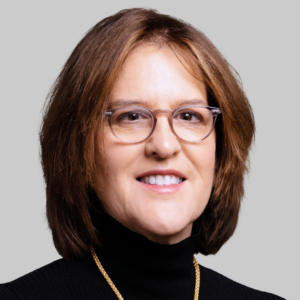
Which recent regulatory (or other significant) development in the private funds space had the greatest influence on your day‑to‑day work, and how have you navigated that shift?
The National Association of Insurance Commissioners recently implemented significant changes to the rules that impact how insurance companies invest into private equity structures. There was not much to go on when this was first proposed, so I reached out to my clients at insurance companies to get their perspectives, and I really dug deep into the new proposed rules and regulations. As a result of this legwork, I was able to be at the forefront of the profession when it came to structuring deals under the new rules and quickly established myself as a leading expert in the field.
What pivotal moment, opportunity or turning point significantly influenced your career trajectory and what role did gender play in that experience, if any?
A decade ago, I was well established in my career as a leveraged finance lawyer when I was asked to pitch in for a partner who was going on vacation. I ended up working with a client I did not know on what became my first NAV deal. I jumped right into what was a new practice area for me. Fast forward to today, and I no longer practice leveraged finance. Now almost all my work is in the NAV, rated-note feeder space for insurance companies and very little is in the leveraged finance space. Had I not pitched in and worked on that deal, I would not have the insurance solutions practice I have today.
How do you approach mentoring others, and what advice do you find yourself giving most often?
I try to mentor by teaching younger attorneys not only how to be good technicians but how to connect with your clients on both a personal and professional level. Younger attorneys rarely have the opportunity to do much more than work around the clock. However, if you can show them how to reach out, connect with their clients and still do great work, then there is no better gift that you can give them because their practice will be much more fulfilling along the way.
Jacqueline Eaves
Partner, Goodwin Procter
Jacqueline Eaves is a partner in Goodwin’s private equity and private investment funds groups. She focuses her practice on complex business transactions in the private funds secondary market, including traditional portfolio sales, preferred equity and GP-led transactions. She also has extensive experience on a broad range of corporate transactions, including mergers and acquisitions, joint ventures and corporate advisory matters.
Which recent regulatory (or other significant) development in the private funds space had the greatest influence on your day‑to‑day work, and how have you navigated that shift?

Watching liquidity solutions evolve from a niche strategy into a mainstream necessity has been one of the most gratifying developments of my career. What was once viewed with a degree of skepticism is now firmly embedded in the market toolkit, and that shift is reflected in the growing volume of regulatory attention and market guidance the space has attracted. The template on continuation fund disclosure recently issued by the Institutional Limited Partners Association is a clear signal of just how far the market has matured.
Navigating that evolution has required staying genuinely ahead of the curve. Clients — whether GPs structuring a continuation fund or secondaries investors deciding whether to invest and on what terms — need counsel who understands not only the current guidance but the direction of travel. For my practice, it has meant deepening expertise continuously; engaging proactively with emerging standards; and helping clients understand the difference between the essentials and the “nice-to-haves.”
What pivotal moment, opportunity or turning point significantly influenced your career trajectory and what role did gender play in that experience, if any?
The Coronavirus pandemic was, paradoxically, one of the most formative periods of my career. The initial weeks brought an almost complete pause — transactions stalled, timelines collapsed and there was genuine uncertainty about what would come next. But what followed was extraordinary. The secondaries market rebounded with remarkable speed and, by 2021, we were seeing record transaction volumes; a surge in single-asset continuation fund deals; and a level of creativity and agility in deal structures that I had not previously encountered at such scale.
That experience taught me three things that have stayed with me. First, that a threat can become an opportunity faster than you expect — the question is whether you are positioned and mentally prepared to move when the market does. Second, that nimbleness is a genuine competitive differentiator; the practitioners and clients who thrived were those who could adapt quickly and execute with confidence under uncertainty. Third, and perhaps most importantly, that resilience is not simply about surviving difficult periods — it is about emerging from them with sharper instincts and a clearer sense of what you are capable of.
As for gender — it did not play a significant role in that particular chapter. This was more a story of grit: the willingness to stay focused, remain available and work hard when the moment came.
How do you approach mentoring others, and what advice do you find yourself giving most often?
I genuinely enjoy mentoring, and I am fortunate to work in an environment at Goodwin where it is woven into the fabric of day-to-day life. The relationships I find most rewarding are the organic ones, built through working together on transactions; sharing real-time feedback; and being honest about both what is going well and what needs work.
The advice I find myself returning to most often is this: invest in coaching and presentation training, and do it earlier than you think you need to. Everyone can improve — regardless of how experienced or accomplished they are — and the difficulty is that we are often the last people to see our own blind spots. A skilled coach or trainer holds up a mirror in a way that even the most well-intentioned colleague cannot.
I also find, particularly with women, that there is a tendency to underestimate the amount of unseen effort that sits behind the polished performance of leaders and senior clients at the top of their game. What looks effortless rarely is, and understanding that helps recalibrate expectations — both of yourself and of the process.
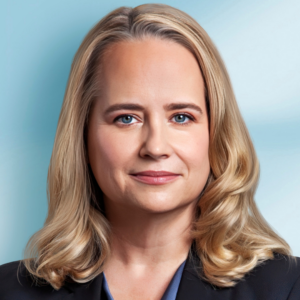
Dabney O’Riordan
Partner, Fried Frank
Dabney O’Riordan is a partner in Fried Frank’s litigation and asset management departments. She advises asset managers and public companies on SEC regulatory compliance and represents clients before the SEC and in private disputes. A seasoned litigator with years of experience in both private practice and at the SEC, she offers unparalleled expertise in SEC matters. She regularly develops novel approaches to achieve key client objectives while minimizing regulatory risk, and her extensive experience allows her to effectively engage with the SEC staff regarding substance and policy.
Which recent regulatory (or other significant) development in the private funds space had the greatest influence on your day‑to‑day work, and how have you navigated that shift?
The dramatic swings in the regulatory environment over the past couple of U.S. presidential administrations have been significant for private fund advisers to navigate. We went from four years under a very aggressive SEC – in terms of enforcement and rulemaking against those firms – to a dramatic drop in both. As a result, the industry was understandably wary of engaging with its regulator given the tone of the SEC’s communications. That has changed, however, with the SEC rebooting its regulatory agenda and issuing constructive and practical guidance.
In addition, the sharp slowdown of public enforcement settlements over the past year has made it harder to see exactly where the SEC will focus with respect to private fund advisers. Based on my experience at the SEC over many administration changes, the enforcement orders we were seeing suggest that the SEC will continue its examination and enforcement focus on private fund advisers’ fiduciary duties to the funds they advise and the various protective rules under the Investment Advisers Act of 1940 (Advisers Act).
What pivotal moment, opportunity or turning point significantly influenced your career trajectory and what role did gender play in that experience, if any?
A pivotal moment for me was joining the SEC’s Asset Management Unit when it was first formed after the 2008 global financial crisis. It was then that the SEC realized it needed specialized expertise for investigations under the Advisers Act. I became particularly interested in the unit after investigating an adviser who had lost all his clients’ money by investing their assets in two preferred bank stocks using maximum margin. His clients – retirees, schoolteachers and other regular people of modest means – ended up losing every penny and even owing the brokerage firm money because of the margin loans. I sat across the table interviewing clients whose lives had been devastated: they could not pay their mortgages, afford necessary medications or send their kids to college.
I was part of the Asset Management Unit for 12 years, including more than six years leading it. My time in the Asset Management Unit has defined my career: I learned a great deal about the industry through my investigations, working with other senior leaders across the SEC and engaging with the industry. I now bring all that experience to advise my clients.
How do you approach mentoring others, and what advice do you find yourself giving most often?
It is important to give constructive feedback. It is incredibly unkind to withhold candid feedback that may help someone in the long term simply to avoid feeling bad or hurt feelings in the short term. In my various management roles, I often encountered situations where there were performance issues that the person had never been told about directly, and thus the performance issue went unaddressed. That can lead to real frustration when someone later learns they could have fixed the issue relatively easily. It’s important to be thoughtful in how you deliver feedback, but avoiding it to spare yourself discomfort is not fair.
There are two pieces of advice I give most often. First, if you learn you made a mistake that likely needs to be fixed, communicate it and act on it immediately. Trying to hide mistakes is a recipe for disaster, both in terms of the mistake itself and your long-term reputation with colleagues and clients. Second, think proactively about your work. Yes, do what you are asked to do well, but also anticipate what it will take to reach the goal and offer ideas for next steps.