Brookfield brings global PE playbook for industrials, business services to Asia


- Asia private equity assets have risen from USD 1bn to USD 15bn since 2018
- Japan will soon be added to India, Australia, China, and Middle East footprint
- Industrials, business services are touchstones of tighter investment mandate
Aditya Joshi is managing partner and head of private equity for Asia Pacific and Middle East at Brookfield. He joined the firm in 2019, having previously worked for Blackstone and Apax Partners in India. PE accounted for USD 166bn out of Brookfield’s USD 1.3tn in total assets as of June 2026.
Q: How would you characterise Brookfield’s private equity business globally?
A: We mostly invest in industrials and business services. We’ve done that for 25 years, generating a 26% compound IRR through wars, recessions, the pandemic. First, we only invest in sectors we understand. Second, we set a high standard in terms of business quality – we like buying good businesses at reasonable prices. Third, we have people on the ground in every market who have experience running companies, usually in CXO roles. We work with management teams on value creation plans, and 50%-60% of our returns come through operational improvement.
Q: What are you doing in Asia?
A: We are building on our global playbook from an Asia perspective. When I joined nearly eight years ago, our Asia AUM [assets under management] was USD 1bn. It’s now USD 15bn. During those eight years we’ve done a complex carve-out like Magneti and tough take-privates like Network, we’ve bought the Trimco platform and done four bolt-on acquisitions, we’ve done organic buildouts with Everise and La Trobe, and with Indostar, we’ve done a turnaround.
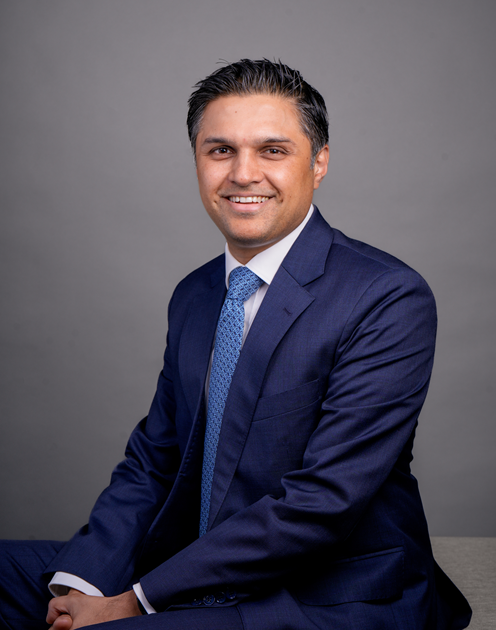
Joshi
Q: And the target geographies are India, Australia, China, and the Middle East?
A: We have offices in Mumbai, Sydney, Hong Kong, and Dubai, so those are the four large markets we are targeting. We will open for private equity in Japan at some point this year. If we don’t have boots on the ground, if we aren’t close to the regulator, if we aren’t close to the competition, we don’t know whether we can deliver private equity returns in those markets.
Q: What are the benefits of categorising the Middle East with Asia Pacific?
A: A lot of what we do there is Middle East for Middle East. We were ahead of the curve – we’ve had an office there for 15 years, we know the local market. We’ve raised USD 2bn for a Middle East-focused private equity fund, and there was good demand from Asia. There is a lot of bonhomie with the Middle East wanting to invest in China and China wanting to invest in the Middle East. WFC [World Freight Company], which we bought earlier this year, has a dual headquarters in Hong Kong and Dubai. That trade corridor is beneficial for them.
Ten years ago, the Middle East was largely a market for selling wealth products, and that was done out of Europe. But when it comes to investing in the Middle East, there is a proximity to Asia, not just from a geographical perspective, but from a language and culture perspective. For example, when I travelled from Mumbai to Dubai for deal meetings, a lot of management teams were Indians who had moved there 15 years ago, so sometimes conversations would be in Hindi. Europe-Middle East might be the right wealth corridor, but Asia-Middle East is the right business or investment corridor.
Q: How is artificial intelligence (AI) shaping your approach to industrials?
A: We see industrials as a great way to play AI. These are often large manufacturing, factory-oriented setups that produce essential components for other B2B businesses. Many require overhauls when it comes to technology, automation, and AI. One company we are looking at still does production planning for 3,000 SKUs [stock-keeping units] on an Excel spreadsheet. We have deployed AI across our factories. There are sensors across our industrial businesses that can tell whether a machine requires some down time or an overhaul or whether maintenance can be re-honed to save on unnecessary capex down the line. The new paradigm of running industrial businesses is with AI, automation, and a lot of data.
Q: What impact is geopolitics having on industrial supply chains?
A: We are mindful of it when doing due diligence – whether there is a large insourcing element or a risk that production is going to shift. If you look at our portfolio of industrials assets, a lot of it is in-geography manufacturing for in-geography sales, so we didn’t see much direct impact from the tariffs 18 months ago. When buying a business, we need to be sure that it has globally diversified manufacturing and in-country manufacturing where the customers sit. Customers may want local manufacturing, and they may want low-cost manufacturing; and you may not be able to give them both.
Q: And, more recently, energy security…
A: That’s always been a diligence point for us. One company we are looking at right now imports gas to manufacture products for export. They have globally relevant input prices and output prices. If fuel prices go up, we need to be sure they can increase output prices to mitigate cost increases. We look at long-term data around price inelasticity, gross margin sustainability, and contracts to establish whether they have that pass-through on fuel costs. If they don’t, it’s a bit of a red flag.
Q: What does sitting alongside sizeable real assets and energy transition businesses mean for private equity?
A: There are no walls – any strategy can talk to any other strategy. We see a lot of interesting ideas that are sometimes a byproduct of what the energy or real estate teams are doing. Think of Westinghouse, which sells critical products to the nuclear energy industry. We bought that business out of bankruptcy about 10 years ago when nuclear wasn’t a good word, but our energy team was saying, ‘There’s going to be a massive shortage, we need more clean energy.’ That turned out to be a multi-bagger for the private equity team. Many of our industrials investments are one degree of separation from infrastructure, real estate or energy, and we get a lot of insights from those conversations.
Q: Where is the line between infrastructure and private equity?
A: We have a very clear definition of what is infrastructure and what is private equity industrials. If you have long-term contracts – 10, 15, 20 years – with take or pay and a fixed revenue component, it’s much more infrastructure-like. If you don’t have long-term contracts, and revenue is more re-occurring, it might be right for private equity. COVID was a true test of what is infrastructure and what is not: you can call something infrastructure, but if revenue went to zero, it’s not bolted to the ground. Through COVID, all our infrastructure businesses earned income every month, whether people were working from home or the office, whether economies were shut or open.
Q: Some investments are classified as essential services. Would healthcare qualify?
A: Yes, it does, but we have decided to be much more focused on our core sectors in private equity, which are industrials and business services. If we do too many things that look like essential services but don’t sit within our core sectors, we could end up making mistakes.
Q: Healthscope would be one of those?
A: Healthscope was a good way to play essential services within Australia, but the deal happened just before COVID, which had a huge impact on their business and profitability. We tried our best to turn it around, but we couldn’t. We had massive learnings from that, both in terms of our strategic underwriting and our go-forward business in Australia. The fault line was partly COVID and partly the impact on revenue of sharing premiums with insurers. If your revenue is concentrated in a few insurers, that’s not good. In India, hospitals get 80% of their revenue in the form of cash payments, so that’s a very different market from Australia.
Q: How do you decide what works in different geographies?
A: We define it as two by two: one or two sectors, one or two types of deal. We create a heat map of businesses in each market – looking at quality of revenues, quality of margins – and from that we develop a list of targets. Australia is a great market for financial services and business services. In China and Hong Kong, we acquired Trimco, which has performed well, and now we’ve done WFC. Can we do more industrials that are China for the world? Financial services is a great way to play India for India and industrials is a great way to play India for the world. Once you have that two by two, teams are much more focused. You might get dozens of ideas from bankers, and it’s distracting – you end up doing nothing or doing the wrong deals. Sometimes less is better.
Q: Many investors played India-for-the-world through IT services. How do you feel about that space now?
A: We have Everise [acquired in 2020], a Singapore business with delivery in India, the Philippines, Malaysia, Colombia, Guatemala, and the US. All its revenue comes from the US, and 90% from healthcare with clients like Centene, Aon, and UnitedHealth. Everise has done well despite AI being a bit of a headwind for the industry because the average handling time for a call is 15 minutes, compared to 90 seconds for insurance and 60 seconds for telecom. A 15-minute call is a multi-node call – a lot of judgment is involved in how the person speaking to the customer runs it.
We have been disciplined around BPO [business process outsourcing] for the last three or four years. That was partly valuations and partly seeing the AI risk ahead of time. While we recognised the benefits of the Everise model, other BPO players were getting badly impacted.
Q: In addition to acquiring WFC, recent private equity activity in Asia includes the sale of a partial stake in Australia-based asset manager La Trobe Financial. What led to this?
A: We saw that La Trobe was tracking ahead of plan and ahead of budget, and we were getting inbound enquiries. We did a strategic review at the end of last year, we ran a process, but then we had to pause it. There was still interest in a minority stake at a great valuation, and now we have Axight [a private equity firm backed by Abu Dhabi’s Lunate] as a partner. That investment is in BCP VI [which closed on USD 12bn in 2023], so it was early in our exit horizon for that fund, but it’s always good to return capital.
Q: What does this say about your approach to exits?
A: Our philosophy has evolved over the last few years. For example, we now have a formal exit committee, which tracks exits years in advance. When we buy a business, we should be able to say what it should look like at time of exit to be attractive to trade buyers, sponsor buyers or the IPO market. What should be in the VCP [value creation plan] to go from point A to point B, so the business is a scalable, sellable asset? Post-investment, we start working on 100-day and 1,000-day plans to get there.
Since we raised our last fund three years ago, we have delivered over USD 10bn in DPI [distributions to paid-in]. What LPs now often ask is how quickly after the fund closes you expect to deliver 1x DPI and then 2x DPI. They are tracking the months from close to 1x DPI.
Q: Is there a risk that you leave money on the table by rushing to deliver early returns?
A: Once you hit your target return, not selling the business is buying the business again. If you don’t sell, are you still going to make 20%-25% IRR from that point onwards? If the answer is no, then it makes sense for your investors to monetise. We have returned capital from the Middle East, mainly through dividends, and from most of our markets in Asia.
Q: Do you have targets in terms of how the private equity business should grow in Asia?
A: There’s no growth target. We’ve been successful in Asia so far because we’ve been disciplined. There have been parts of the market – India, for example – where for three or four years we thought it was tough to invest at given valuations. We bided our time and built out other markets. Could we grow AUM 50%-70% from here? For sure. Will we be doing it aggressively or thoughtfully? Our choice is to do it thoughtfully: the right valuation, the right type of business where we can drive operating improvement and get an exit.
A service of 

Your M&A Future. Today
Explore unlimited content like this, available only in the platform.
Already a client? Sign in