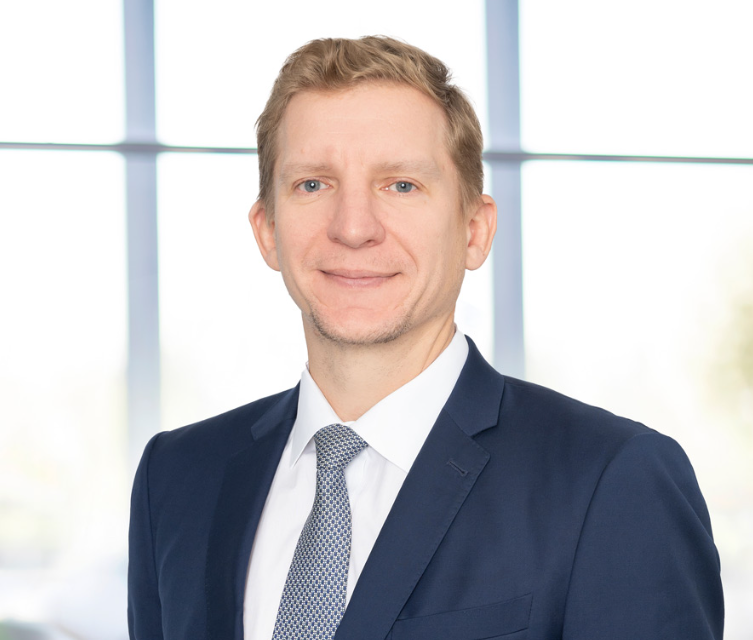
Brett Hickey, Founder & CEO at Star Mountain Capital, on impact of tariffs into services businesses


In a deep-dive ION Influencers Fireside Chat, Brett Hickey, Founder & CEO of Star Mountain Capital, unveiled a compelling investment thesis: the most significant opportunities in the booming secondary market are not in mega-deals, but in the often-overlooked lower middle market. The conversation with host Giovanni Amodeo provided a masterclass on navigating private market liquidity in an uncertain economic climate.
While headlines focus on multi-billion dollar continuation funds, a quieter revolution is happening downstream. According to Hickey, whose firm manages one of the largest teams dedicated to the US lower middle market, this segment offers a unique blend of resilience, uncorrelated returns, and untapped potential—if you know where to look.
Key Topics Discussed:
1. Tariffs, Tech, and the Defensive Nature of the Lower Middle Market
Hickey presented a counterintuitive insight: geopolitical risks like tariffs have a muted impact on lower middle market businesses.
-
Local Focus, Global Resilience: These companies typically “make and sell their services more locally,” making them less vulnerable to international supply chain disruptions than large multinational corporations.
-
The AI & Tech Equalizer: He drew a parallel to the cloud computing revolution 15 years ago, which allowed smaller firms to access enterprise-level infrastructure. Today, AI and modern technology are once again empowering agile, smaller companies to compete with—and even outmaneuver—larger, legacy-bound competitors. The key is investing in management teams that are tech-savvy and forward-looking.
2. The Art of Assessing “Essential” Services
In a potential recession, identifying truly essential services is paramount. Hickey’s framework goes beyond financials:
-
The Customer’s Wallet Test: It starts by asking: “If budgets are tighter, where are [people] willing to spend money?” He cited examples like preschool chains and school bus transportation—services with high perceived value and few substitutes.
-
The Human Capital Advantage: True durability comes from a company’s culture. Hickey looks for businesses with high employee alignment and customer satisfaction, where teams “go the extra mile.” This operational excellence creates a defensive moat that is hard to replicate.
3. The Secondary Market: Evolution and Opportunity
The demand for liquidity in private markets is a structural, not cyclical, trend.
-
A Natural Evolution: Secondaries are a “natural and logical evolution” for an asset class that represents over 90% of the US economy. They solve a core investor problem: accessing the return premium of private assets without being locked in for a decade.
-
The LP Motivation: Hickey shared an insight from a public pension plan manager: selling a small stake at a discount is “inconsequential” compared to the benefit of freeing up internal resources from monitoring a complex, mature investment. This makes secondaries a standard portfolio management tool for large LPs.
4. Navigating Continuation Vehicles and Pricing
With a flurry of GP-led deals, discernment is critical.
-
Assessing Manager Motivation: Hickey advised investors to “deeply understand the asset and the manager.” The best continuation vehicles are often built around a high-performing asset with a clear growth plan that the GP knows intimately. He noted it’s “more rare” for a portfolio of underperformers to be spun out successfully.
-
It’s About Value, Not Just Discount: “Because it’s a secondary, it doesn’t automatically make it a good deal or a bad deal,” Hickey cautioned. The focus must be on fundamental value—leverage ratios, valuation multiples, and earnings potential—rather than fixating on the discount headline.
5. The Private Credit Secondary Wave is Building
Hickey predicts medium-to-steady growth for secondaries in the $2 trillion private credit asset class.
-
Structural Drivers: The natural shorter duration of credit assets creates a more predictable liquidity schedule. Furthermore, life events (e.g., wealth transfers between generations) and operational decisions by wealth managers to clean up books create a constant stream of supply.
-
A Defensive Allure: In a high-rate environment with public equity markets at all-time highs, the defensive, yield-oriented profile of private credit remains highly attractive, ensuring continued institutional appetite.
Key timestamps:
00:07 Introduction to the Fireside Chat
01:44 Impact of Tariffs on the Market
04:22 Analyzing Business Resilience
07:09 Defining Essential Services
10:01 Decision-Making in Business Operations
12:52 Evolution of the Secondary Market
17:28 Opportunities in the Secondary Market
19:22 Challenges of Real Estate Ownership
20:09 Opportunistic Bidding Strategies
20:40 Investor Appetite for Secondaries
21:19 Market Concentration Concerns
22:12 Evaluating Value Beyond Discounts
23:07 Liquidation Structures in Private Credit
23:46 Attractiveness of Private Credit
24:29 Conclusion and Closing Remarks
A service of 

Your M&A Future. Today
Explore unlimited content like this, available only in the platform.
Already a client? Sign in