Asian private equity gets to grips with institutionalisation of exits


As Asian private equity continues to struggle with distributions, LPs are increasingly focused on whether managers are equipped to deliver liquidity in a systematic way.
Having the right processes in place could be decisive in securing a fund commitment, especially as traditional exit channels become harder to access in certain markets. From buyout players targeting dividend recaps to minority investors securing partial exits via up-rounds to everyone eyeing up continuation vehicles, the emphasis on timing and mode of liquidity is intensifying.
“We are encouraged to see there is more focus by the GPs on this aspect of fund management today,” said Lydia Hao, a managing director at HarbourVest Partners. “In the past, it has been taken for granted that the exit will come. But when public market windows are open, it’s not a bad idea to take some chips off the table. These windows aren’t necessarily open for a long period of time.”
There are many ways of testing exit process resilience during due diligence. LPs examine not only the multiple on capital returned, but also the speed at which it has been delivered – for example, the length of time for different funds to achieve distributions to paid-in (DPI) of 1x. Broader market conditions are layered into the analysis to establish the manager’s unique role in these outcomes.
Due diligence will also focus on the original underwriting case for an investment: the level of granularity when drawing up exit scenarios and identifying likely buyers; the speed and agility in positioning a company for exit; and how easily the manager pivoted when an investment didn’t go according to plan.
Some private equity firms have taken systematization to what might be seen as its logical conclusion. They have installed dedicated exit or liquidity committees that sit alongside the investment and portfolio management committees that are already part of the fabric of the industry.
When geographical mandates are wide and cheque sizes large, the case is made plainly. Exit committees enable firms to take a higher view of the portfolio, removing any country-level silos, while sharing experiences and expertise across organisations.
“If you are a pan-Asian fund with multiple teams across the region, it’s essential to have an exit committee today,” said Liam Coppinger, a senior managing director and head of Asia private equity at Manulife Investment Management. “You need that committee to make decisions in the best interests of the fund, hold different teams accountable, and review exit optionality in a systematic manner.”
This assessment doesn’t extend into the middle market. Numerous LPs claim to have suggested that managers formalise exit processes, but they stop short of advocating for formal exit committees. The scope of the organisation, based on geography, portfolio size, or number of key decision-makers, may not warrant it. At the same time, others are broadly in favour.
“What is the downside?” observed Doug Coulter, a partner at LGT Capital Partners. “Having an exit committee in Asia’s low to mid-market is a sign of institutionalization.”
Multiple channels
Exits rebounded to USD 76.9bn last year from USD 64.8bn in 2022, according to AVCJ Research. Bain & Company calculated that LPs saw positive net cash flow from the region for the first time since 2021. However, those are the only years since 2018 in which cash flows have left negative territory.
There are clear geographical patterns. India has been the single largest source of Asia exit proceeds since 2021, and it saw only a small drop in deal flow last year. Australia, Japan, and South Korea also held up well, offsetting continued difficulties in China. Digging deeper into the numbers, two trends emerge. In different ways, both underline the need for systematic approaches to liquidity.

First, the number of USD 1bn-plus transactions has fallen in each of the last three years, while the share of proceeds from the 15 largest exits reached 50% last year, a level not seen since the post-global financial crisis period. The implication is that, with much of the value concentrated into a handful of mega-deals, securing partial exits from a broader portfolio becomes even more important.
Second, the industry is adjusting to weaker public markets. Between 2010 and 2017, IPOs and post-listing block trades accounted for 27% of exit proceeds – high by global standards, but unsurprising given the traditional dominance of minority investment. For 2018 to date, this share is 13%. Trade sales have stayed flat at around 52%, while sponsor-to-sponsor transactions have risen from 17% to 31%.

When it comes to tapping alternative sources of liquidity, large buyout players have more tools at their disposal. Speaking to AVCJ last month, Jean Eric Salata, EQT’s Asia chairperson, pointed to India’s public markets and dividend recaps as key drivers of distributions over the past 18 months. He also highlighted the emergence of continuation vehicles and cross-fund-transactions.
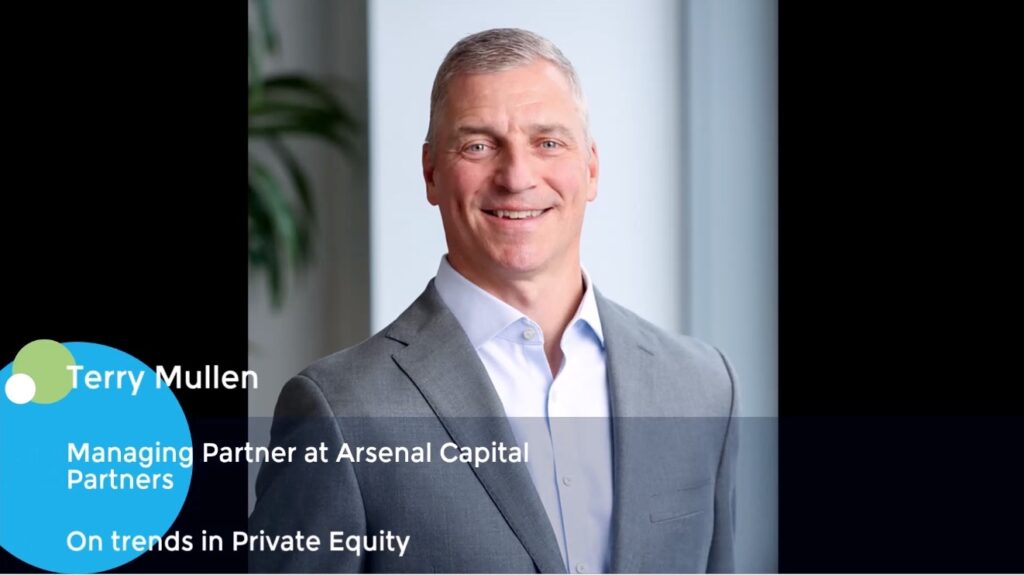
EQT established a standalone exit committee about eight years ago, becoming the first mover among pan-regional players in Asia. The nine-strong group meets once every six weeks.
A typical committee deck runs to more than 100 pages, projecting performance and exit outlook for the approximately 40 live investments held across four Asian funds. It maps out the next eight quarters for individual deals, tracking different exit scenarios. Every portfolio company held for at least four years is subject to committee review alongside those primed for earlier liquidity events.
A two-member team works with the relevant deal teams and prepares materials ahead of their appearance before the committee. Hari Gopalakrishnan, a partner head of India at EQT, who serves as deputy chair of the committee, describes the dynamic as collegial rather than confrontational. The objective is to remove emotion from the equation and make objective calls on deals.
“The exit plan should start at the time of underwriting, so what appears in the deal memo becomes a road map for the exit committee,” he explained.
“During the course of the investment, if a similar asset trades with a high multiple, the committee might find it makes sense to accelerate an exit with our portfolio company into a positive market environment. Alternately, the business plans in a sector were pushed out by one year say because of COVID, so we can decide now is not the right time to exit.”
CitiusTech is an example of acceleration. EQT bought the India IT services business in 2019 and sold half its 80% stake to Bain Capital in 2022 on the back of a global valuation surge driven by the rise of software-as-a-service. The firm returned 150% of its invested capital, while staying involved for further upside.

Another function of the committee is sharing knowledge across the organisation. Should the India team embark on an exit route that is tried and tested in Japan, learnings from the Japan experience can be shared with India-based colleagues. Similarly, when a Japanese strategic investor bids for an EQT-owned asset in India, the two teams can exchange ideas on how best to engage the potential buyer.
The same applies to other private equity firms and advisors: insights into how they operate in one market can be instructive in others.
“The exit committee runs the RFP [request for proposal] process to select advisors, so it’s not about relationships with individual people, it’s about the advisor’s track record. Again, we are taking emotion out of the decision. It’s not the friendliest bank that gets the mandate, it’s the bank that’s done the most deals in that sector,” said Gopalakrishnan.
Objective views
EQT’s exit committee is chaired by Jack Hennessey, a partner who leads the cross-border investment team, and its members include Salata. Seniority of membership and independence of thought are seen as essential foundations, separating genuine articles from those that exist as window-dressing for LPs.
The same applies to individuals who are recruited to coordinate exit functions, a trend that is spreading into the middle market. Job descriptions can be wide-ranging, encompassing business development, capital markets, and investor relations, but it is unclear whether there is real empowerment. Sometimes, these individuals do little more than prepare materials, according to industry participants.
“If this person goes up to a deal captain and asks them to think about an exit, will the deal captain do anything?” said Wen Tan, founder and CEO of Azimuth Asset Consulting, which helps GPs address strategic and governance issues. “If the person has clout, it’s more likely that things will move internally. However, it must be built into the firm culture and structural processes.”
Tan is not opposed to individuals representing different functional capabilities having a say in exit oversight. This includes investor relations and fundraising professionals who “are aligned to ensuring there are exits because it makes their lives easier.” Fund performance milestones impact the timing of new fund launches, such as the need to reach 1x DPI on Fund II before returning to market with Fund IV.
Debt capital markets teams can contribute to discussions on recaps, while their peers in equity capital markets offer perspectives on IPOs and post-listing block trades.
For all the talk about creativity in the pursuit of liquidity, one frequently voiced LP frustration involves the management of assets that are already liquid. “So many GPs are holding public positions. You wonder how much focus these get and what the sell-down plans are,” said Manulife’s Coppinger.
The enduring criticism of managers in growth-oriented markets like China and India is that they fall in love with companies and never want to exit, thinking that businesses can compound forever. This includes holding on to listed shares. Ideally, LPs want to see pre-IPO derisking through recaps or partial exits, a further exit at IPO, and then a well-managed series of sell-downs.

India has delivered on this in recent years. Notably, EQT completed a staged exit of its 70% stake in IT services player Coforge via eight block trades over the course of two-and-a-half years. Realisations amounted to USD 2.2bn, including a final tranche of 26% that went for USD 925m in August 2023. Blackstone and KKR followed similar paths with Sona Comstar and Max Healthcare, respectively.
However, other managers have demonstrated an ability to generate liquidity from less friendly capital markets. Ascendent Capital Partners exited drug manufacturer SciClone Pharmaceuticals last year with a 3.4x return when another sponsor completed a take private. There were two other realisations in between: a dividend recap prior to the company’s 2022 Hong Kong listing and a share buyback.
The GP engineered another exit last year when Hong Kong-listed online gaming business NetDragon Websoft Holdings spun out its education technology subsidiary via a reverse merger with a US-listed shell. Ascendent invested in the subsidiary through a USD 150m convertible bond in 2019. A partial conversion returned the principal, and it retained another USD 90m in exposure.
Derek Cheung, a managing director at the firm, led the original NetDragon negotiation and took responsibility for the Cyclone exit – the deal lead signed off on a target valuation – because of his experience on the capital markets side. There is no exit committee at Ascendent, nor is he an investment professional designated to oversee liquidity.
Cheung described these realisations as labour-intensive processes due to relatively weak market liquidity, but he stopped short of citing them as evidence of a systematic approach to exits. “It’s not like there’s a button we press,” Cheung explained. “Every year, we try to generate some realisations from at least one asset. That’s ingrained in our risk management philosophy.”
Minority rules
The firm’s approach to risk management is also punctuated by a preference for highly structured deals that emphasize downside protection when making minority investments. These include rights around mode and timing of exit. Other GPs point to similar characteristics when asked about systematic approaches to liquidity in the growth capital space.
Amit Kunal, a managing partner at South and Southeast Asia-focused Growtheum Capital Partners, outlined three key touchpoints: establishing the path to exit on day one, squaring that with the company founder, and putting it in legal contracts. In addition to drag-along rights that oblige the controlling shareholder to sell, the firm can push through an IPO where the shareholder is not a seller.
“No deal is interesting enough for us to compromise,” he added. “We hear from advisors that our contracts are among the most aggressive, to the extent that the majority shareholder has no say in the exit. They can make life difficult by not cooperating, but the exit is in our hands.”
Neither Growtheum nor Quadria Capital, a healthcare investor in the same geographies, have exit committees. Their portfolios are relatively small, so investment committees handle exit oversight. Ewan Davis, a partner at Quadria, endorsed the need for stakeholder alignment, but observed that “if you are reaching for contracts to get something done, it has probably already gone wrong.”
This is central to due diligence efforts focused on venture capital and growth equity managers. LPs want to see not only track records that include partial exits via follow-on rounds, but also an ability to pivot from the blue-sky IPO exit scenario. Influence over the founder, through holistic channels rather than contractual enforcement, is a key consideration.
“We ask the investment team how they are thinking about the development of the company and whether they have changed how they plan to exit,” said Hao of HarbourVest.
“If a business isn’t growing as quickly as before, maybe it’s no longer an appropriate IPO candidate, so the GP needs to adapt in terms of how it manages liquidity. The company might still have value, but it’s not a unicorn, so how does the GP approach the founder about exit options like a merger with the next-largest competitor in the sector?”
Lessons learned
To the extent that exit committees exist in Asia’s middle market, it tends to be firms with longstanding exposure to more volatile emerging economies. CDH Investments and Navis Capital Partners, which primarily invest in China and Southeast Asia, respectively, are widely cited examples. In Japan and Australia, the typical country manager response is that they’ve never seen a need for such a function.
The China-India comparison is instructive in this context. Until recently, China managers with US dollar-denominated funds had seen a relatively unconstrained flow of liquidity, chiefly via the IPO markets. India, on the other hand, experienced an existential crisis when weak exits from the 2007-2008 vintages left LPs disillusioned, leading to severely curtailed fundraising activity through the mid-2010s.
There is a sense that Indian managers have learned the value of taking money off the table. According to Manish Kejriwal, founder and managing partner of Kedaara Capital, a fixation on ensuring multiple exit routes was one of four core principles on which the firm was established in 2011. To this end, original investment memos were only approved if they featured a list of likely buyers for the target asset.
Often, the most impactful demonstrations of a systemised approach to exits come when investments diverge from their expected course and the strength of plan B or C is put to the test. Gopalakrishnan of EQT observed that it’s rare for plans to work perfectly, pointing to instances where the firm had to recalibrate following aborted share offerings and special purpose acquisition company (SPAC) mergers.
“Having control and the shared experience of the exit committee gives you optionality to do different things,” Gopalakrishnan added.
From an LP perspective, it’s about getting visibility into these processes and being convinced that exits are woven into a firm’s DNA. There will be innovations along the way. These may not include exit committees – Hao of HarbourVest noted that GPs may set liquidity-related KPIs [key performance indicators] for deals teams – but they must reinforce a certain kind of thinking.
“Post-investment management and exits may not be perceived to be the most glorious parts of private equity, but we would prefer to see GPs with a portfolio and fiduciary mindset rather than a deal mindset,” said Pamela Fung, a managing director at Morgan Stanley Private Equity Solutions.
“We would rather they be saying, ‘These companies are performing ahead of plan, let’s look at early exits,’ and ‘These companies are not performing well, let’s manage them and focus on other parts of the portfolio.’”

A service of 

Your M&A Future. Today
Explore unlimited content like this, available only in the platform.
Already a client? Sign in