
Investors return to Australia’s renewables market


Nearly three years ago, Australian billionaire Andrew Forrest’s private investment firm Squadron Energy acquired Partners Group‘s CWP Renewables business for upwards of AUD 4bn (USD 2.6bn) in Australia’s largest ever renewables acquisition.
Squadron quickly raised debt to finance the 1.1 GW operating portfolio and 20 GW pipeline but its plan to farm down CWP equity to Australian super funds never materialised.
The CWP sale now feels like the high-water mark of Australian renewables deals, but Australian super funds and their international brethren were already cooling towards renewables investments before the deal was inked.
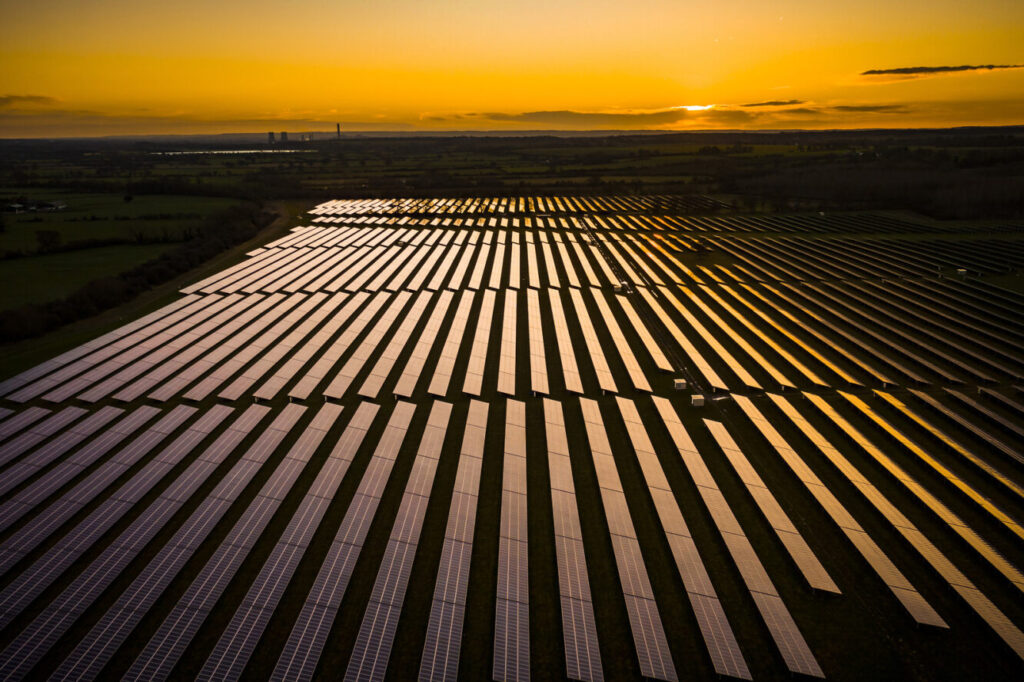
Since then, renewables returns have been squeezed further as wind construction costs have risen to around AUD 4m per MW, additional transmission costs have jumped to AUD 2m per MW and the output of east coast solar farms has been widely curtailed as the grid struggles to cope with solar power generated by four million households.
Renewables managers including HMC Capital, Palisade Investment Partners’ Intera Renewables, Igneo Infrastructure Partners’ Atmos Renewables, Federation Asset Managementand Octopus Australian Sustainable Investments (OASIS) have sought capital from limited partners to fund Australia’s huge energy transition demands, but they have struggled – until now.
A new hope
Within the last few months, Rest committed AUD 230m to Wollemi Capital, three existing investors have agreed to co-invest more than AUD 400m into Atmos Renewables, APG has pledged AUD 1bn to OASIS and Australian Retirement Trust (ART) has announced plans to invest more than AUD 1bn in Macquarie Green Energy and Climate Opportunities Fund (MGECO), a global impact fund which includes a healthy dose of Australian renewables.
And the newfound optimism extends beyond those commitments. Tilt Renewables’ existing owners, the Future Fund and QIC’s super fund clients, are preparing to exercise their pre-emptive rights to buy AGL Energy’s 15% stake in Tilt.
La Caisse’s AUD 1.1bn purchase of Edify Energy and Nuveen’s reported plan to plough around USD 200m into Australian renewables also point to a new-found confidence in the market.
“I think there probably is a thaw,” said Jordan Kraiten (pictured below), Head of Private Markets and Infrastructure at Cbus Super, one of the super funds that has just invested in Atmos. But he cautions, “I don’t know if it’s going to lead to dam walls bursting.”

Three things appear to be drawing superannuation and pension funds back to the market.
Vendors are taking a more realistic view of the value of their assets; firmed solar power and standalone batteries offer an alternative to expensive wind developments or curtailed standalone solar; and fund managers are increasingly offering their clients co-investments.
“The timing now is better we feel for investors than it has been for quite a few years,” says Michael Weaver, ART’s General Manager of Mid Risk Assets & UK, (pictured below) explaining that investors and developers struggled to price assets in a rising interest rate environment having lived for so long in a benign interest rate environment.
“We think that time has sort of closed that gap a little [between buyers and sellers], and that people are more rational about what it actually takes to develop.”

The lucky country
On paper, Australia has long been seen as a very attractive market for renewables investment. The country is rich; boasts abundant sunshine and wind resources and a stable legal system. Australia’s federal Labor government has been very supportive of renewables and it won a second three-year term in May in a landslide victory.
“Between the government’s commitment to decarbonisation, adoption of ambitious net-zero targets across the country, and increasing corporate and consumer adoption of renewables, Australia has all the ingredients needed to fundamentally transform its energy sector,” says Hans-Martin Aerts, Managing Director and Head of Infrastructure & Private Natural Capital, Asia Pacific at APG Investments, explaining the thinking behind his fund’s investment in Australia.
But despite Aerts’ up-beat medium term assessment, he acknowledges that the Australian market is experiencing some short-term challenges.
Those challenges are now forcing sellers and developers to reassess the value of their assets – closing the valuation gap between them and potential investors.
Solar curtailment
One place that this has become evident is in the growing number of Australian solar farms being forced to restructure their debt. Power purchase agreements, which had provided the steady income streams underpinning most project financings, do not protect solar farms from curtailment.
Curtailment peaked at 107% of National Electricity Market demand, or 10 GW, on 14 September, according to GPE NEMlog, a monitor of renewables generation activity in the Australian power market. That Sunday was an exceptional day, but curtailment has been a consistent enough issue to cause financing issues for the Kidston, Columboola, Sunraysia, Suntop and Gunnedah, Kiamal and Yatpool solar farms, among others.
“While the industry has seen substantial growth in wind, solar, and battery energy storage systems (BESS), an increasing number of projects are facing financial and operational difficulties,” noted Matt Baumgurtel, Jo Ruitenberg and Nicholas Edwards, partners in the Hamilton Locke law firm, which wrote a paper on distressed solar investing in July.
“Sub-optimal infrastructure, approval delays, rising debt costs, and financial stress have all contributed to the growing pool of distressed renewable assets,” they added.
So far, existing sponsors have been prepared to tip more equity into troubled projects, but others have been understandably cautious about investing more in the sector.
There are 263 live greenfield and M&A renewables and battery transactions, worth a collective USD 79.03bn in Australia, according to Infralogic data. Those figures include some huge, multi-year transactions, which are years away from completion. Nevertheless, it is some indication of the market’s indigestion that just 22 similar transactions worth USD 4.1bn had closed in the year to the end of the third quarter.
Curtailment has hit existing investors hardest, but escalating wind costs also deterred new entrants. The global pandemic, torturous planning processes and wind turbine makers demanding reasonable prices were some of the factors that led to a spike in wind development costs.
Transmission, which is also needed to link increasingly remote wind projects to the grid, became massively more expensive at the same time. Project EnergyConnect, which is due to link the New South Wales and South Australia grids, saw costs blow out from AUD 2.1bn to AUD 3.6bn.
A buyers’ market
Under the circumstances, it is not surprising that some investors in Australia’s renewables markets are folding up their tents. TotalEnergies, BP, Statkraft, Elgin, John Laing and Germany’s Pelion are among those pulling out of Australian renewables generation, as reported.
“The Australian market has had a lot of individual owners of assets, whether they be European, Asian or American, who entered the market with the strategy to acquire an asset that would underpin a broader business initiative,” says Cbus’ Kraiten.
“I don’t think that that strategy worked out in the manner that they had hoped, maybe at least in part because of a lack of political consistency with regards to the renewables space.”
Kraiten argues that those disillusioned investors are now leaving the Australian market, creating opportunities that he believes Atmos has already been able to tap into. BayWa RE is another group looking to sell its Australian assets. Atmos owns options on the German company’s developments, which seem to position it well for that sale.
“With that set of opportunities and the increase in development costs you are finding an ability to buy existing assets below replacement costs,” notes Kraiten. “So that’s made some of these operating assets a lot more attractive than perhaps they used to be.”
ASX-listed fund manager HMC Capital said that the AUD 950m price it paid for Neoen’s Victorian renewables assets was below their replacement cost and Atmos bought Wild Hill Cattle Farm at the end of last year for close to the AUD 300m project cost.
“Renewable pricing has become more sensible as the heat from several years ago has washed out of the market,” says Daniel Timms, a partner at Igneo, which manages Atmos. “High quality renewable platforms can now demonstrate a clearer pathway to delivering higher returns for investors.”
Bottoming out?
In addition to picking up cheap operating assets, managers can also now see some hopeful signs in greenfield developments.
The Clean Energy Council, an industry lobby group, reported there were 8.7 GW or 23.3 GWh of battery developments across Australia at the end of last year.
Brookfield’s Neoen has just finished the 560 MW/2.24 GWh Collie battery in Western Australia; state-owned Synergy is close to finishing a second 500 MW/2GWh battery; and Equis and the Victorian State Electricity Commissions’ 600 MW/1.6 GWh Melbourne Renewable Energy Hub is also on the verge of completion.
Wind development costs continue to nudge up but battery and solar costs are both trending down. Utility-scale solar costs declined 8% in 2024-2025 and large-scale battery costs fell 20%, according to the Commonwealth Scientific and Industrial Research Organisation’s (CSIRO) annual GenCost study.
ART’s Weaver argues that, in addition to costs, a battery and solar combination make energy generation much more predictable.
“How much confidence do you have around how much the wind will blow or the sun will shine in those locations?” he asks. “Until you’ve actually got something in the ground, it is relatively hard to gain that much confidence. I think that’s where batteries play a great role with solar.”
In addition to the predictability of generation, Weaver also acknowledges that batteries offer revenue predictability. “Being able to have more certainty that you will actually get paid for your output is clearly better,” he says, noting that developers have previously paid a lot for sites that could not be connected.
Cbus’s Kraiten agrees that big electricity customers want the certainty of generation that can only be achieved by a portfolio with multiple technologies.
“It’s very difficult to operate competitively in that space if you don’t have multiple forms of technology working on your behalf,” he says. “Having a large wind portfolio, a solar portfolio and a firmed solar portfolio and maybe just batteries in isolation is going to be essential for you to be a compelling partner to off takers.”
“If you are AGL, if you are Amazon, if you are – insert name here – you are going to want to have confidence that the party you are contracting with will be able to produce power when you need it, and you can only really do that if you’ve got that multiple technology portfolio that’s working in your favour,” he adds.
Less money, more control
Struggling through the tough fundraising environment of the last few years pointed Federation, Igneo, Palisade and others to consider offering LPs more co-investment opportunities.
These sort of arrangements, which lower LP fees and increase LP control, have been the final piece of the puzzle in luring back super and pension funds to the Australian market.
“We’ve made many co-investments, or even co-underwriting investments with our key partners, investment partners — Macquarie and others in the past — and expect to continue doing that into the future, says ART’s Weaver, agreeing that lower fees and greater control are the main attractions of this kind of arrangement.
“MGECO, for example — there’s many businesses there that we expect to scale over time, and we’d consider providing capital to those if it made sense for all the parties and stakeholders involved in those investments.
The super funds returning to Atmos are all co-investors.
APG’s Aerts (pictured below) did not say whether the Dutch fund’s commitment to OASIS is also a co-investment, but he did stress the advantages of control.

“This is a strategic partnership, not just a capital commitment, and long-term focused given our position as a responsible pension investor,” he says. “Through the partnership, APG gains greater alignment, governance rights, and voice over the platform’s direction.”
Green shoots
Spring is typically the time when Australian renewables generation records tumble when sunshine tends to be plentiful, but air conditioners have not yet been turned on.
This year was no exception. Renewables generation in Australia’s National Electricity Market (the east coast grid, which accounts for 80% of national demand) reached 48.8% for the month of September, overtaking coal’s 47.6% on a monthly basis for the first time, according to David Dixon, an analyst at Rystad Energy.
But Dixon has previously warned that Australia’s energy transition is running seven years behind schedule.
More realistic sellers, batteries and solar providing a cheaper and more efficient energy solution than previous renewables strategies and co-investments providing LPs lower fees and more control are three good reasons for pensions and super funds to be dipping their toes back into the Australian market.
But most people are not celebrating yet.
A service of 

Shape your future with Infralogic. Today
Explore unlimited content like this, available only in the platform.
Already a client? Sign in