
Gas-fired assets red hot, renewables shaky in 2025 M&A


There was rarely a moment to catch your breath in the energy M&A market in 2025. In the traditional power sector, interest in gas-fired assets surged as investors jettisoned ESG ambitions to focus on meeting ever rising power demand. Though Infralogic data showed deal count and volume were relatively flat across power and energy versus 2024, increased investor appetite, particularly for gas-fired assets, and rising capital costs for new build power plants have led to higher valuations on a per kilowatt basis, industry experts told this publication.
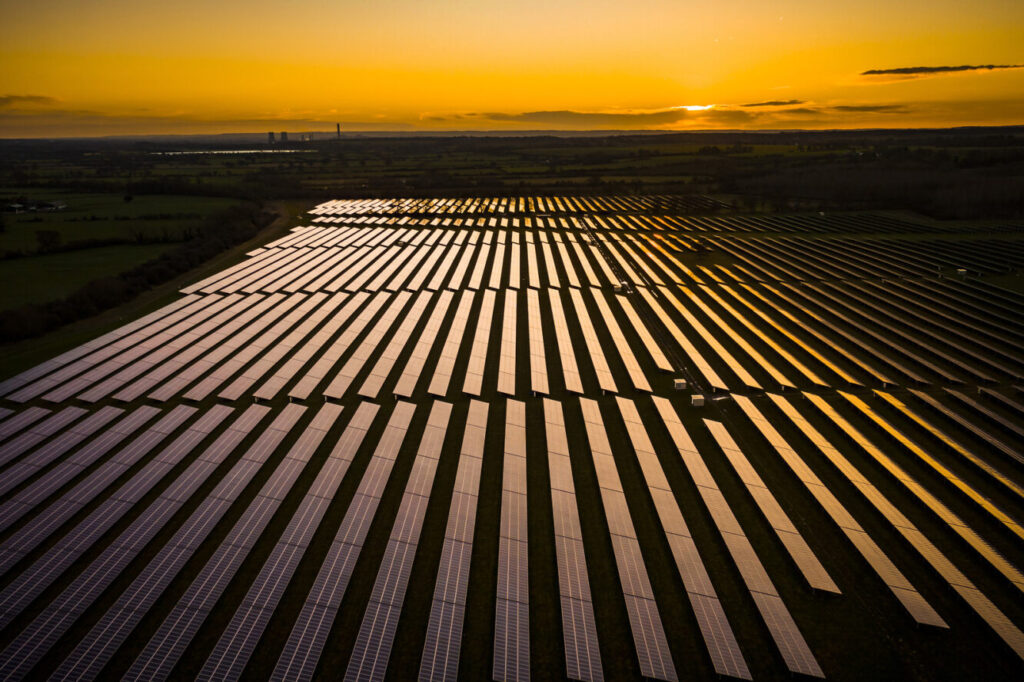
The Trump administration’s cold treatment of renewable energy, including the rollback of federal incentives in the One Big Beautiful Bill Act (OBBBA), has caused a bifurcation in the M&A market for wind and solar assets.
The LNG sector, meanwhile, continued its trend of megadeals, with multiple deals topping the USD 1bn mark throughout the year.
Renewables’ rocky year
Renewable energy developers have been hit with one challenge after another. Trump’s OBBBA and a slew of executive actions have made it tougher and more uncertain to develop new renewable energy projects, which high interest rates and supply chain uncertainty had already made more costly.
Investors are doing what they can to mitigate this risk, which is bad news for development portfolios.
“What we are seeing is that there are far fewer people on the buyside these days. That is what we are hearing from the advisors also,” a CEO at one US-based renewables and battery firm said. “If it’s late-stage contracted, then you will see funds and other investors bidding on it.”
It’s a brighter picture for operational or very late-stage development assets, which are in high demand and insulated from many of the risks facing early-stage projects.
“There’s much capital chasing derisked megawatts these days that are getting premium attention because they solve an immediate problem,” said Mona Dajani, Global Co-Chair of Energy Infrastructure & Hydrogen for Baker Botts. “Utilities and corporates need power now, not in 2029.”
Overall, renewable energy M&A deal volume and deal count in North American renewables are both lower in 2025 than any year since 2017, according to Infralogic data, though that could still change as the final numbers come in. The year has seen 109 deals worth USD 12.85bn, down from 145 deals and USD 18.15bn last year and 122 deals worth USD 24.14bn in 2023.
CDPQ’s take-private of Innergex was the year’s largest renewable energy deal, with an enterprise value of roughly CAD 10bn (USD 7.22bn).
Assets and portfolios are still coming to the market though. The CEO at the US-based renewables and battery firm said that he has seen more high-quality, late-stage projects come to market than in previous years.
“We just did not see any of those [the previous three years] and we’ve seen several of them all in the last six months,” the CEO said. “You know you can transact on that. The valuations on those are still pretty good.”
He added that early-stage or advanced projects are still coming to the market, while mid-stage projects are not.
Britta Von Oesen, a partner and senior managing director at CRC-IB, agreed that there was too much uncertainty around early-stage projects for them to be in high demand.
“I think the ‘gigawatts for gigawatts’ sake’ is certainly not the flavor of the day,” she said.
Unlike in prior years, Von Oesen said that having a power purchase agreement (PPA) in place can make an earlier stage project less desirable. Having a locked-in offtake price can be a negative when there is the expectation that the cost to build the projects may be volatile.
The year has also seen many prospective sales stall out or get pulled, especially as OBBBA discussions were taking place in the first half of the year. Many sellers who do not urgently need to transact, Von Oesen said, will wait until they receive a fair valuation.
“Not every platform is created equal, and it’s not necessarily about just quantifying development pipeline,” said Keith Derman, a partner at Ares Management and co-head of Ares Infrastructure Opportunities. “It’s really about track record, maturity and quality of the pipeline, and execution capability. So, I think the cream rises to the top in a market like this.”
ESG goals are much less of a factor in driving deals than in past years, investors say.
“Right now, renewables are being driven by scarcity and need for power. And I think investments are being made very much based on that,” Von Oesen said. “As the market matures, investor focus has shifted from branding toward execution, scale and long-term value creation.”
ESG stigma flipped
While unwelcome news for renewables, this shift has benefited other sectors, particularly gas-fired generation and LNG export facilities. Five years ago, investors in natural gas-related assets were worried about how they would exit their holdings five to ten years down the line. ESG was the cause of the day, and it was feared that even profitable fossil fuel-based assets would soon be untouchable.
The AI revolution, anti-ESG pushback and Trump’s election have completely upended this dynamic. Natural gas generation is badly needed to power the data centers needed for AI and new power plants are costly to build. Investors are today willing to pay a premium for operational gas-fired assets to meet this newfound demand, leading to rising valuations.
“Gas is the perfect example of how quickly the narrative can swing. Two or three years ago, buyers worried that they would get stranded with a fossil asset and no one would buy it,” said Dajani. “Now the market has changed to the opposite extreme.”
This has spurred increased M&A activity, and at higher prices, for gas-fired assets.
One industry investment banker estimates that gas-fired assets are trading at least 40% to 50% higher per kW than they would have two years prior.
Others called this estimate low. Blackstone paid nearly USD 1bn for the 620 MW Hill Top Energy Center, roughly USD 1,600 per kW, when it bought the plant from Ardian.
But even these costs are a bargain compared to the price of building a new plant, says Mark Voccola, co-head of Ardian Infrastructure US. New build costs can run around USD 2,500 to USD 3,000 per kW, Voccola estimated, with new turbine orders not available until the 2030s.
“The new build cost is so high that I think you’re going to see, through the end of the decade, continued high valuations for operating assets,” Voccola said. “If you’re going to have to wait five years for cash flow, at least for the financial buyers like us, I’d rather pay a fair price now to start generating yield today.”
There is somewhat of a “chicken or egg” question when it comes to the waning prominence of ESG and the growing demand for gas-fired assets. Gas-fired assets were not always highly profitable before the AI boom and growing power demand, one investor said, meaning that companies were not sacrificing greatly by shunning them for ESG reasons.
“These assets just didn’t make money,” the investor explained. “So, it’s really easy to say, I don’t want this in my portfolio.”
The biggest deal to close in 2025 across the energy, power, and renewables segments was Constellation Energy Group’s acquisition of Calpine, a deal with a nearly USD 30bn enterprise value. Most of Calpine’s roughly 27 GW generation fleet is gas-fired.
Love for LNG
The LNG sector continued to see some of the broader infrastructure sector’s largest megadeals, including Sempra’s agreed USD 10bn sale of a 45% stake in Sempra Infrastructure Partners to KKR and CPP Investments and Stonepeak’s USD 1.9bn acquisition of a 40% stake in the Woodside Louisiana LNG terminal project.
“Many developers in North America were awaiting permitting clarity that then unlocked their ability to fully commercialize their projects and ultimately achieve [Final Investment Decision],” Stonepeak Senior Managing Director James Wyper, who also serves as head of US Private Equity and head of Transportation & Logistics, said in an email. “LNG is a very attractive asset class for infrastructure investors such as ourselves because it offers the ability to invest into hard assets that generate significant cash flows on the back of long-term contracts with investment grade counterparties.”
Overall, five M&A deals closed, worth USD 10.85bn (the Sempra Infrastructure Partners sale is signed but has not reached financial close), according to Infralogic data, a slight dip in deal count from recent years but representing a higher volume.
At the same time, some investor hesitation has crept into the sector, according to one banker active in the LNG sector. Rising Henry Hub prices have led some investors to shift to targeting upstream investments.
“Between inflation and your input costs going up, the economics of these [LNG] facilities have been hurt quite a bit,” the banker said.
Japanese investors in particular have focused their attention away from LNG towards upstream investments, the banker added.
But LNG still has some momentum, with a friendly Trump administration, power demand growth, Western nations’ pivot away from Russian gas and the increasing acceptance of natural gas as a transition fuel.
“Valuations have remained relatively consistent, with headwinds from increased project financing costs offset by tailwinds from the increasing market expectation of long-term demand growth,” said Wyper.
The massive capital needs for LNG projects, along with the need for infrastructure investors to deploy billions in equity, has ensured that there’s no end in sight for the megadeals in the LNG space.
“These LNG projects are right in their wheelhouse from an infrastructure investing perspective. The influx of private capital in the energy space is only going to increase,” said Justin Stolte, Global Chair of Latham Energy & Infrastructure Group. “I do think the ripple effects associated with increased power demand from digital infrastructure and the AI infrastructure buildout will be and has been seen in the LNG M&A space, as well as from upstream companies that are looking to get exposure in the LNG space through vertical integration.”
A service of 

Shape your future with Infralogic. Today
Explore unlimited content like this, available only in the platform.
Already a client? Sign in