
Asia blended finance gains traction


Asian emerging markets have always been a riskier bet for infrastructure investors. But the withdrawal of foreign aid under current US policy has made it even tougher and led to a slowdown in public funding that underwrote that risk.
More private funds, including US managers, however, are putting money to work in Asia, lured by the region’s growth prospects and infrastructure needs.
So local governments, investors, and other stakeholders in Asia are witnessing a call-to-action to fill the gap and blended finance, which involves an assortment of financiers pooling their money, appears to offer a solution.
Typically blended finance takes a first loss tranche, which derisks the project, as well as senior debt. Providers of blended finance are usually a mix of government-backed, public funds as well as private investors.
“A lot of eyes are avidly watching the space, the players and projects involved, and the evolution of deal structures with interest,” says Daryl Liu, Singapore-based partner at Clifford Chance.
Prem Raj Suman, Head of ECA and Blended Finance, Structured Finance Asia Pacific at SMBC, points to “a growing influx of capital from diverse investor classes seeking impact along with financial returns”.
He adds that blended finance will play a “crucial role in supporting projects that are complex or only partially bankable from a purely commercial perspective”.
According to a report by data provider Convergence, East Asia and the Pacific have seen a surge in blended financing flows, jumping from USD 1.1bn in 2023 to USD 4bn in 2024.
The increase is primarily driven by the TPG Global South Initiative, a climate change-focused private investment vehicle managed by TPG’s impact platform.
Singapore is also leading the charge, with its central bank-led Financing Asia’s Transition Partnership (FAST-P) scheme. The initiative brings together public, private and philanthropic partners to tackle the region’s climate finance gap.
In September, the Green Investments Partnership (GIP) blended finance fund was announced with a USD 510m first close. The fund manager is Pentagreen Capital, an infrastructure debt financing platform established by HSBC and Temasek.
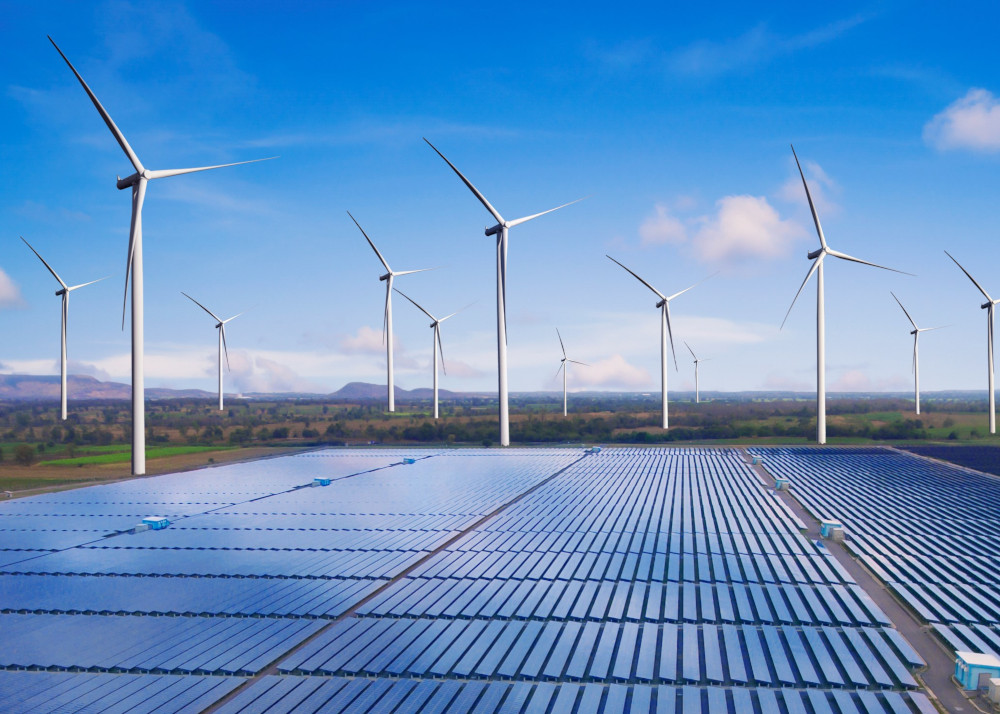
GIP targets renewables and storage, electric vehicle infrastructure, sustainable transport, water and waste management in Southeast and South Asia.
Deals so far include a USD 55m financing for Philippines solar developer Citicore and a USD 45m loan for Tinfund’s hydropower projects in Indonesia.
A handful of other managers also stand out in the region.
Swiss impact manager responsAbility Investments invests in Asia’s low-carbon solutions using a blended finance fund, targeting USD 500m. The fund comprises a senior and junior tranche, with the latter accounting for 15% at the beginning before increasing to 26%.
Launched with German development bank KfW and Dutch development bank FMO, responsAbility’s Asian fund has raised over USD 200m from the private sector as of its latest close at USD 414m in September 2025.
responsAbility’s investments so far include Singapore-based renewables developer August Energy, Indian renewables developer AMPIN Energy Transition, and Indian EV battery swapping network Battery Smart.
London-based Ninety One is another blended finance manager via its Emerging Africa and Asia Infrastructure Fund (EAAIF). The vehicle combines equity capital from European governments and debt facilities from private investors.
EAAIF last year expanded its mandate to include Asia, with plans to invest over USD 1bn in emerging African and Asian economies over the next few years. Asian investments include a sustainable aviation fuel facility in Pakistan, Vietnam’s CME Solar, and Indian renewables firm Greenko.

Returns differ
Overall, Asia’s blended finance funds target returns of less than 10% when they are provided on a philanthropic- or sovereign-based premise, said a source familiar. By contrast, commercial funds providing comparable risk would seek percentage returns in the high teens to low twenties, they added.
Blended finance returns will generally differ according to the investor’s role and position in the capital structure, said Stephen Clugston, Singapore-based counsel at Hogan Lovells. Depending on their seniority level, returns can range from 6% to 12% subject to sector, risk profile, and the underlying assets’ development stage, he said.
According to Liu, mezzanine providers receive fixed returns based on a hurdle rate, plus an equity component allowing participation in potential upside. Junior investors are often not promised any financial return.
Blended finance projects can also involve a heady mix of investors. Such was the case with the 600 MW Monsoon onshore wind power farm in Laos. The USD 692m deal saw a mix of lenders including SMBC, Kasikornbank, Siam Commercial Bank, the Asian Development Bank, and Asian Infrastructure Investment Bank.
In FAST-P’s case, the Singapore government has pledged up to USD 500m in concessional capital which will match, dollar-for-dollar, that from other governments, multilateral DFIs, and philanthropies. The idea is to “crowd in” commercial capital and other sources to raise up to USD 5bn for Asia’s green and transition financing needs.
Greenfield risk drives demand
Given blended finance is more effective in mobilising private capital in emerging and frontier markets, Africa has so far been leading the volumes for blended finance, said SMBC’s Suman.
According to Convergence, Sub-Saharan Africa remained the most targeted region for blended finance between 2022 and 2024, with an average of 48% of transactions directed there each year.
However, the focus is now coming to Asia, said Suman.
“There is a strong drive to deploy blended finance for marginally bankable infrastructure projects in renewable energy, energy storage, clean water, transport, and waste management sectors in the region,” Suman said.
Japanese lender SMBC was listed as the top commercial investor with 15 blended finance deals as of July 2024, based on data from Convergence.
The need for Asian infrastructure spend is evident. According to a report by the Asian Development Bank, developing Asia requires USD 1.7tn per year until 2030 to maintain growth and address climate change.
Early-stage greenfield projects can experience more uncertainty in emerging markets, in areas such as planning, governmental and regulatory approvals, construction cost, operational arrangements, and timeline, said Liu. That poses a greater bankability risk versus developed markets, thus intensifying the need for blended finance in emerging Asia, he added.

Public funding steps up
Asia has seen increasing appetite from a wider array of public capital after the second Trump US administration scaled back its global aid and development funding initiatives, said Clugston.
“The last 12 months has kindled a stronger commitment to Asia from the likes of Canada, Europe, the UK, and Australia,” he said.
The US funding pullback was likely more political, and it appears those countries that don’t share the same political stance are now stepping up to fill the gap in funding, reducing the reliance on US support, Clugston added.
One example is British International Investment (BII). Besides a USD 60m commitment to Singapore’s GIP, the British DFI is also a senior equity investor in the South-East Asia Clean Energy Fund II (SEACEF II). Managed by Singapore-based Clime Capital, SEACEF II is a USD 175m blended investment fund backed by junior first-loss and senior equity investors.
Asian institutional investors are also increasingly keen to deploy locally, said Stephanie Bilo, Chief Client & Investment Solutions Officer at responsAbility. “Historically, many Asian investors concentrated on the US and Europe, but this is gradually shifting,” she said.
“Geopolitical dynamics are accelerating interest from Singapore, Japan, Australia, Malaysia, and Indonesia in Asian infrastructure opportunities and in the role blended finance can play,” said Bilo.
At the same time, private sector participation is slowing down compared to a few years ago given the increase in the cost of private capital and challenge of delivering returns, said Clugston. “For example, in areas like Southeast Asian renewables, it’s not as feasible to expect returns of 15%-18%,” he said.
With concessionary and philanthropic capital stepping up, blending more public with private money could plug the gap.
Time will tell
Asia still needs to build a track record for blended finance and scale the product, said responsAbility’s Bilo.
The source agreed. “Time will tell if the market’s entrants deliver appropriate returns for the risk taken,” he said.
“We would want to see more mezzanine-type philanthropic funds in Asia, but how many people with conviction can afford it?” the source said. “It requires capital to invest for the public good, to get projects off the ground – and not for pure economics.”
There are also the practical issues that come with aligning multiple investors with differing incentives and returns expectations. “Managing coordination among multiple stakeholders can be challenging,” said Suman.
Although multilateral and development banks have been active in this space for some time, they often have a reputation for slow decision making, undue focus on geopolitical considerations and bureaucracy in negotiations, the source added.
The reality of deploying and operating in emerging Asia presents another barrier.
“There is a finite number of managers with the experience and know-how to handle the political and pre-construction development risk projects face in Southeast Asia, and conversely, a limited number of projects with the risk profile to attract private capital or blended finance support,” said Clugston.
From a deployment perspective, large managers seeking to commit substantial capital face limited opportunities. In Southeast Asia, there are relatively few companies or platforms that satisfy the scale and return requirements of ambitious investors, he said.
Not to be ignored
Others are more optimistic. Mason Wallick, Managing Director and CEO of Clime Capital, said “we’re familiar with emerging managers like ourselves with AUM of around USD 1bn that are looking at blended funds for both equity and credit opportunities”.
Wallick understands that larger institutional managers are looking at blended finance for global strategies, to be fine-tuned for deployment in Southeast and South Asia.
It’s also not just renewables. Nature-based solutions, carbon credits, and hard-to-abate industrial applications are attractive areas for blended finance as well, said Wallick.
Ultimately, with pressure from Singapore Inc, the idea cannot be ignored.
BlackRock and AIA have announced their intention to collaborate on FAST-P’s Industrial Transformation infrastructure debt initiative, focused on decarbonisation. Clifford Capital, a Temasek-backed infrastructure finance platform, is in talks to manage Energy Transition Acceleration Finance, the third pillar under FAST-P.
For sustainability-driven private capital managers, blended finance has become “part of the conversation”, said Liu.
[Editor’s note: The eighteenth paragraph has been updated post publication to note one of responsAbility’s recent investments includes Battery Smart.]
A service of 

Shape your future with Infralogic. Today
Explore unlimited content like this, available only in the platform.
Already a client? Sign in