Debtwire Asia Pacific showcases contributions, achievements and observations of outstanding leaders – Trailblazing Women, Part II


To mark International Women’s Day, the ION Analytics team, including reporters and analysts at Creditflux, Debtwire, Mergermarket, Dealreporter, Cybersecurity Law Report, Hedge Fund Law Report, Private Equity Law Report, and Anti-Corruption Report have interviewed outstanding women in their respective jurisdictions and fields.
It is our honour to highlight these women and their accomplishments and contributions to their industries and share some of their insights and perspectives. These lawyers, advisors, and consultants from around the world specialize in private equity, restructuring, mergers and acquisitions, hedge funds, anti-corruption, data privacy, and more. We hope these remarkable women inspire you as much as they do us.
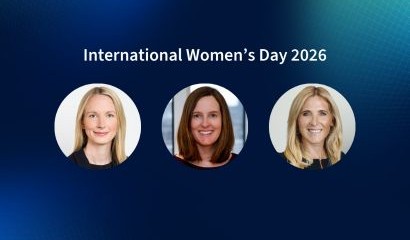
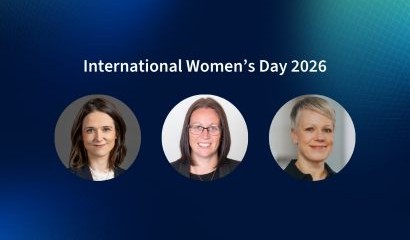
In Part 2 of this two-part series, Ashley Bell, Senior Legal Commentator at Debtwire APAC, profiles three leading professionals in the APAC restructuring and insolvency space: (i) Emma Beechey, Barrister, New Chambers (Sydney); (iv) Phoebe Lo, Partner, Clifford Chance (Hong Kong); and (iii) Tiffany Wong, Managing Director, Alvarez & Marsal (Hong Kong).
Emma Beechey
Barrister, New Chambers (Sydney)
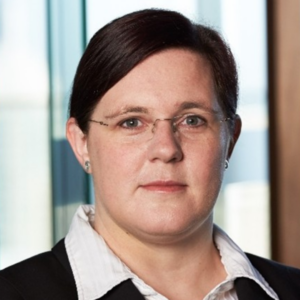
Emma Beechey is an Australian barrister practising in corporate restructuring and insolvency litigation. She has appeared as counsel in the Australian aspects of the restructurings of Garuda Indonesia, Thai Airways, Endo International and Exactech, advised bidders in the restructuring and sale of Virgin Australia, and appeared for the Commonwealth Government in relation to the restructuring of Rex Airlines.
She regularly appears in multinational restructuring applications and related disputes, acting for corporations, insolvency practitioners and major domestic and international banks. She also acts for the Australian Securities and Investments Commission in proceedings concerning the regulation of crypto-asset financial services products. She is a Fellow of INSOL International and a NextGen member of the International Insolvency Institute.
Do you believe that gender has played a role, either negatively or positively, in your career path and opportunities?
I have not personally experienced gender as either an impediment or an advantage in my own career. I think my career path has depended on the usual combination of intellect, talent, luck, hard work and perseverance, as for most professionals. My experience at the commercial Bar in Australia has been that success is fundamentally merit-based.
That said, restructuring remains an area in which women are under-represented, particularly at senior levels. Whether or not one has personally encountered obstacles, visibility and sponsorship matter. Seeing women in technical, commercially complex practices sends a powerful signal to younger practitioners that they belong in those spaces. I place real importance on mentoring women as students, junior lawyers and restructuring professionals, and on being visible in a field that has historically been male-dominated. Progress in the profession is not only about removing barriers; it is also about ensuring talented people see the path forward.
Is there a particular woman who has been an influence/inspiration to you in your career and what have you learned from her?
A particularly formative professional influence on me was Laura Hall, now Senior Trial Counsel at the U.S. Federal Trade Commission, whom I met almost 10 years ago during the INSOL Fellowship programme. What struck me immediately was her technical command and commercial clarity. She approached complex cross-border restructuring issues with complete authority and an evident lack of self-consciousness.
She was a restructuring lawyer first and foremost: rigorous, commercially astute and intellectually confident, without framing herself through gender. Nor did she feel any need to diminish it. She was fully herself, but wholly focused on the work. There was no sense that she was performing a role or managing perceptions; her authority came from technical mastery and sound commercial judgment. That quiet confidence left a lasting impression on me. She modelled what it looks like to practise at the highest level without treating gender as either a constraint or a defining characteristic.
What leadership qualities do you think female restructuring/turnaround professionals bring to the table that are sometimes overlooked?
I am cautious about attributing fixed leadership traits to women as a category. Restructuring is a highly technical, commercially driven practice, and effective leadership in this field depends on judgment, clarity and resilience, qualities that are not gendered.
That said, two dynamics are sometimes overlooked. First, professional trust networks matter. As the composition of boards, lenders and advisory teams becomes more diverse, similarity and shared experience can influence who feels heard and understood. Greater female representation in restructuring broadens those networks and strengthens stakeholder engagement.
Secondly, many women I have worked with demonstrate strong emotional awareness and stakeholder sensitivity. In restructuring, where outcomes often involve distress, negotiation and competing interests, the ability to read a room, manage tension and communicate difficult messages with clarity can be a material advantage.
Ultimately, the benefit is not that women lead differently in any simplistic sense, but that diversity of perspective improves decision-making in complex, high-stakes environments.
If you had one piece of advice for investors unfamiliar with APAC’s stressed/distressed opportunities and restructuring practices (or even those with experience), what would it be?
The Asia-Pacific region encompasses a wide range of legal systems, political economies and business cultures, and those differences matter in restructuring. Investors who approach the region with a US or European playbook can misread the dynamics.
In parts of Southeast Asia, government influence, whether formal or informal, can be a significant factor in major restructurings. State-linked entities, political sensitivities and the possibility of public funding support can materially affect stakeholder negotiations and outcomes. Understanding the political context is often just as important as understanding the balance sheet.
Cultural norms also matter. In some jurisdictions, decision-making is more hierarchical and consensus-driven, and communication can be indirect. What is not said may be as important as what is said. Investors who take time to build relationships and read the local context tend to fare better than those who rely purely on formal rights.
Pacific Island jurisdictions present their own complexities, including evolving institutional frameworks and deeply relationship-based commercial environments. Local political and social structures can influence business outcomes in ways that may be unfamiliar to offshore investors.
By contrast, Australia and New Zealand operate within common law systems broadly familiar to UK and US investors, though with distinct features. Singapore has made a deliberate strategic effort to position itself as a regional restructuring hub, modernising its insolvency framework and establishing the Singapore International Commercial Court to attract cross-border work. Australia has strong courts and restructuring capability but has been slower to reform certain aspects of its regime.
The consistent theme across APAC is that legal rights are only one part of the equation. Investors who succeed in the region are those who combine technical analysis with cultural literacy and a clear understanding of the political and institutional landscape.
Phoebe Lo
Partner, Clifford Chance (Hong Kong)

Phoebe Lo is a partner in the Restructuring and Insolvency Group at Clifford Chance’s Hong Kong office, specialising in non-contentious corporate insolvency and restructuring work. She is experienced in a wide range of distressed situations, having advised creditors, debtors, receivers and insolvency office holders in corporate restructuring and formal insolvency processes, including on issues on enforcement of security, restructuring indebtedness through formal and informal processes, and loan and security assignments.
Do you believe that gender has played a role, either negatively or positively, in your career path and opportunities?
When I first started my career, the Greater China restructuring market looked very different from what it is today. Back then, the senior echelons of the profession were almost exclusively men. It was much more challenging for a young woman starting out her career to envisage a path to success. Over time, awareness of the importance of diversity grew, and the market changed. Nowadays, I think it is fair to say that there is a more balanced representation at a senior level between the genders across organisations in the restructuring market. I have been fortunate to witness and be part of that change, and hope to do my part in building a more equitable market for the next generation of restructuring and turnaround professionals.
I am also fortunate to be based in Hong Kong – dual-income families are by-and-large the norm, and while there will always be more work to be done, working women here do benefit from a more level playing field when pursuing career opportunities compared to some other markets in the region.
Is there a particular woman who has been an influence/inspiration to you in your career and what have your learned from her?
I have worked with many amazing women during the course of my career. A special shout out to Joanna Charter, who was a Counsel at our restructuring practice before relocating with her family back to the UK during the COVID pandemic. She now works with Stevens & Bolton LLP as a Senior Knowledge Lawyer. Jo is an amazing lawyer and highly respected by clients, colleagues and competitors alike. On top of that, she was a great advocate for other women. Through observing her at work, I gained an appreciation of the importance of mentorship and sponsorship to a woman’s career, and she inspires me every day to pay it forward.
I would also like to take this opportunity to pay tribute to the many fantastic women who have served on the IWIRC Hong Kong Board over the years – the market would not be the same without their efforts!
What leadership qualities do you think female restructuring/turnaround professionals bring to the table that are sometimes overlooked?
I try to avoid attributing qualities as “male” or “female” – labels often reinforce stereotypes – but many of the best female restructuring/turnaround professionals I’ve known have high emotional intelligence, prioritise consensus building and are focused on finding solutions which work for a range of stakeholders, rather than simplistically pursuing an ideal outcome for their client which may not be practicable. These attributes, combined with technical expertise, contribute significantly to successful outcomes in restructuring and turnaround scenarios.
If you had one piece of advice for investors unfamiliar with APAC’s stressed/distressed opportunities and restructuring practices (or even those with experience), what would it be?
In many APAC jurisdictions, an investor’s contractual and legal rights are not always necessarily reflective of what can be practically achieved in a distressed scenario. It is often equally (if not more) important to try and find ways to exert practical leverage, and position yourself as part of the solution rather than part of the problem. Needless to say, having advisors with the right market experience and insight always helps!
Tiffany Wong
Managing Director, Alvarez & Marsal (Hong Kong)

Tiffany has over 25 years’ experience in corporate restructuring and dispute resolution in Hong Kong and the PRC. Recognized as a thought leader in the field, Tiffany combines her international restructuring experience with a local knowledge of Chinese restructuring practices to provide clients with solutions to challenging cross-border projects.
Her high-profile engagements have included court-appointed roles over entities including property developer China Evergrande Group, casino operator Genting Hong Kong, university conglomerate Peking University Founder Group’s subsidiary note issuer Nuoxi Capital, and Luckin Coffee, the fastest growing coffee retailer in the PRC.
Tiffany is a Fellow of CPA Australia, a member of the Hong Kong Institute of Certified Public Accountants, a holder of a Special Designation in Insolvency from the HKICPA, and a former board member of INSOL International.
Do you believe that gender has played a role, either negatively or positively, in your career path and opportunities?
There are two faces of the same coin. Being a female practitioner in a male dominated profession is difficult especially at the early stage of one’s career as we constantly need to prove to our clients and bosses that we are at least as capable as our male counterparts. It has got better in recent years as there are quite a few ladies in R&I who are doing very well and set good precedents for the benefit of the younger girls. I see being a female has also given me advantage as once people see my commitment to my job and that I out-perform my male counterparts, they are extremely complimentary because they did not expect it.
Is there a particular woman who has been an influence/inspiration to you in your career and what have your learned from her?
My supervisor is called Man Kong and she was the one who trained me in the early days of my career. She is known to be very strict and I was inspired by her commitment to deliver best quality work and her work ethics is second to none until this day.
Another woman who is an inspiration to me in more recent years is Carolyn Dong. Her journey from a remote village in North-eastern China to being a top lawyer in the resources sector in HK and the PRC makes me feel small. Her devotion to quality and grooming the next generation of lawyers to success is selfless and moves me deeply.
What leadership qualities do you think female restructuring/turnaround professionals bring to the table that are sometimes overlooked?
There are a lot of competing interests in a restructuring so in my view, it is critical that we who are there to drive a restructuring forward do not act in a way that add oil to the fire. I see women typically handle confrontation better as we are able to find ways to engage parties in constructive discussions in a contentious environment. This is not stereotype but it is about female restructuring professionals being able to bring people together when things get heated as it is not typical for female to have big egos.
If you had one piece of advice for investors unfamiliar with APAC’s stressed/distressed opportunities and restructuring practices (or even those with experience), what would it be?
In times of stress and distress, I see cash flow position to be the one single most critical item to look into. It is no longer about profitability but how much and when cash is coming in for it to save itself. In APAC, it is even more important for investors to understand how cash flows work in a business as cash flows don’t lie and are easier to trace when verification is needed. I have had many experience of identifying irregularities when performing or reviewing cash flow forecasts of businesses.
Prior to joining Debtwire, Ashley was a Partner at DLA Piper in Hong Kong with a practice focused on cross-border restructuring and insolvency matters. Ashley’s team advised lenders, funds, officeholders and debtors on a range of high-profile distressed scenarios across APAC (including in Australia, China, India, Indonesia, Malaysia, the Philippines, Singapore and Thailand) and worked closely with local counsel to coordinate related proceedings in the Caribbean, the UK, and the US. Ashley is a Fellow of INSOL International and is qualified in Australia, Hong Kong, and England & Wales.
This report should not be relied upon to make investment decisions. Furthermore, this report is not intended and should not be construed as legal advice. ION Analytics does not provide any legal advice, and clients should consult with their own legal counsel for matters requiring legal advice. All information is sourced from either the public domain, ION Analytics data or intelligence, or [is provided to us by our clients], and ION Analytics cannot and does not verify or guarantee the adequacy, accuracy or completeness of any source document. No representation is made that it is current, complete or accurate. The information herein is not intended to be used as a basis for investing and does not constitute an offer to buy or sell any securities or investment strategy. The information herein is for informational purposes only and ION Analytics accepts no liability whatsoever for any direct or consequential loss arising from any use of the information contained herein.
A service of 

Start your trial. Today
Explore unlimited content like this, available only in the platform.
Already a client? Sign in