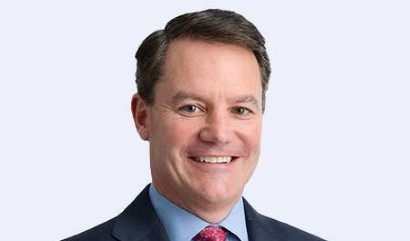
Eldridge revamps for future growth


Arts festival South by Southwest (SXSW), baseball team the LA Dodgers, bakery Le Pain Quotidien, insurance firm Security Benefit, leasing company Stonebriar Finance — Tony Minella and Todd Boehly have amassed one of the most diverse sets of holdings in the business world. And now, following a huge restructuring effort at Eldridge Industries, they are ready to focus on diversified credit opportunities.
The duo founded Eldridge Industries in 2015, from a partnership forged many years ago at Guggenheim Partners, and have built it into a formidable conglomerate with more than 5,000 employees and investments in more than 100 companies across such esoteric sectors as finance, media, sports and defence. They also gained fame along the way — especially Boehly, who has been the topic of countless pub chats and social media posts as the disruptive owner of English Premier League giant Chelsea FC.
Splitting the corporate structure
In late 2024, they rejigged their corporate structure, launching Eldridge, an asset management and insurance holding company with about USD 70bn in assets under management, with two divisions: Eldridge Capital Management and Eldridge Wealth Solutions.
 Todd Boehly with players from Chelsea Football Club
“Really, the inspiration for setting up Eldridge was to build and grow businesses and to invest our general account,” said Minella, co-founder, president of Eldridge Industries, and CEO of Eldridge Capital Management. Boehly is the co-founder, chairman and chief executive officer of Eldridge Industries, and chairman of Eldridge.
“The next phase is growing a consolidated asset management platform,” said Minella.
The pair have recruited fresh talent to pave the path. Jeff Forlizzi, who worked with Minella decades ago at a credit hedge firm, co-heads the diversified credit strategy at Eldridge Capital Management.
“Our evolution to Eldridge Capital Management is to still manage our own capital, but to allow others to come alongside us, because the opportunity set is just far more vast than we can handle on our own balance sheet,” said Forlizzi.
Security Benefit, acquired in 2010 by Boehly for Guggenheim Partners, has long been a crown jewel for the pair, and was vital in getting Eldridge Industries going. At the time of purchase the insurance company had a USD 11-12bn general account. Today, Security Benefit is wholly owned by Eldridge Industries with more than USD 60.4bn in assets under management, and acts as a key backer for Eldridge Capital Management.
The name Eldridge harkens back to a stay in Lawrence, Kansas at the Free State Hotel, which was burned down during the Civil War and rebuilt by Colonel Shalor Eldridge. “It was just a hotel at the time, and the name of the holding company,” said Minella. “But as we really dug into the name, we fell in love with the history of the hotel and what’s behind it, and decided to keep the name as we broke off from Guggenheim and built the Eldridge business.”
Rise of Eldridge Capital Management
Eldridge Capital Management is now growing its credit business and has recently opened up to third-party investments for the first time. The asset management arm focuses on corporate credit, general partner (GP) solutions, real estate credit, and sports, media and entertainment. Meanwhile, Eldridge Wealth Solutions houses wholly-owned insurance companies, Security Benefit and Everly Life.
Tony Minella, CEO, Eldridge Capital Management
“We have some broad credit strategies, under which there’s corporate credit, structured credit and real estate credit,” Minella explains. “We do everything from a lease-indicated loan to a directly-originated lease, private credit lease to a private credit transaction that we’re agenting, a direct loan, as we used to call them, to a broadly-syndicated loan, to a secondary, to trade claims.”
While Eldridge has more than 420 employees across the business, its investment team currently numbers approximately 160 people across the US, London and Mumbai. The firm is “aggressively staffing up” in the Indian city, with the intention of creating a 24-hour working day whereby the US-based team can hand off their work to their Indian colleagues and vice-versa.
Sports and entertainment are two big areas of interest for Eldridge Industries, and to date it has bought assets that are now a part of Penske Media — most notably Billboard and The Hollywood Reporter. For a touch of glamour, it also owns the Golden Globe awards.
The firm also owns Stonebriar — the largest independent equipment leasing company in the US. There are real estate holdings, insurance businesses, music catalogues, hotels, and award winning independent film studio A24 — the list goes on. The firm once also owned Essential Properties, a publicly-traded net lease REIT that owns and manages single-tenant properties across the US. At the time of writing, it had a market cap of approximately USD 6.7bn.
Towards the end of 2025, Minella and Boehly re-entered the world of CLOs, where Boehly started his career. In 2022, the pair sold their former CLO outfit, CBAM, to Carlyle. Three years later Eldridge printed an issue of its own — Eldridge CLO 2025-1, arranged by JPMorgan. This has been followed by two more deals. Eldridge also manages two CLO ETFs — one focused on triple A tranches, one which invests in the mezz.
Minella says these products allow the firm to continue to have a presence in the BSL market. “We have a lot of capital that sits behind that and allows us to deploy,” he says. “In this environment, you can’t be a passenger inside of a capital structure. You need to really drive outcomes and be part of a group that’s delivering solutions, as opposed to someone that’s necessarily inside of that group that’s getting taken advantage of.”
In January 2025, Eldridge consolidated six investment teams. It has been operating as one business ever since. The firm is building out its wealth distribution channel as it aims to scale up and attract external investment.
Forlizzi is aware that the private credit sector as a whole has an over-concentration when it comes to software, but adds that diversification is the key to pushing through the current market stress. Eldridge is bullish on AI and its staff use Claude on a daily basis (see Q&A below).
To date, Eldridge’s work has been fuelled by the innovative decision-making of its founders and financed internally. As the firm opens up to outside investment, Forlizzi and Minella are aware they are entering a crowded market at a time when private credit products are coming under scrutiny.
“Your guard has to be up as a credit investor,” says Minella. “Whether it’s a BSL or it’s private credit, it’s the same thing, it’s just in a different wrapper. There’s been a big influx of capital into private credit. That influx of capital, especially from retail, is finding out that private credit is not as liquid as other markets. As those investors want their money back and panic, they can make mistakes. Deploying capital to solve liquidity problems, as opposed to exacerbating them, is a focus of our organisations.”

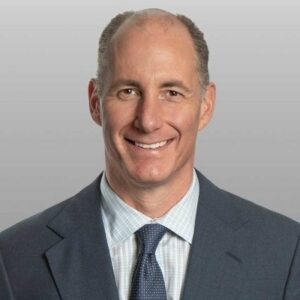
Jeff Forlizzi, Co-head of diversified credit strategy, Eldridge Capital Management
“We recognise that we’re going to have to provide differentiated value,” adds Forlizzi. “We’re looking to partner with companies and deploy capital and scale. We’re looking at the wealth channel. We’ve got about eight people that are focused there for our diversified credit strategy, GP solutions and our sports and entertainment strategies.”
Post-restructuring, the firm may look different, but its core investment strategy remains the same — to leverage existing and new relationships and to diversify capital across a variety of growth areas.
“We’re in the early innings of delivering for our clients,” says Minella. “I think we’ve proven that we can deliver for ourselves. We’ve… attracted a lot of talented people around us. And now our goal is to show we’re good stewards of their capital.
“When you’re investing your own capital, you’re pretty relentless about finding edge,” he adds. “That’s what we do. We relentlessly seek edge. And so I think we’ll stand out.”
Q&A with Tony Minella, co-founder, president of Eldridge Industries & CEO of Eldridge Capital Management
Q: What do you think about AI and how are you adopting it?
A: We are spending a lot of time really embracing AI. There were a handful of us at inception and then we’ve just basically mandated it across the organisation. It’s a decision that I made and pushed across the organisation in late January, early February, when the new Claude product came out, and I realised the power of the enterprise connections.
We have 440 seats, and we have 90% monthly usage. The entire organisation has to upskill. I’m pushing this from the top. I’m a daily average user. Without incorporating AI, you are going to get run over. It’s tantamount to not downloading Netscape in 1995.
You can’t delegate it to a working group, which is what a lot of companies are doing. You can’t hire people externally. You should hire new people into the organisation that are young, who are aggressive, who know how to implement technology and who can help upskill your existing employee base. We have a team of about a dozen people internally that we’ve hired, and who are helping us do this. They are teaching our analysts and our portfolio managers across the board to be able to develop skills within Claude.
Your skillset is expanding so dramatically — it reminds me of when I was a junior investment banking analyst and I would look back on my knowledge base, my steep learning curve, that I was embarrassed for who I was when I looked back six weeks or a month prior.
Q: What do you think about AI disruption of software companies?
A: Part of the catalyst for the rapid adoption of AI is to develop a better understanding of AI and software risk. We sold a lot of software in the summer of last year, just because we thought AI was going to explode. So we have very little exposure now.
Our AI implementation team is integrated with our research team. They’re integrated with our investment team. We’re not going to let a ‘finding’, or a ‘learning’ happen in a new use of the technology without filtering through our perception of businesses and software companies out there in the market. That way we really have that continuous feedback loop. We have a daily morning call. People are talking about the new skills or agents that they’re developing within the Claude ecosystem, and the AI ecosystem.
You have an existential risk with AI for software companies. Will SaaS companies evolve and develop and leverage their own language model? We don’t know the answer to that, and we’re going to find out over the course of the coming months and years. Twelve months from now, we’ll be in a much different spot.
Q: Private credit has been making headline news. Should we be worried?
A: The single best risk-return that we think we can get right now is in asset-based credit. There’s asset-based finance, there’s sponsor-backed private credit, and specifically sponsor-backed software companies where you might have a 40% or 50% loan-to-value credit facility in place. In a private credit world that might be seven, eight, nine times levered on cashflow — and in a changing environment that sweeps a lot of cashflow to service the debt. So those companies are hamstrung, and I think that’s the real concern, that they can’t pivot to the AI agent model and they can’t transform their business. That’s where folks will get stuck.
Q: Besides asset-based credit, what other growth potential do you see?
A: Two strategies we are developing right now are sports teams and other media platforms.
We think there’s a big opportunity right now in the US to rethink our rare earth and critical mineral supply chain, which is largely dependent on China. We’re spending a lot of time in that industry right now, and those are businesses that we control on our balance sheet.
We see a massive opportunity with tech deployment. We can deploy an investment-grade credit — as an example, there was a data centre product that’s effectively AA Google risk, that we’re getting a 6.2% yield, and Google trades at 60 basis points over Treasuries — and there’s a nice yield pickup.